The post 10 Unhealthiest Restaurant Pasta Dishes in America appeared first on Eat This Not That.
]]>While a simple pasta dish can fit into a healthy diet, many restaurant offerings push the limits. From calorie-packed Alfredo creations to carb-heavy plates topped with fried meats and rich cheeses, these dishes can deliver more than an entire day’s worth of calories and sodium in a single serving. Not to mention the high-fat content of these dishes, often exceeding guidelines for saturated fat.
To help you make better choices, we’re highlighting 10 of the unhealthiest pasta dishes available at major restaurant chains. Whether dining out for a special occasion or trying to make healthier choices, knowing the unhealthiest restaurant pasta dishes can help you make informed decisions to enjoy your meal without compromising health. Read on, and for what to order instead, don’t miss The #1 Healthiest Pasta Dish at 10 Major Restaurant Chains.
Chili’s Cajun Pasta with Grilled Chicken
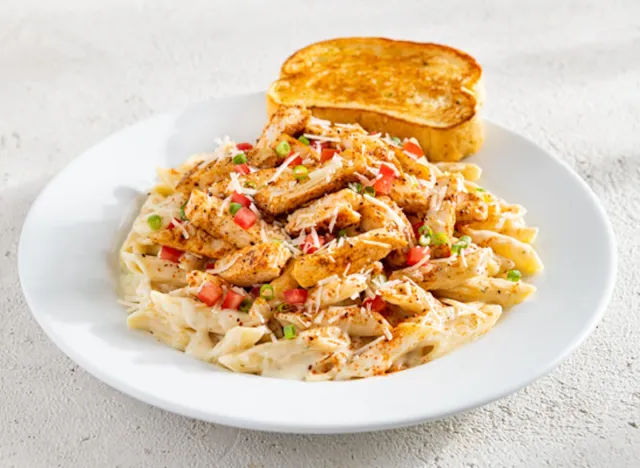
Calories: 1,180
Fat: 56 g (Saturated Fat: 23 g)
Sodium: 3,610 mg
Carbs: 110 g (Fiber: 8 g, Sugar: 6 g)
Protein: 61 g
Chili’s Cajun Pasta with Grilled Chicken is a creamy, cheesy Alfredo pasta packed with sodium. The creamy, cheesy sauce is topped with Parmesan, one of the saltiest cheeses, which only adds to the dish’s already high sodium content. Swapping the chicken for shrimp doesn’t significantly change the nutritional profile, making this pasta equally indulgent either way. If you choose to indulge, consider sharing it or saving half for leftovers to keep portions more manageable.
RELATED: 8 Healthiest Dishes at Chili’s, According to Dietitians
TGI Friday’s Cajun Shrimp & Chicken Pasta with Breadstick
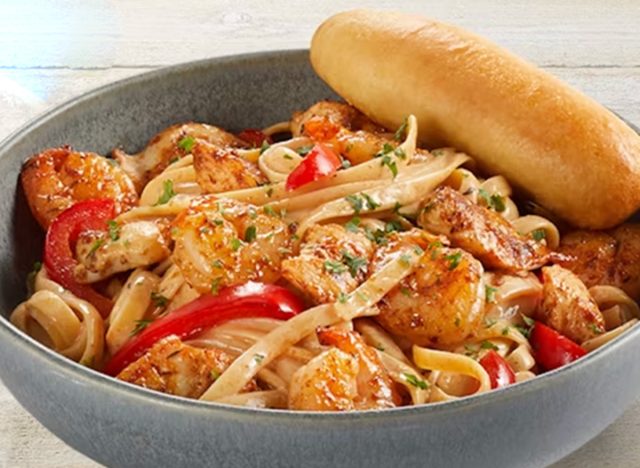
Calories: 1,410
Fat: 58 g (Saturated Fat: 26 g)
Sodium: 2,760 mg
Carbs: 135 g (Fiber: 7 g, Sugar: 13 g)
Protein: 81 g
The Cajun Shrimp and Chicken Pasta at TGI Friday’s has 1,410 calories, 58 grams of fat, and 2,760 milligrams of sodium per serving. The pasta dish comes with a hefty breadstick, adding to the dish’s high-calorie content. Chopped red bell peppers dot the pasta dish but don’t contribute enough to boost the fiber intake or help meet vegetable recommendations of three cups daily.
Olive Garden Tour of Italy
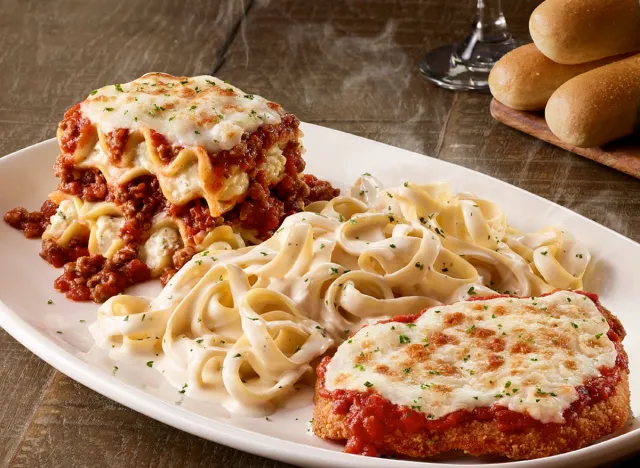
Calories: 1,500
Fat: 97 g (Saturated Fat: 50 g)
Sodium: 3,220 mg
Carbs: 99 g (Fiber: 7 g, Sugar: 12 g)
Protein: 72 g
The Tour of Italy from Olive Garden is a calorie-heavy meal combining lasagna, chicken parmigiana, and fettuccine Alfredo. This indulgent combination delivers a whopping 1,500 calories, 97 grams of fat, and 3,250 milligrams of sodium in a single serving. While it does provide 75 grams of protein, the high fat and sodium content make it one of the most indulgent items on the menu.
The dish is particularly concerning for its saturated fat content. With 50 grams of saturated fat per serving, it far exceeds the American Heart Association‘s recommended daily limit of 13 grams, which is based on keeping saturated fat to less than 6% of daily calories. Consistently consuming meals like this can contribute to elevated cholesterol levels and increase the risk of heart disease.
RELATED: Every Single Olive Garden Pasta—Ranked by Nutrition
Outback Steakhouse Queensland Chicken & Shrimp Pasta
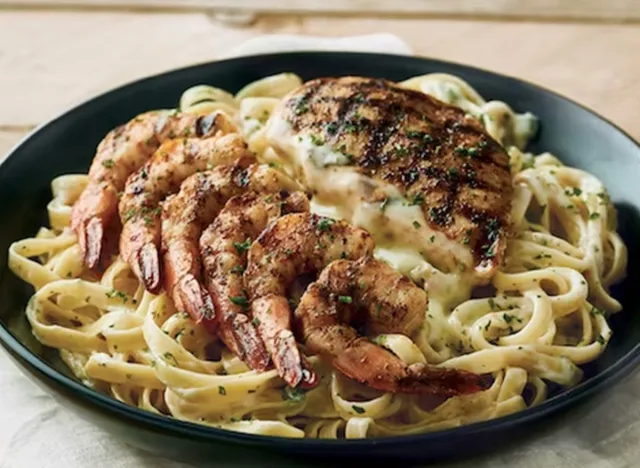
Calories: 1,510
Fat: 73 g (Saturated Fat: 23 g)
Sodium: 1,810 mg
Carbs: 122 g (Fiber: 7 g, Sugar: 9 g)
Protein: 82 g
A creamy and meaty dish, Outback Steakhouse’s Queensland Chicken and Shrimp Pasta packs more than 1,500 calories per serving. Although lower in sodium than other options on our list, it still contains nearly an entire day’s worth of sodium in a single meal. For individuals with heart concerns or those monitoring their sodium intake, this dish surpasses the American Heart Association’s recommended limit of 1,500 milligrams of sodium per day, making it a choice worth reconsidering.
Ruby Tuesday Crispy Chicken Mac ‘n Cheese
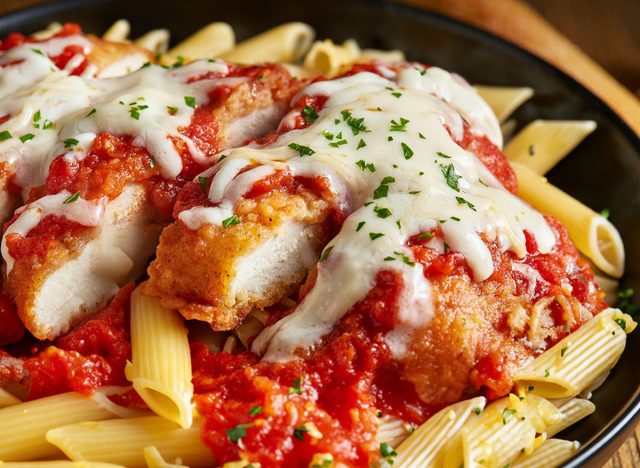
Calories: 1,920
Fat: 110 g (Saturated Fat: 51 g)
Sodium: 5,960 mg
Carbs: 147 g (Fiber: 8 g, Sugar: 26 g)
Protein: 91 g
The Crispy Chicken Mac ‘n Cheese from Ruby Tuesday is a surprising source of both sugar and sodium, partly due to its tomato sauce, which can sneak in added sugar and salt. With 26 grams of sugar per order, this dish exceeds the American Heart Association’s daily added sugar recommendation of 25 grams for women and 36 grams for men. On top of that, it packs more than 2.5 times the recommended daily sodium limit of 2,300 milligrams.
Fortunately, Ruby Tuesday offers customization options to make this dish slightly less indulgent. Skipping the Parmesan cream sauce saves 90 calories and 250 milligrams of sodium, while forgoing the breadstick cuts another 130 calories and 180 milligrams of sodium.
Olive Garden Chicken Tortelloni Alfredo
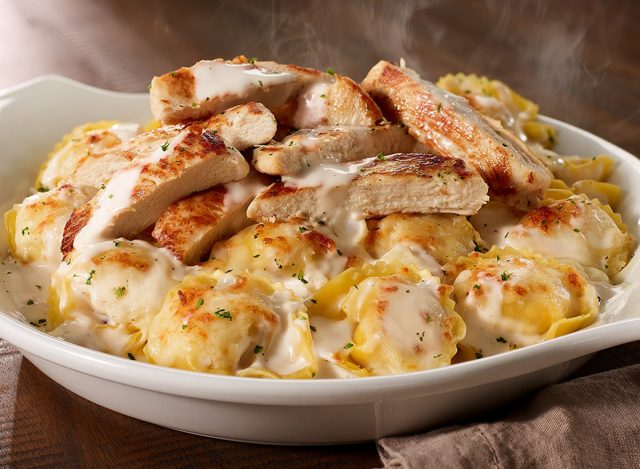
Calories: 1,980
Fat: 131 g (Saturated Fat: 76 g)
Sodium: 3,720 mg
Carbs: 95 g (Fiber: 5 g, Sugar: 9 g)
Protein: 112 g
The Chicken Tortelloni Alfredo at Olive Garden is a decadent meal consisting of cheese-filled tortelloni pasta cooked in an alfredo sauce topped with toasted breadcrumbs and sliced grilled chicken. The dish contains nearly 2,000 calories, roughly the average calorie intake of an adult in the United States.
The Dietary Guidelines for Americans recommends limiting saturated fat to less than 10% of total daily calories. On a 2,000-calorie-per-day diet, this amounts to roughly 22 grams of saturated fat. With 76 grams, the Chicken Tortelloni Alfredo contains three times more than the recommended saturated fat.
Macaroni Grill Mama’s Trio
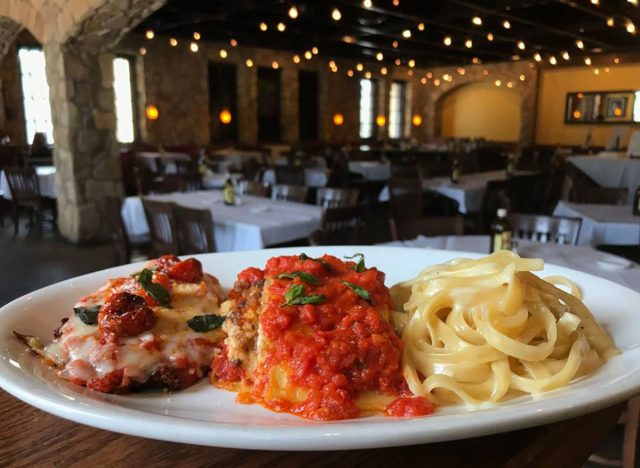
Calories: 2,110
Fat: 129 g (Saturated Fat: 56 g)
Sodium: 3,940 mg
Carbs: 140 g (Fiber: 9 g, Sugar: 19 g)
Protein: 103 g
Mama’s Trio at Macaroni Grill is a combination platter with three of the restaurant’s pasta dishes: Chicken parmesan, lasagna bolognese, and fettuccine alfredo. Individually, these dishes pack a significant amount of calories and sodium. Together, these three pasta dishes provide 2,110 calories and 3,940 milligrams of sodium.
The Recommended Dietary Allowance (RDA) for protein is 0.8 grams per kilogram of bodyweight. The RDA represents the average daily protein intake necessary to meet nutrient requirements for most healthy adults. For someone who weighs 150 pounds, this amounts to 54 grams of protein per day—slightly more than half of the 103 grams of protein in the Mama’s Trio dish.
RELATED: I Tried 13 Rao’s Pasta Sauces & the Best Was Smooth and Creamy
Carrabba’s Filet and Shrimp Pasta Toscana
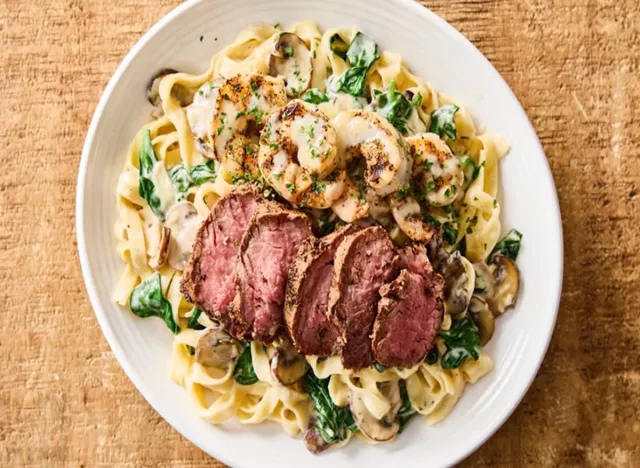
Calories: 2,140
Fat: 136 g (Saturated Fat: 77 g)
Sodium: 4,910 mg
Carbs: 143 g (Fiber: 12 g, Sugar: 11 g)
Protein: 77 g
Carrabba’s Filet and Shrimp Pasta Toscana is a decadent dish that combines fettuccine with spinach and mushrooms in a roasted garlic cream sauce, topped with steak filet and shrimp. At 2,140 calories and an astonishing 4,910 milligrams of sodium per serving, this meal far exceeds the daily recommended sodium limit of 2,300 milligrams. With over 2,000 calories, it can easily account for the entire daily caloric intake of many individuals, making it a poor choice for anyone aiming to lose or manage their weight.
Cheesecake Factory Bistro Shrimp Pasta
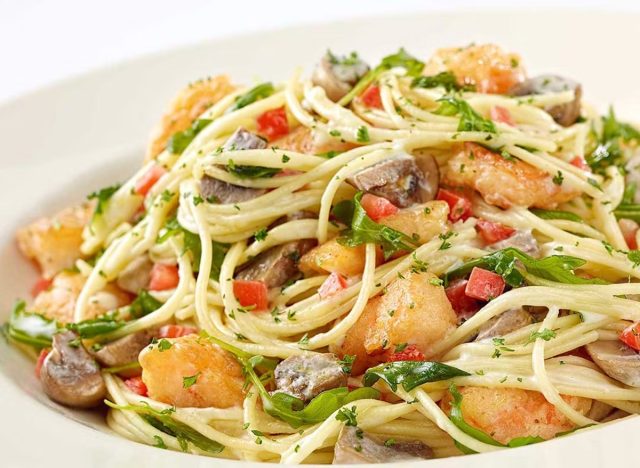
Calories: 2,170
Fat: 147 g (Saturated Fat: 69 g)
Sodium: 3,240 mg
Carbs: 155 g (Fiber: 10 g, Sugar: 12 g)
Protein: 58 g
The Bistro Shrimp Pasta at the Cheesecake Factory is a bowl of spaghetti topped with mushrooms, tomato, arugula, and crispy battered shrimp in a basil-garlic-lemon cream sauce. Shrimp, on its own, is considered a lean protein, but its lower-calorie status changes when it’s battered and fried. Ask for grilled instead of crispy battered shrimp to cut down on sodium and fat content.
RELATED: 10 Fattening Restaurant Dishes With More Than a Full Day’s Worth of Calories
Cheesecake Factory Louisiana Chicken Pasta
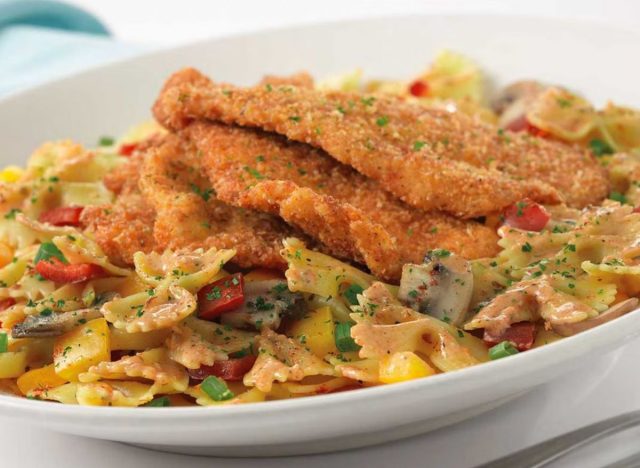
Calories: 2,270
Fat: 132 g (Saturated Fat: 67 g)
Sodium: 4,460 mg
Carbs: 176 g (Fiber: 10 g, Sugar: 17 g)
Protein: 98 g
Mushrooms, peppers, onions, and parmesan-crusted chicken top this bowl of pasta in a spicy New Orleans sauce. With a whopping 4,460 milligrams of sodium, the Cheesecake Factory’s Louisiana Chicken Pasta significantly exceeds the general recommendation that adults limit sodium to 2,300 milligrams daily. Some of the other significant
When ordering pasta dishes out, opt for ones without a cream sauce to help cut down on calories, sodium, and fat. Some restaurants offer dishes that mix regular pasta and zucchini noodles for a lower-calorie option. And remember, sharing dishes or saving half of a meal as a leftover is always an option.
The post 10 Unhealthiest Restaurant Pasta Dishes in America appeared first on Eat This Not That.
]]>The post The 8 Best Low-Calorie Chick-fil-A Orders, According to a Dietitian appeared first on Eat This Not That.
]]>Whether you’re counting calories, watching portions, or just looking for lighter options, knowing which items to pick can help you stick with your goals. To cut calories further, consider skipping dipping sauces or condiments, which can quickly add 60 to 140 calories to your meal.
In this article, we’ll review the eight best low-calorie Chick-fil-A orders and provide additional suggestions to lower the calorie content of popular menu items. For more healthy menu items at this chicken chain, check out 12 Healthy Chick-fil-A Orders, According to Dietitians.
Grilled Nuggets
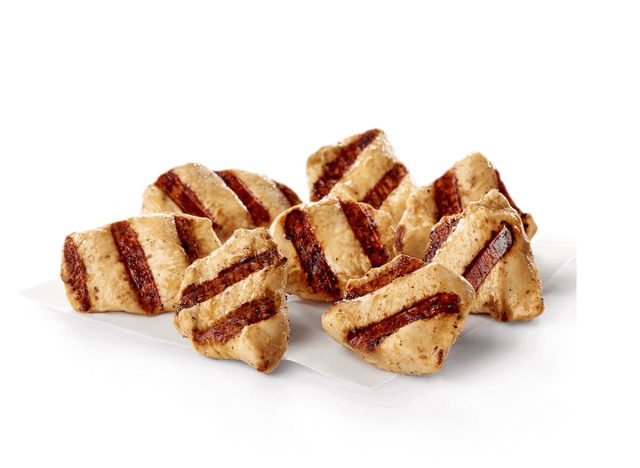
Calories: 130
Fat: 3 g (Saturated Fat: 0.5 g)
Sodium: 440 mg
Carbs: 1 g (Fiber: 0 g, Sugar: 1 g)
Protein: 25 g
The lowest calorie option on this list is the Grilled Nuggets, which offers eight pieces for just 130 calories. However, you only get the nuggets for this low of calories. Dipping sauces boost the calorie content, with each sauce ranging from 25 to 140 calories per packet.
If you want to add a side to the Grilled Nuggets, go with the fruit cup for 70 calories or the Kale Crunch Side or Chicken Noodle Soup, both of which have 170 calories. Unlike the Kale Crunch Side — which is just curly kale, cabbage, and roasted almonds — the Side Salad contains cheese and vegetables tossed with oil, contributing to its total of 470 calories.
RELATED: Woman Who Lost 250 Pounds Swears by This Chick-fil-A Order Hack
Chick-fil-A Nuggets
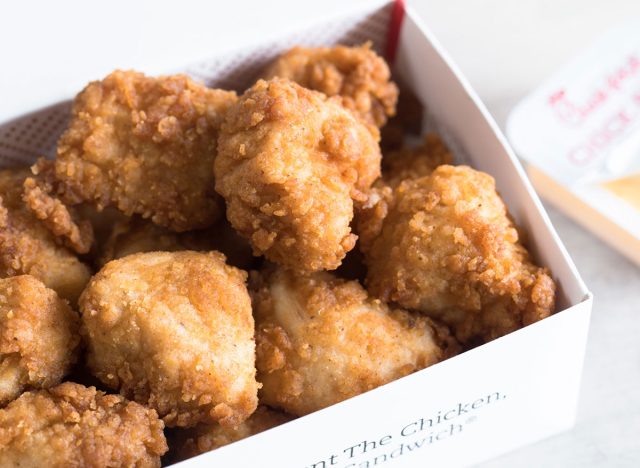
Calories: 250
Fat: 11 g (Saturated Fat: 2.5 g)
Sodium: 1,210 mg
Carbs: 11 g (Fiber: 0 g, Sugar: 1 g)
Protein: 27 g
The Chick-fil-A Nuggets are available in five-, eight-, 12, and 30-count servings. For an individual portion, stick with the five or eight-count servings. An eight-count serving contains 250 calories. The seasoning and breading add flavor to the chicken nuggets, perhaps minimizing the need for dipping sauces. If you’re craving a dipping sauce, pick the Zesty Buffalo Sauce, which has 25 calories per packet.
Bacon, Egg & Cheese Muffin
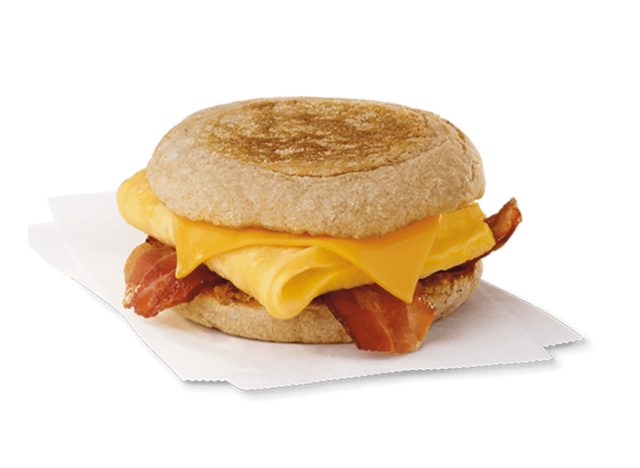
Calories: 300
Fat: 13 g (Saturated Fat: 6 g)
Sodium: 780 mg
Carbs: 28 g (Fiber: 1 g, Sugar: 2 g)
Protein: 16 g
A classic breakfast sandwich, the Bacon, Egg & Cheese Muffin sandwiches folded egg, smoked applewood bacon, and American cheese between toasted English muffin halves. Opt for egg whites instead of regular eggs for a 30-point calorie reduction.
This breakfast sandwich is sauceless. While you can add ketchup, mustard, or hot sauce to the sandwich, it will up the calorie content. Choose your sauce wisely: Chick-fil-A’s Honey Mustard Sauce contains 50 calories per packet, and its Zesty Buffalo Sauce has 25 calories per serving.
RELATED: I Tried Chick-fil-A’s Entire Breakfast Menu & One Item Blew Me Away
Chick-n-Strips
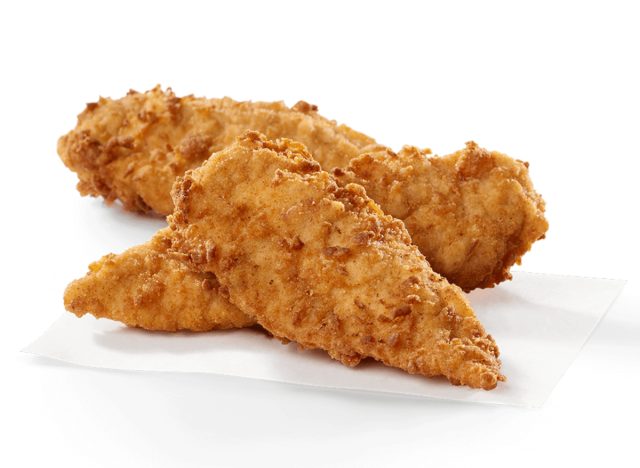
Calories: 310
Fat: 14 g (Saturated Fat: 2.5 g)
Sodium: 870 mg
Carbs: 16 g (Fiber: 0 g, Sugar: 2 g)
Protein: 29 g
Three of the Chick-n-Strips provide 310 calories and 29 grams of protein. By themselves, the Chick-n-Strips are a low-calorie option. But rarely are they eaten plain. As Chick-fil-A highlights, the Chick-n-Strips are “made for dipping.” Adding sauces increases the calorie content. Both the Signature Chick-fil-A sauce and the Garden Herb Ranch contain 140 calories per packet. Other popular sauces like the Polynesian Sauce and Honey Roasted BBQ Sauce contain 110 and 60 calories per packet, respectively.
When ordering the Chick-n-Strips, be mindful of the calories in the sauces. Try to eat the strips plain, if possible.
Chick-fil-A Chick-n-Minis
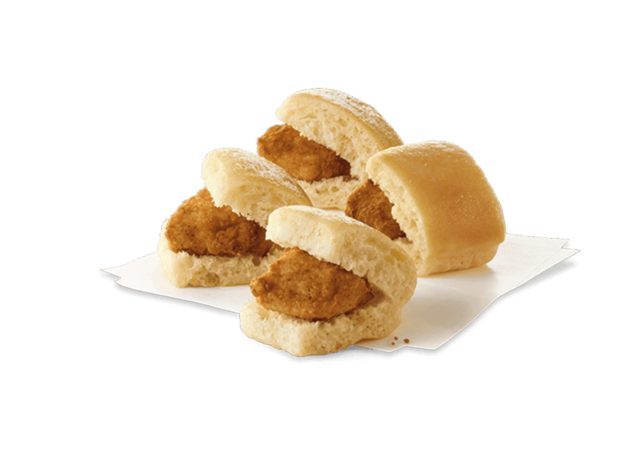
Calories: 360
Fat: 13 g (Saturated Fat: 4 g)
Sodium: 1,060 mg
Carbs: 41 g (Fiber: 2 g, Sugar: 8 g)
Protein: 20 g
A mix between plain chicken nuggets and a sandwich, the Chick-fil-A Chick-n-Minis are bite-sized nuggets in a yeasted roll brushed with honey butter. A four-count serving contains 360 calories and provides 20 grams of protein. Dietitians recommend consuming 20 to 30 grams of protein per meal for muscle health, satiety, and weight management goals. Although the four-piece serving may seem small, it contains an appropriate amount of protein and calories. A larger portion of ten pieces exists, but it is no longer a low-calorie option, at a whopping 910 calories.
Grilled Chicken Sandwich
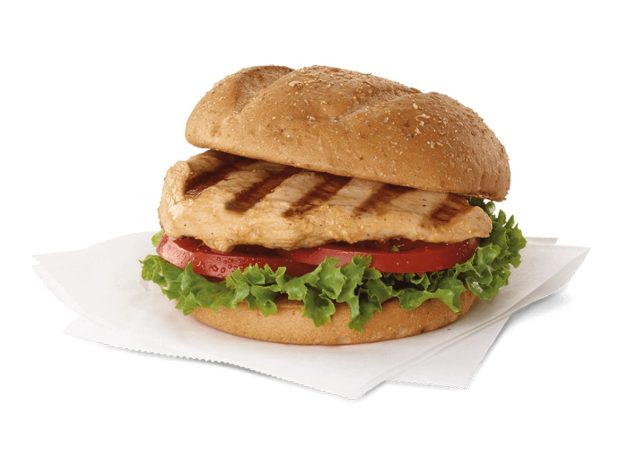
Calories: 390
Fat: 12 g (Saturated Fat: 2 g)
Sodium: 770 mg
Carbs: 44 g (Fiber: 3 g, Sugar: 12 g)
Protein: 28 g
The Grilled Chicken Sandwich is a lower-calorie alternative to the classic Chick-fil-A Chicken Sandwich. It has a similar protein content but with 390 calories, 30 calories less than the classic Chicken Sandwich. The grilled chicken is served on a multigrain brioche bun with lettuce, tomato, and honey-roasted BBQ sauce. Swap the multigrain brioche bun for an unbuttered regular bun to lower calories. Reduce calories even more by ditching the 60-calorie honey-roasted BBQ sauce to lower the calorie content to 330, making this sandwich a suitable low-calorie option.
RELATED: I Tried Every Chick-fil-A Chicken Sandwich & Ranked Them By Taste
Chick-fil-A Chicken Sandwich
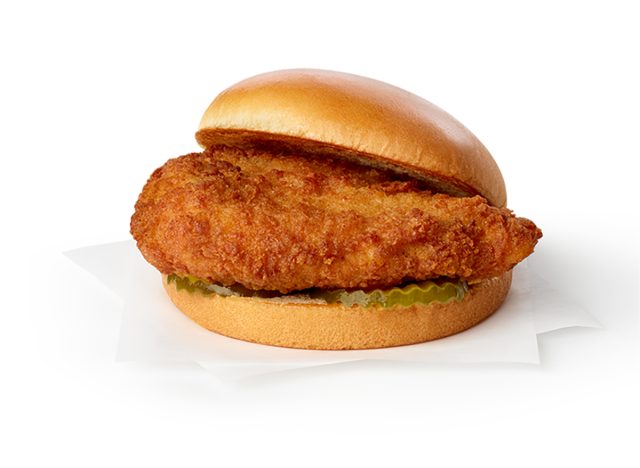
Calories: 420
Fat: 18 g (Saturated Fat: 3.5 g)
Sodium: 1,460 mg
Carbs: 41 g (Fiber: 1 g, Sugar: 6 g)
Protein: 29 g
The classic Chick-fil-A Chicken Sandwich places fried, breaded chicken and pickles in a buttery bun for a sandwich with 420 calories. Ask for an unbuttered bun to reduce the calorie content by 30 calories further, or consider ordering the Grilled Chicken Sandwich for a lower-calorie option. Leave the pickles on the sandwich—pickles add tang and flavor while providing almost no calories.
Market Salad
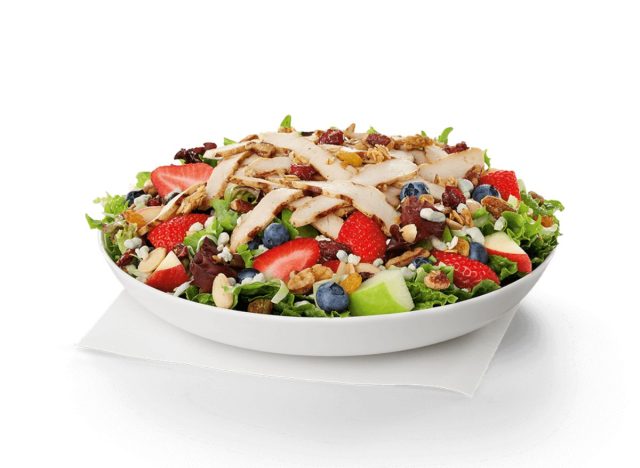
Calories: 550
Fat: 31 g (Saturated Fat: 6 g)
Sodium: 1,010 mg
Carbs: 42 g (Fiber: 5 g, Sugar: 26 g)
Protein: 28 g
Salads may seem the healthier choice, but they can often be calorie-laden, packed with crunchy, fried ingredients, or loaded with sauces. If you’re looking for a salad at Chick-fil-A, go with the Market Salad. Although it is higher in calories than other options on this list, it has the best nutrition profile of all of the salads offered at Chick-fil-A, with 550 calories, 5 grams of fiber, and 28 grams of protein per serving.
Ask for the dressing and Harvest Nut Granola on the side, and go with the cold filet to keep calories low. Consider getting the Light Italian Dressing on the side instead of the Zesty Apple Cider Vinaigrette. The Light Italian Dressing has just 25 calories per serving compared to the 230-calorie-per-serving Zesty Apple Cider Vinaigrette.
RELATED: The Best & Worst Fast-Food Salads
The post The 8 Best Low-Calorie Chick-fil-A Orders, According to a Dietitian appeared first on Eat This Not That.
]]>The post 10 Protein Bars That Are Actually Unhealthy appeared first on Eat This Not That.
]]>Many popular brands pack their bars with added sugars, artificial sweeteners, and unhealthy fats. What might appear as a quick, nutritious snack can sometimes resemble candy more than a balanced protein source. While protein bars can fit into a balanced diet, it’s essential to read labels carefully and watch for these hidden ingredients to ensure you’re making a smart choice.
Here, we’re sharing ten protein bars that fall short on the health front, so you can avoid options that could derail your nutrition goals. And for what to buy instead, check out The 10 Best Protein Bars in 2024.
What Makes a Protein Bar Unhealthy?
- The added sugar content. Limiting added sugar is a cornerstone of good health. Eating too much added sugar contributes to weight gain and increases the risk of heart disease and type 2 diabetes. Protein bars are likely not the only source of added sugar in your diet. To help keep added sugars in check, look for protein bars with less than 6 grams of sugar.
- The amount of saturated fat. Many bars rely on fillers like palm oil, which is high in saturated fat. The U.S. Dietary Guidelines recommend keeping saturated fat to less than 10% of your daily intake. On a 2,000-calorie per day diet, this amounts to less than 22 grams of saturated fat. Foods high in saturated fat can raise cholesterol and increase the risk of heart disease.
- Its sugar alcohol content. This one is a bit nuanced. Sugar alcohols like maltitol reduce the effect of food on blood sugar, which is beneficial for people with diabetes. However, sugar alcohols can also trigger digestive issues, such as abdominal cramping, bloating, or diarrhea. While you may tolerate small doses, some protein bars contain significant amounts of sugar alcohols.
Unhealthiest Protein Bars
- Gatorade Peanut Butter Chocolate Protein Bar
- 1st Phorm Level 1 S’mores Protein Bar
- Think! High Protein Lemon Delight
- Pure Protein Caramel Churro
- Met-Rx Super Cookie Crunch
- Clif Bar Peanut Butter Banana with Dark Chocolate
- Power Crunch Salted Caramel
- Quest Nutrition Cookies & Cream
- Go Macro Coconut + Almond Butter + Chocolate Chip Bar
- Perfect Bar Almond Butter
Gatorade Peanut Butter Chocolate Protein Bar
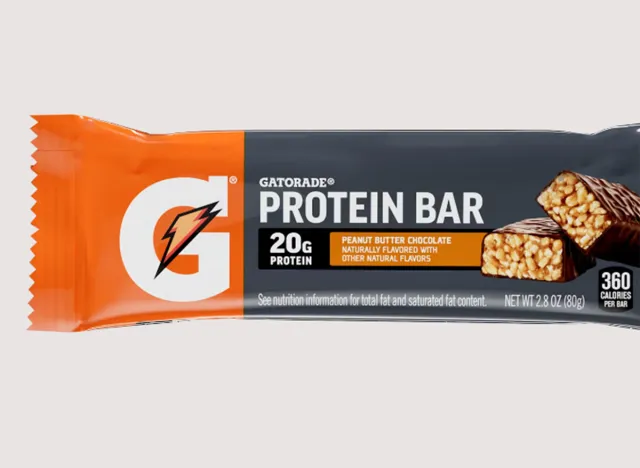
Calories: 360
Fat: 13 g (Saturated Fat: 9 g)
Sodium: 310 mg
Carbs: 39 g (Fiber: 1 g, Sugar: 24 g)
Protein: 20 g
With more sugar than protein, the Gatorade Peanut Butter Chocolate Protein Bar is one you want to limit. The American Heart Association (AHA) recommends keeping added sugar to less than 6% of your daily intake, or less than 25 grams for women and 26 grams for men. This protein bar contains 24 grams of added sugar—nearly the maximum amount of sugar recommended by the AHA.
RELATED: Is Gatorade Good For You? We Asked a Nutritionist
1st Phorm Level 1 S’mores Protein Bar
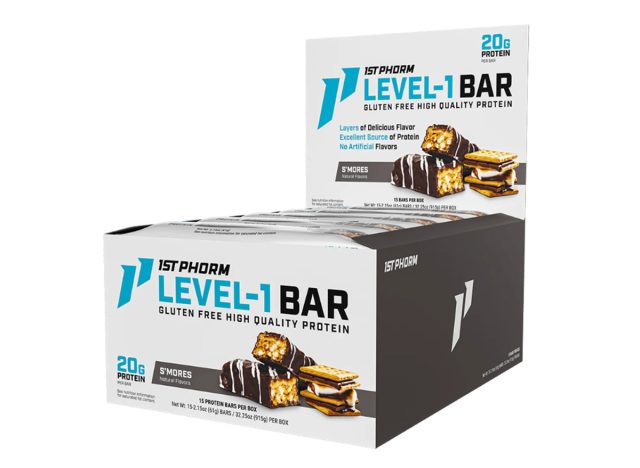
Calories: 270
Fat: 12 g (Saturated Fat: 9 g)
Sodium: 170 mg
Carbs: 20 g (Fiber: 0 g, Sugar: 1 g)
Protein: 21 g
Palm kernel oil is the fourth ingredient in the 1st Phorm Level 1 S’mores protein bar. Unlike other oils that may be a mix of saturated and unsaturated fats, palm kernel oil is roughly 80% saturated fat. The palm kernel oil significantly contributes to the saturated fat content of this s’mores protein bar, which contains 9 grams of saturated fat, or 45% of your daily value.
The U.S. Dietary Guidelines for Americans recommend limiting saturated fat to less than 10% of your daily intake to reduce the risk of heart disease, or no more than 20 grams a day.
Think! High Protein Lemon Delight
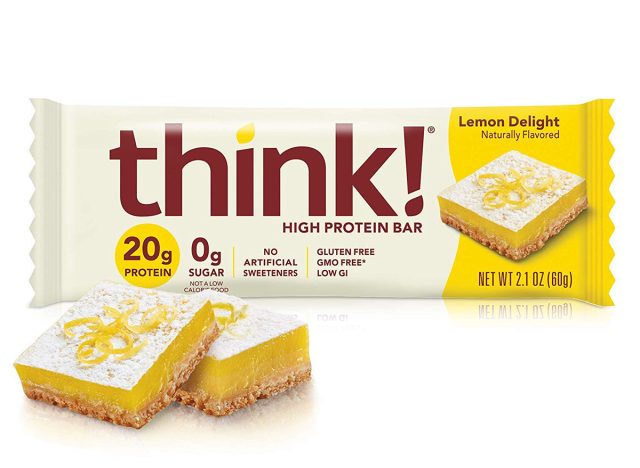
Calories: 230
Fat: 9 g (Saturated Fat: 3.5 g)
Sodium: 230 mg
Carbs: 24 g (Fiber: 0 g, Sugar: 0 g [Sugar Alcohol: 13 g])
Protein: 20 g
The Think! High Protein Lemon Delight bars are a low glycemic option protein bar for people watching their blood sugar. However, the bar contains 13 grams of sugar alcohols, namely maltitol syrup. Sugar alcohols can cause abdominal cramping or diarrhea, especially among people with irritable bowel syndrome or those unaccustomed to sugar alcohols.
Pure Protein Caramel Churro
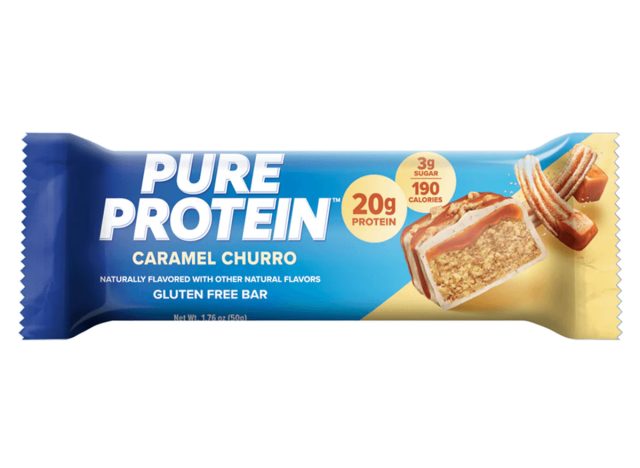
Calories: 190
Fat: 6 g (Saturated Fat: 4 g)
Sodium: 180 mg
Carbs: 17 g (Fiber: 1 g, Sugar: 2 g)
Protein: 20 g
Pure Protein’s Caramel Churro bar has just 190 calories, with 17 grams of carbohydrates and 20 grams of protein. However, despite its favorable nutrition profile, the Caramel Churro bar from Pure Protein still makes our list of unhealthy protein bars because it’s packed with nearly every type of sweetener. This bar contains artificial sweeteners like sucralose, sugar alcohols such as maltitol and sorbitol, and refined sugars including corn syrup, sugar, and brown sugar.
RELATED: 12 Best Protein Shakes, According to a Dietitian
Met-Rx Super Cookie Crunch
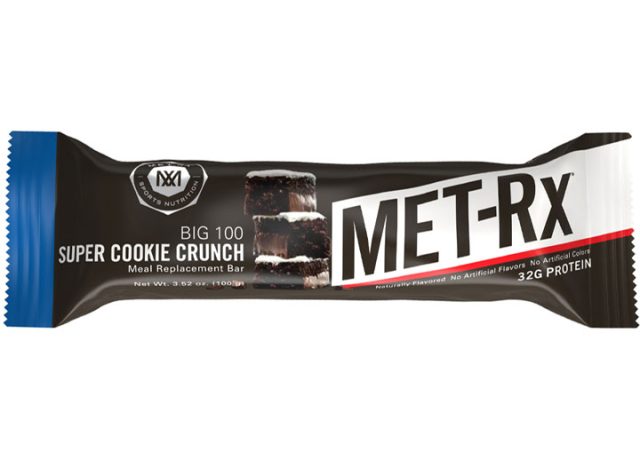
Calories: 410
Fat: 13 g (Saturated Fat: 6 g)
Sodium: 320 mg
Carbs: 42 g (Fiber: 2 g, Sugar: 24 g)
Protein: 32 g
The MET-Rx Super Cookie Crunch Protein Bar is advertised as a meal replacement bar, and rightfully so. It can be easy to exceed daily calorie or macronutrient targets with this protein bar. This bar contains 410 calories, roughly equivalent to a meal. Besides the high-calorie content, one Super Cookie Crunch protein bar has 24 grams of sugar—nearly 50% of the daily value based on a 2,000-calorie diet.
Clif Bar Peanut Butter Banana with Dark Chocolate
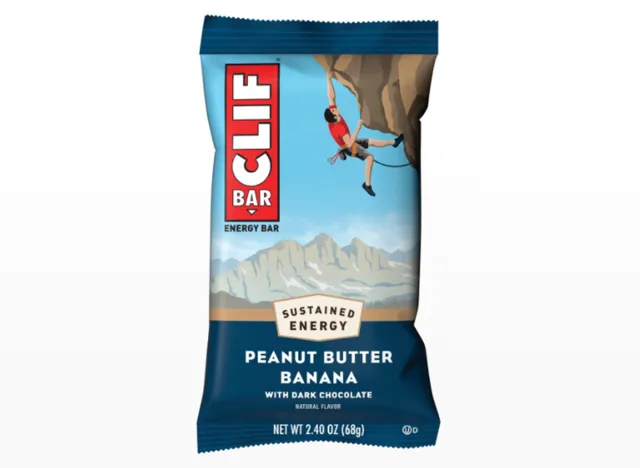
Calories: 260
Fat: 8 g (Saturated Fat: 2 g)
Sodium: 230 mg
Carbs: 41 g (Fiber: 5 g, Sugar: 14 g)
Protein: 10 g
The Clif Bar Peanut Butter Banana with Dark Chocolate protein bar contains more sugar than protein. With 14 grams of added sugar and just 10 grams of protein, this bar is more of a dessert than a high-protein snack. It contains three types of sugar: brown rice, tapioca, and cane syrup. Although the syrups are organic, they’re still considered an added sugar. And diets high in added sugar increase the risk of weight gain and developing chronic conditions like type 2 diabetes and heart disease.
RELATED: The 16 Healthiest Low-Sugar Protein Bars, According to Dietitians
Power Crunch Salted Caramel
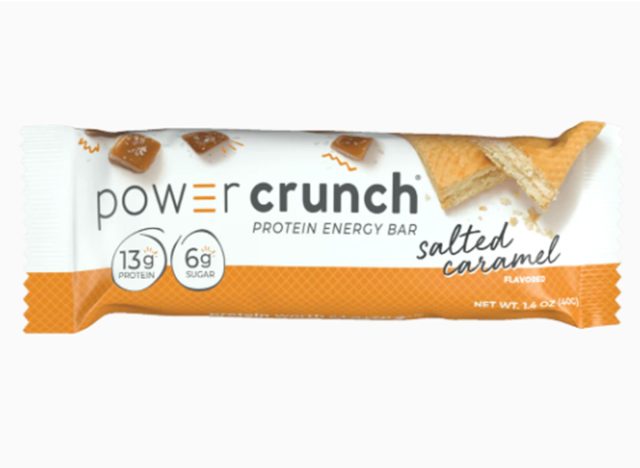
Calories: 215
Fat: 14 g (Saturated Fat: 7 g)
Sodium: 180 mg
Carbs: 11 g (Fiber: 1 g, Sugar: 6 g)
Protein: 13 g
With a texture and flavor similar to wafer cookies, Power Crunch’s Salted Caramel protein bar resembles more of a dessert than a typical protein bar. It has 7 grams of saturated fat (35% DV) from palm oil and palm kernel oil. Palm oil itself is roughly 50% saturated fat, whereas palm kernel oil is 85% saturated fat. And some research indicates palm oil contributes to elevated low-density lipoprotein (LDL) or “bad” cholesterol.
Quest Nutrition Cookies & Cream
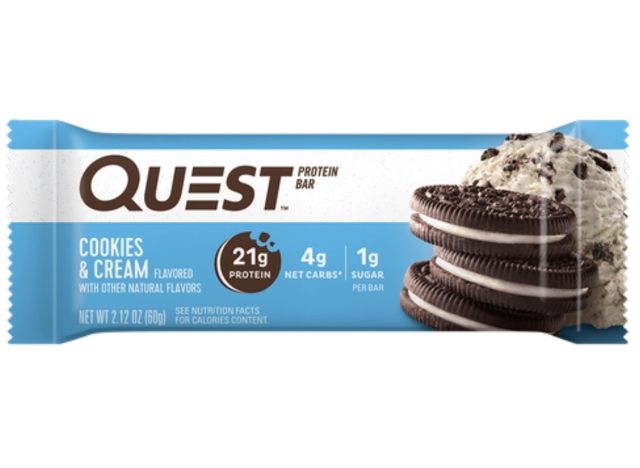
Calories: 190
Fat: 8 g (Saturated Fat: 2.5 g)
Sodium: 290 mg
Carbs: 22 g (Fiber: 13 g, Sugar: 0 g)
Protein: 21 g
The Quest Nutrition Cookies & Cream protein bar contains a whopping 13 grams of fiber. Consuming large quantities of fiber—like 13 grams in one sitting—is a lot and can cause digestive issues like abdominal cramping or bloating. So, while this protein bar may seem like a good way to meet fiber recommendations, it may also cause stomach issues. Instead, stick with naturally fiber-rich foods like fruits, vegetables, and legumes.
Go Macro Coconut + Almond Butter + Chocolate Chip Bar
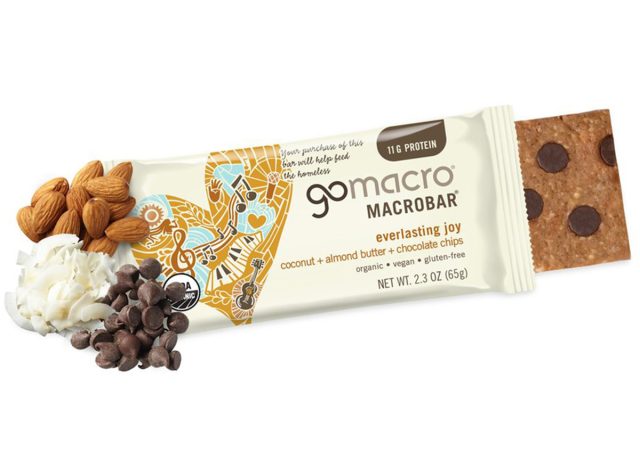
Calories: 280
Fat: 10 g (Saturated Fat: 3.5 g)
Sodium: 15 mg
Carbs: 36 g (Fiber: 3 g, Sugar: 11 g)
Protein: 11 g
Go Macro bars are often touted as healthier protein bar options due to their “clean” and simple ingredients. However, despite the short ingredient list of recognizable items, the Go Macro Coconut, Almond Butter, and Chocolate Chip protein bar is high in sugar. The U.S. Dietary Guidelines for Americans recommend keeping added sugar below 10% of total daily intake. With 11 grams of added sugar per serving, this protein bar is a significant source of added sugar at 22% of the daily value.
Perfect Bar Almond Butter
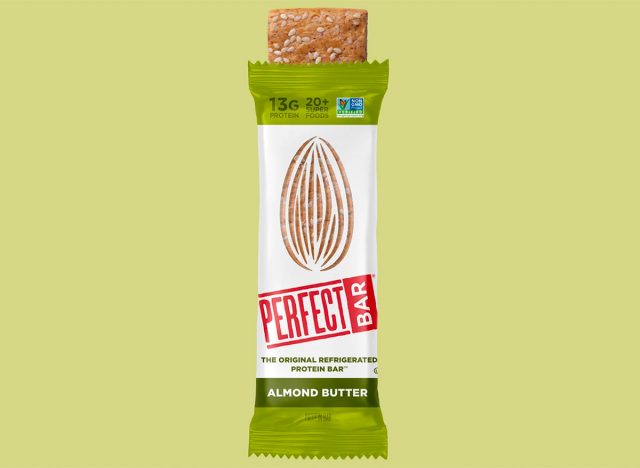
Calories: 320
Fat: 19 g (Saturated Fat: 1.5 g)
Sodium: 45 mg
Carbs: 25 g (Fiber: 4 g, Sugar: 18 g [Added Sugar: 12 g])
Protein: 13 g
The Almond Butter Perfect Bar offers a balanced mix of nutrients, with 19 grams of fat, 25 grams of carbohydrates, and 13 grams of protein. Despite its higher sugar content of 18 grams, the bar has a low glycemic index, meaning its healthy fats and protein help prevent the blood sugar spikes typically seen with other high-sugar bars. However, honey is the second ingredient, contributing to the bar’s 12 grams of added sugar. Though often marketed as a natural sweetener, honey is still considered an added sugar and should be limited, especially given other daily sources of sugar.
We recommend this bar for those needing glucose for workouts; for a lower-sugar option, consider Perfect Bar’s Snack Size, which has just 10 grams of sugar per serving.
The post 10 Protein Bars That Are Actually Unhealthy appeared first on Eat This Not That.
]]>The post Do You Know How Much Sugar Is In Your Cocktail? 10 Shockingly Sweet Alcoholic Drinks appeared first on Eat This Not That.
]]>Many popular cocktails contain significant amounts of added sugars, with some reaching 30 to 40 grams per serving—60 to 80% of the recommended daily sugar limit. The U.S. Dietary Guidelines recommends keeping added sugar to less than 10% of your daily intake. On a 2,000-calorie diet, this amounts to 200 calories or 50 grams of sugar. While sugar enhances the flavor of cocktails and masks the alcohol, it also contributes empty calories, which can lead to weight gain and a greater risk of other chronic health conditions like type 2 diabetes and heart disease.
We’ve rounded up some of the sugariest cocktails and offer alternatives so you can continue enjoying these alcoholic beverages without all the sugar. Read on, and for more, don’t miss 10 Best Low-Sugar Wines That Won’t Derail Your Diet.
Piña Colada
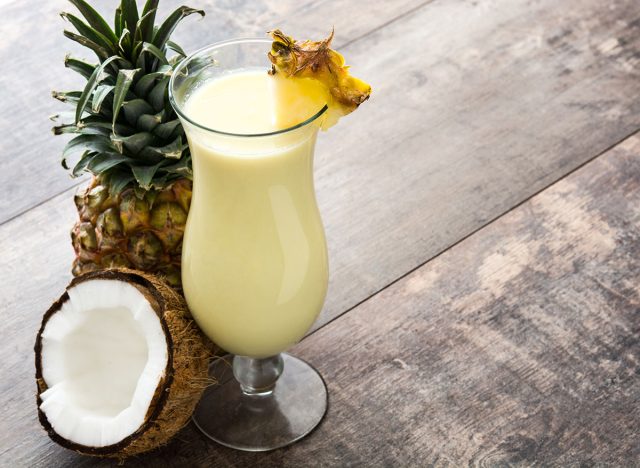
Piña coladas are popular tropical cocktails made with rum, coconut cream, and pineapple juice. Piña coladas are one of the sugariest cocktails: An 8-ounce piña colada can contain 40 grams of sugar, most from coconut cream and pineapple juice.
Drink this instead: For a lower-sugar alternative, use coconut water or light coconut milk instead of coconut cream and reduce the amount of pineapple juice.
RELATED: The 6 ‘Healthiest’ Types of Alcohol to Drink, According to Dietitians
Margarita
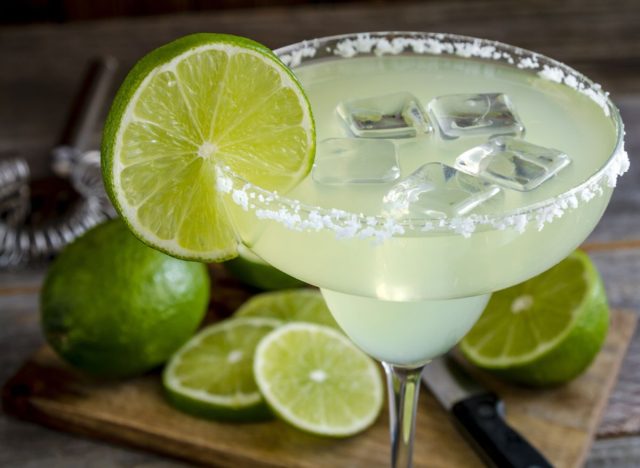
A classic margarita is made with tequila, lime juice, and orange liqueur (usually triple sec). The sugar content of a margarita varies, but on average, the classic cocktail contains 36 grams of sugar. Instead of using fresh lime juice and triple sec, some margaritas are prepared with a premade mix, often high in sugar. Premade margarita mixes can have nearly 7 grams of sugar per ounce.
Drink this instead: For a low-sugar alternative to a margarita, make a Ranchwater cocktail, usually tequila with soda water and a splash of lime juice.
Mai Tai

A type of rum punch, the mai tai combines rum, lime juice, orange curaçao, and almond syrup (orgeat). Some mai tais include additional fruit juices and syrups, boosting the sugar content. Even without the additional fruit juices and syrups, the mai tai is a sweet cocktail with 32 grams of sugar per drink. Most of the sugar in mai tais comes from the orgeat, a syrup of almonds, sugar, water, brandy, and orange flower water. Orange curaçao, an orange-based liqueur similar to triple sec, contributes more sugar to this already sweet tropical cocktail.
Drink this instead: Use unsweetened almond milk instead of orgeat and skip the orange curaçao, swapping it for a splash of orange juice.
RELATED: 10 Best & Worst Types Of Alcohol For Weight Loss
Daiquiri

Strawberry daiquiris are a fun variation of the classic daiquiri, blending rum, fresh lime juice, and strawberries. Although the exact sugar content of a strawberry daiquiri varies depending on the ingredients, most contain at least 30 grams of sugar. Daiquiris can be high in sugar from the sweetened strawberry purees or syrups used for flavoring. Strawberry daiquiri mixes can be a significant source of sugar, with some containing 34 grams per 4-ounce serving.
Drink this instead: Opt for a rum and soda water with mudded fresh strawberries and a splash of lime juice.
White Russian

A White Russian is a creamy, rich drink made with vodka, coffee liqueur, and heavy cream or milk. With 21.5 grams of sugar per 8-ounce drink, a White Russian is more like a dessert than a cocktail. Most of the sugar in a White Russian comes from the coffee liqueur, which can have 11 to 16 grams per ounce, depending on its alcohol proof.
Drink this instead: Mix coffee with vodka and low-fat cow or almond milk for a low-sugar alternative.
RELATED: What Happens to Your Body When You Give Up Alcohol
Long Island Iced Tea

The Long Island iced tea is a boozy cocktail made with vodka, rum, tequila, gin, triple sec, lemon juice, and a splash of cola. Despite its high alcohol content, the Long Island iced tea is a sugary drink with 19 grams of sugar per 8-ounce beverage, most of which comes from the triple sec and cola. Some Long Island iced teas may even be sweeter: It is not uncommon for this potent cocktail to contain simple syrup.
Drink this instead: If you’re looking for a boozy cocktail without the sugar, skip the triple sec and simple syrup and use diet cola.
Cosmopolitan
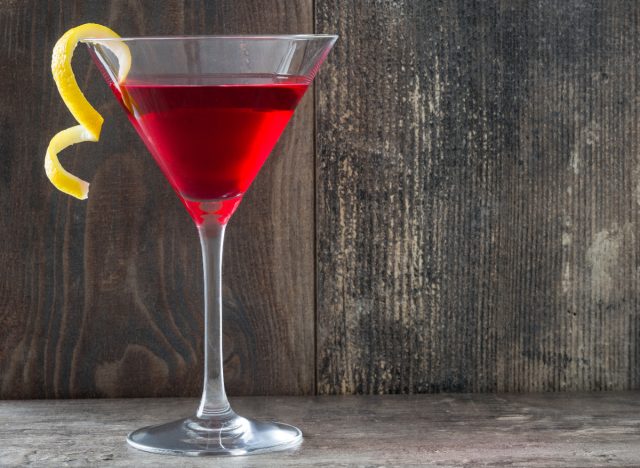
Popularized by the television show “Sex and the City,” a Cosmopolitan is a tangy, slightly sweet cocktail made with vodka, triple sec (orange liqueur), cranberry juice, and fresh lime juice. An 8.25-ounce Cosmopolitan has 19 grams of sugar, mostly from triple sec. One ounce of triple sec boasts 19 grams of sugar.
Drink this instead: Order a vodka soda with lime and a splash of cranberry juice with 4 grams of sugar for a low-sugar option.
RELATED: 7 Ways to Lose Weight Without Giving Up Alcohol
Appletini

Apple martinis, or appletinis, are cocktails made with vodka, apple schnapps, and a splash of lemon juice. An 8-ounce appletini has about 18 grams of sugar. The apple schnapps provides an apple flavor and makes the appletini sweeter than a typical martini. Most of the sugar in an appletini is from the apple schnapps, a sweet liqueur made from fermented and distilled apples.
Drink this instead: Swap the appletini for a regular, dry martini, which is nearly sugar-free.
Sangria

An 8-ounce glass of red wine sangria contains 16 grams or more of sugar. Sangria ingredients vary depending on where you get the sangria. Some sangrias include fruit juice and an alcohol flavoring, while others add another alcoholic spirit and sweetener. Ask about sangria ingredients before ordering if you’re watching your sugar intake.
Drink this instead: Plain red wine or a red wine spritzer.
Mojito
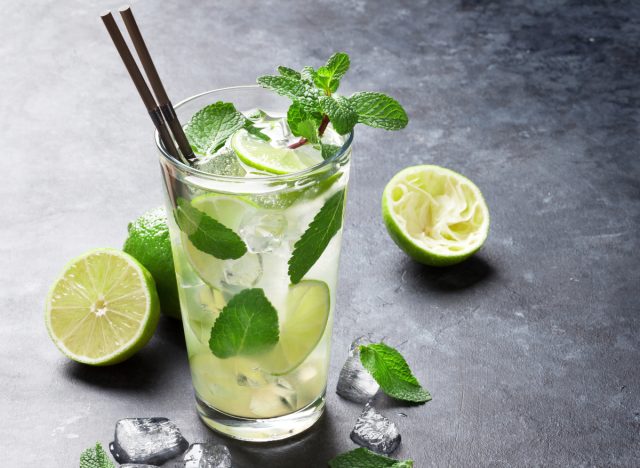
Mojitos are refreshing cocktails made with rum, fresh lime juice, mint leaves, sugar, and soda water. Despite its simple ingredients, a traditional mojito contains around 2 teaspoons of sugar per serving, providing 8 grams of sugar, making it a relatively sweet drink. Some recipes use simple syrup from water and sugar to sweeten the mojito.
Drink this instead: Try rum and soda water with mint and a splash of lime—all the components of a mojito but without the sugar.
The post Do You Know How Much Sugar Is In Your Cocktail? 10 Shockingly Sweet Alcoholic Drinks appeared first on Eat This Not That.
]]>The post 25 Saltiest Chicken Sandwiches in America—Ranked appeared first on Eat This Not That.
]]>Restaurant food is notoriously higher in sodium than items you’d prepare at home, and chicken sandwiches are no exception. What’s surprising is that chicken itself can be a sneaky source—often injected with sodium to enhance flavor. A 3.5-ounce serving of chicken breast can have 200 milligrams of sodium. Add sandwich toppings like pickles and mayonnaise, and the sodium content creeps up even more.
Eating too many high-sodium foods, like fast food, can raise blood pressure and increase the risk of heart disease. In fact, a meta-analysis of more than 600,000 people found a 6% increase in heart disease risk for every 1-gram increase in dietary sodium. While the U.S. Dietary Guidelines suggest a daily sodium limit of 2,300 milligrams per day, the American Heart Association (AHA) encourages keeping sodium at less than 1,500 milligrams daily, especially those with heart complications. The AHA also notes that reducing sodium by 1,000 milligrams can significantly improve blood pressure and heart health.
We’ve rounded up the saltiest chicken sandwiches at popular fast-food and fast-casual restaurants and ranked them from the least sodium to the most. Read on to discover the saltiest chicken sandwich in America, and for more, don’t miss 26 Popular Store-Bought Bacons—Ranked by Sodium.
McDonald’s McChicken Sandwich
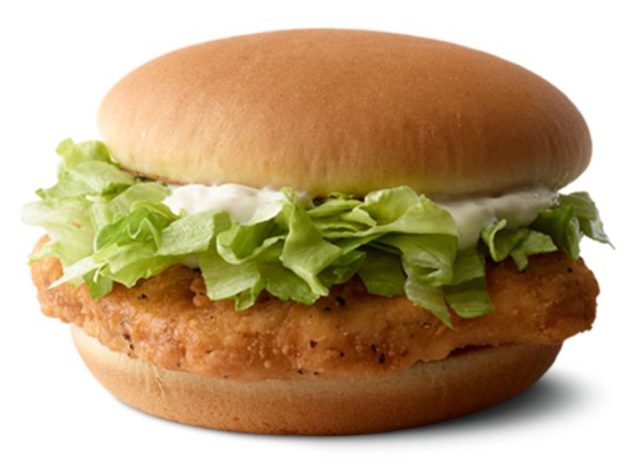
Calories: 400
Fat: 21 g (Saturated Fat: 3.5 g)
Sodium: 560 mg
Carbs: 39 g (Fiber: 1 g, Sugar: 5 g)
Protein: 14 g
McDonald’s classic McChicken sandwich is a low-sodium chicken sandwich alternative. The sandwich is simple: a patty with lettuce, mayonnaise, and a bun, providing just 560 milligrams of sodium. Condiments like mayonnaise, honey mustard, and spicy sauce, among others, can be packed with sodium, making it harder to keep a meal low-salt. Omitting extra sauces—even ketchup and mustard—and pickles keeps the sodium content low with this sandwich. One thing to note: The McChicken is a chicken patty, not a filet, likely influencing the sandwich’s sodium content.
RELATED: The #1 Unhealthiest Chicken Sandwich at 11 Major Restaurant Chains
Dairy Queen Original Chicken Strip Sandwich
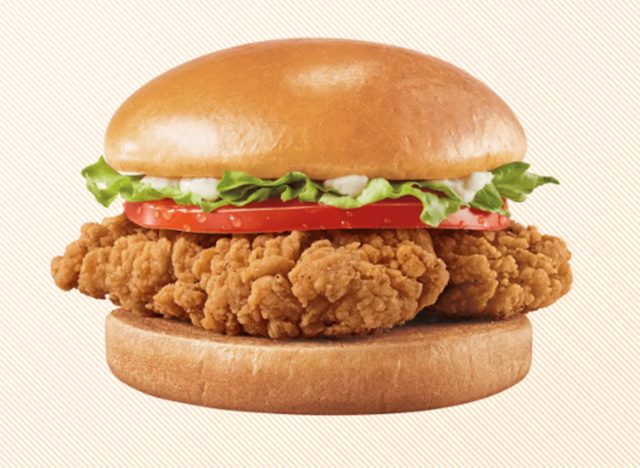
Calories: 550
Fat: 26 g (Saturated Fat: 4.5 g)
Sodium: 990 mg
Carbs: 62 g (Fiber: 3 g, Sugar: 6 g)
Protein: 18 g
Instead of a patty or filet, the Original Chicken Strip Sandwich at Dairy Queen puts two chicken strips between a bun for a crunchy chicken sandwich. The two chicken strips provide a greater surface area for seasoning and breading. Leave off sauces to help keep the sodium content below 1,000 milligrams.
Culver’s Grilled Chicken Sandwich
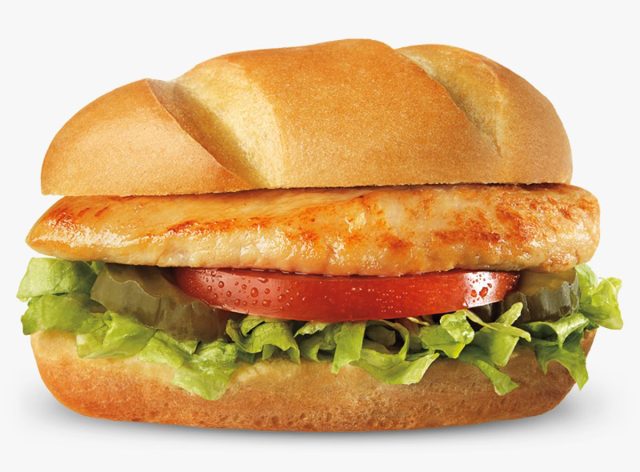
Calories: 390
Fat: 8 g (Saturated Fat: 2 g)
Sodium: 1070 mg
Carbs: 40 g (Fiber: 1 g, Sugar: 6 g)
Protein: 41 g
Even a grilled chicken sandwich can be high in sodium. Culver’s Grilled Chicken Sandwich keeps it simple with lettuce, tomato, pickles, grilled chicken, and a hoagie roll but still has 1,070 milligrams of sodium. Chicken, seasoning, and pickles contribute to sodium. Although this sandwich is low on our list of saltiest chicken sandwiches, it is still not a low-sodium option.
McDonald’s McCrispy Sandwich
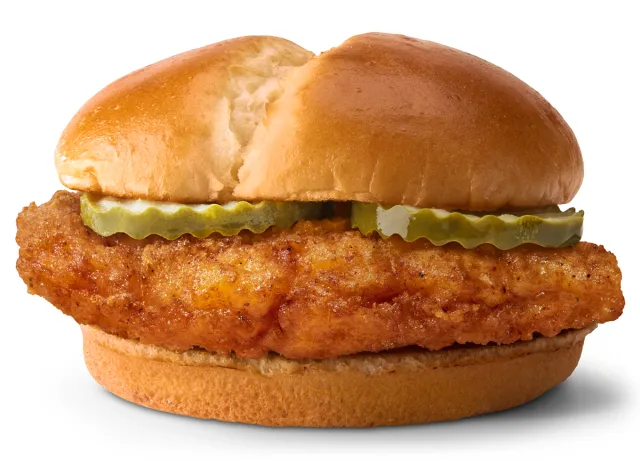
Calories: 470
Fat: 20 g (Saturated Fat: g)
Sodium: 1,140 mg
Carbs: 46 g (Fiber: 1 g, Sugar: 7 g)
Protein: 26 g
Different from the McChicken sandwich, the McDonald’s McCrispy sandwich uses a crispy chicken filet. Despite its lack of condiments, the McCrispy has salted butter, which adds significant sodium to this sandwich. If you’re looking for a chicken sandwich at McDonald’s, go for the McChicken, which has just 560 milligrams of sodium.
Shake Shack Chicken Shack
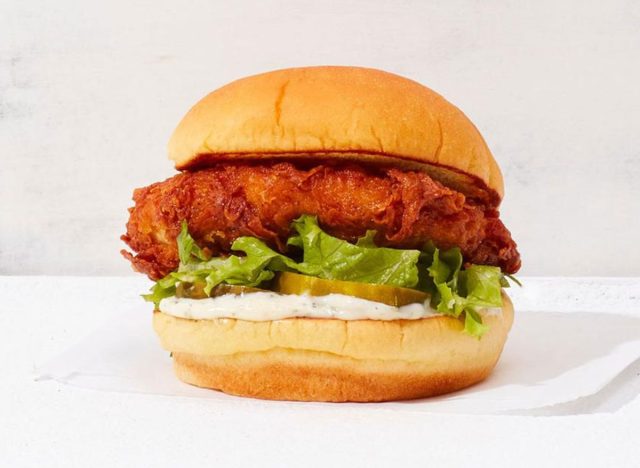
Calories: 550
Fat: 31 g (Saturated Fat: 7 g)
Sodium: 1,170 mg
Carbs: 34 g (Fiber: 0 g, Sugar: 6 g)
Protein: 33 g
The Chicken Shack at Shake Shack comes with pickles, a buttermilk herb mayo, and lettuce on a potato bun. The Chicken Shack still has 1,170 milligrams of sodium despite its simple ingredients. Even with few ingredients, sodium content can add up. One potato bun contains 290 milligrams of sodium, and each pickle slice has roughly 55 milligrams of sodium.
RELATED: The Best Chicken Sandwich in Every State
Buffalo Wild Wings Classic Chicken Sandwich
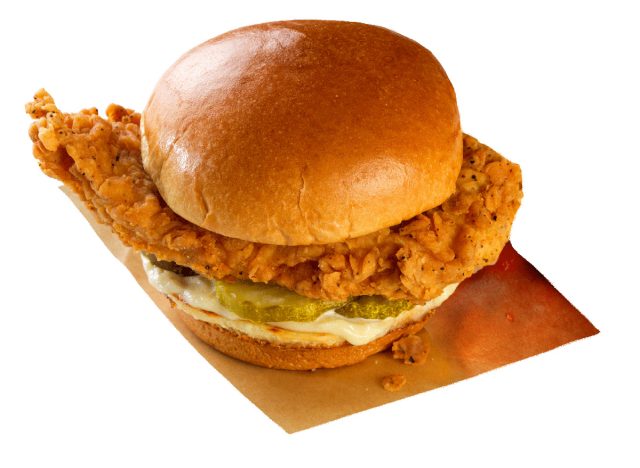
Calories: 620
Fat: 32 g (Saturated Fat: 10 g)
Sodium: 1,220 mg
Carbs: 54 g (Fiber: 3 g, Sugar: 5 g)
Protein: 30 g
Despite its simplicity, the Classic Chicken Sandwich at Buffalo Wild Wings still contains 1,220 milligrams of sodium, more than half the daily recommendation. The 1,220 milligrams of sodium does not include fries, which come with the sandwich order. Still, the classic chicken sandwich is the better chicken sandwich option at Buffalo Wild Wings. It is lower in fat, carbohydrates, and sodium but with the same amount of protein as other sandwiches.
RELATED: 12 Low-Calorie Fast Food Orders That Are High in Protein
KFC Classic Chicken Sandwich
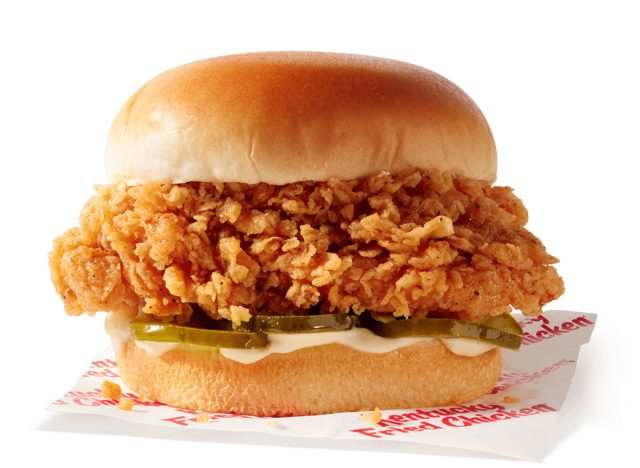
Calories: 650
Fat: 33 g (Saturated Fat: 4.5 g)
Sodium: 1,260 mg
Carbs: 49 g (Fiber: 1 g, Sugar: 6 g)
Protein: 34 g
There are plenty of chicken options at KFC, but the Classic Chicken Sandwich is the best option if you’re monitoring sodium intake. With 1,260 milligrams, the KFC Classic Chicken Sandwich has moderate salt compared to other chicken sandwiches. Keep sodium lower by sticking with the classic sandwich and toppings. Trying to cut sodium even more? Go with the Chicken Littles sandwich, which has half the sodium as the classic.
Burger King Royal Crispy Chicken
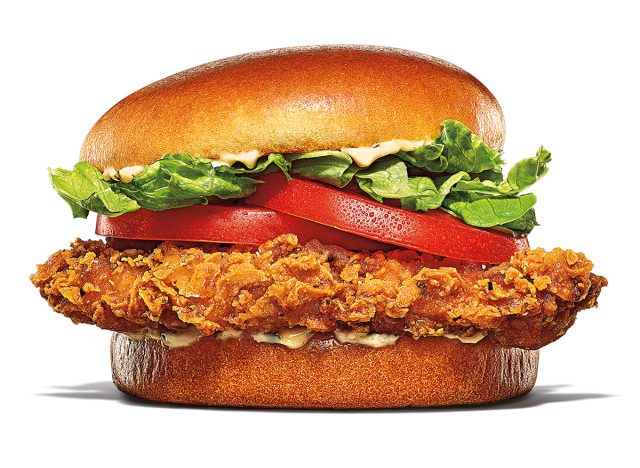
Calories: 600
Fat: 33 g (Saturated Fat: 5 g)
Sodium: 1,330 mg
Carbs: 54 g (Fiber: 4 g, Sugar: 9.5 g)
Protein: 31 g
The Burger King Royal Crispy Chicken sandwich has 1,330 milligrams of sodium from sauces, chicken, and bread. To reduce sodium, switch to a wrap instead of the sandwich, as bread can be a sneaky source of added salt. The BK Royal Crispy Chicken Wrap has just 790 milligrams of sodium—a little more than half of what’s in the sandwich.
Carl’s Jr. Charbroiled BBQ Chicken Sandwich
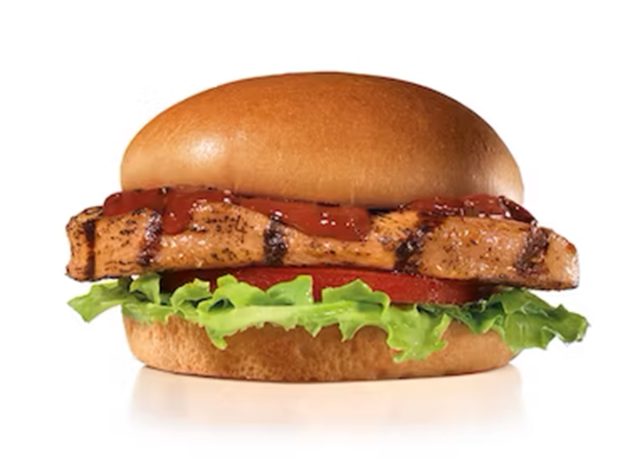
Calories: 400
Fat: 40 g (Saturated Fat: 5 g)
Sodium: 1,330 mg
Carbs: 57 g (Fiber: 3 g, Sugar: 13 g)
Protein: 33 g
Although not fried, Carl’s Jr. Charbroiled BBQ Chicken Sandwich still has 1,300 milligrams of sodium, more than half the recommended 2,300 milligrams. Besides the sodium content, this sandwich also contains 13 grams of sugar—26% of the recommended daily added sugar. Barbeque sauce is a sneaky source of added sugars. The U.S. Dietary Guidelines recommend limiting added sugar to 10% of total daily calories to reduce the risk of type 2 diabetes and other health conditions.
Texas Roadhouse Mushroom Jack Chicken Sandwich
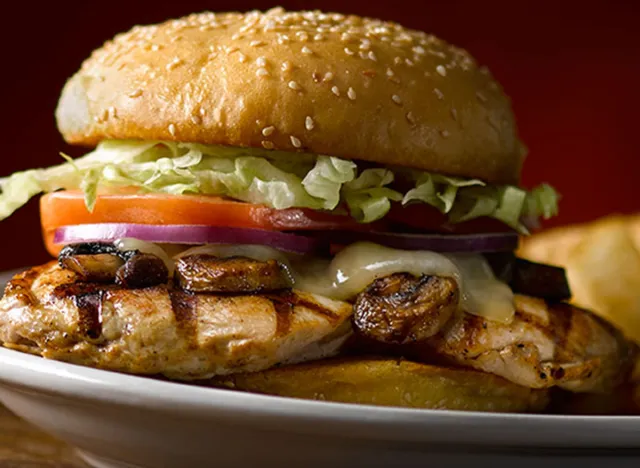
Calories: 710
Fat: 30 g (Saturated Fat: 11 g)
Sodium: 1,410 mg
Carbs: 48 g (Fiber: 6 g, Sugar: 11 g)
Protein: 63 g
The Texas Roadhouse Mushroom Jack Chicken Sandwich loads up on vegetables to help balance its 1,410-milligram sodium content. Each sandwich comes with mushrooms, tomatoes, lettuce, and onions. Instead of fried chicken, this sandwich uses grilled chicken. Customize the sandwich to change the sodium: Skipping the margarine reduces the sodium by 100 milligrams.
Jack in the Box Sourdough Grilled Chicken Club
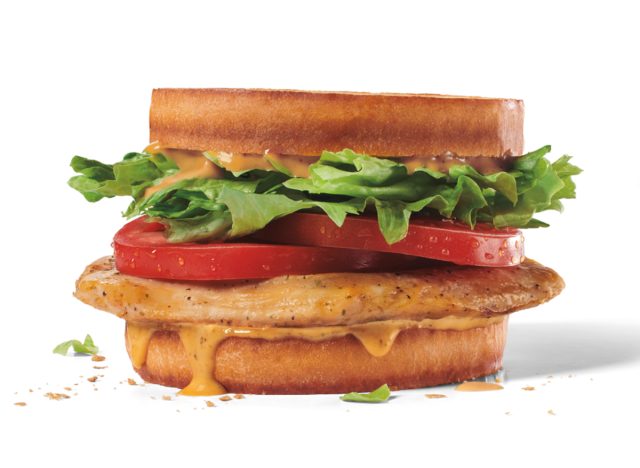
Calories: 500
Fat: 23 g (Saturated Fat: 4.5 g)
Sodium: 1,440 mg
Carbs: 40 g (Fiber: 3 g, Sugar: 7 g)
Protein: 33 g
Jack in the Box’s Sourdough Grilled Chicken Club packs 1,440 milligrams of sodium per sandwich. Just because the chicken is grilled instead of fried does not mean the sandwich will be healthier. Other sandwich components, like the bread, butter, and Good Good sauce, still contain salt, which all adds up. The sourdough bread also contributes to the sodium content. Two slices of sourdough bread can contain 280 milligrams of sodium.
RELATED: The Best & Worst Menu Items at Jack in the Box, According to a Nutritionist
Popeyes Classic Chicken Sandwich
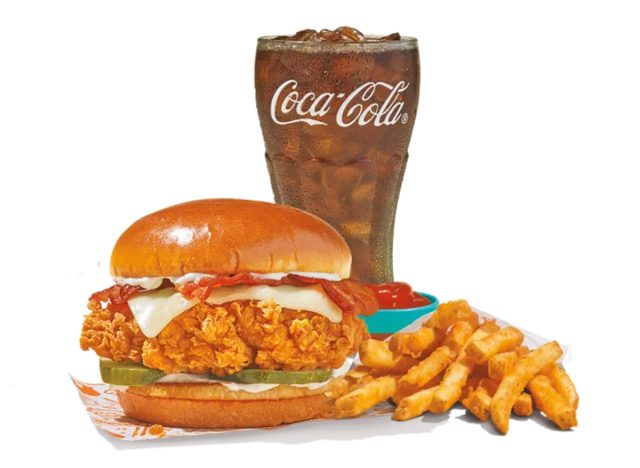
Calories: 700
Fat: 42 g (Saturated Fat: 14 g)
Sodium: 1,440 mg
Carbs: 50 g (Fiber: 2 g, Sugar: 8 g)
Protein: 28 g
The Classic Chicken Sandwich from Popeyes contains 1,440 milligrams of sodium. The chicken is marinated in seasoning before frying. Seasoning mixes impart flavor to the meat but also contribute a significant amount of sodium. Popeye’s gives you the option of adding bacon and cheese. Consider skipping the cheese and bacon unless you want to add more sodium to the sandwich.
Wendy’s Classic Chicken Sandwich
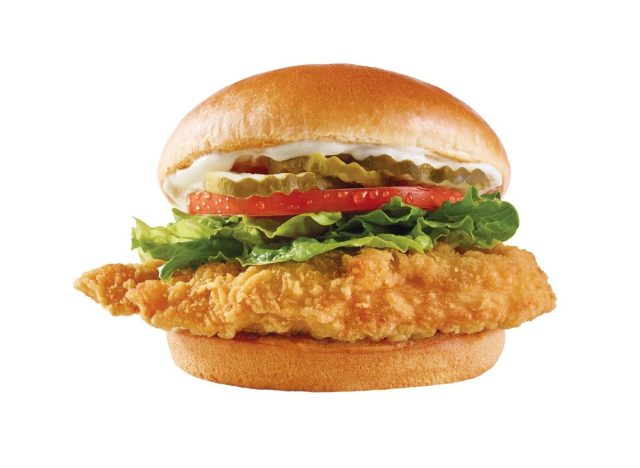
Calories: 490
Fat: 21 g (Saturated Fat: 3.5 g)
Sodium: 1,450 mg
Carbs: 49 g (Fiber: 2 g, Sugar: 5 g)
Protein: 28 g
The Classic Chicken Sandwich at Wendy’s is served with lettuce, tomatoes, pickles, and mayonnaise on a toasted bun. Although the classic chicken sandwich may not seem bad compared to other sandwiches on the list, it still has 1,450 milligrams of sodium—a significant amount for anyone, but particularly for individuals monitoring salt intake.
Sonic Crispy Chicken Sandwich
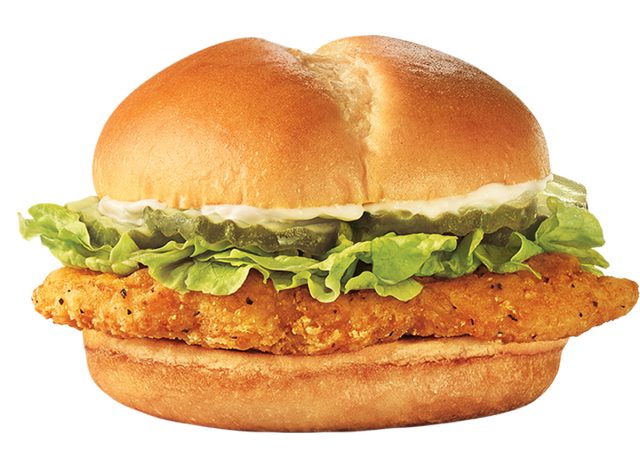
Calories: 520
Fat: 24 g (Saturated Fat: 4.5 g)
Sodium: 1,470 mg
Carbs: 52 g (Fiber: 4 g, Sugar: 10 g)
Protein: 24 g
Keeping the sodium content of foods low is challenging. Although the Sonic Crispy Chicken Sandwich only includes a crispy chicken filet, chopped lettuce, brioche bun, and mayonnaise, it still has 1,470 milligrams of sodium. For frying, chicken is often coated in a flour and spice mixture to seal in moisture. Then, the chicken is coated with another layer of seasoning for crunch and more flavor. Salt is used at each seasoning phase, ultimately increasing the sodium content of the sandwich.
Chick-Fil-A Deluxe Sandwich with American Cheese
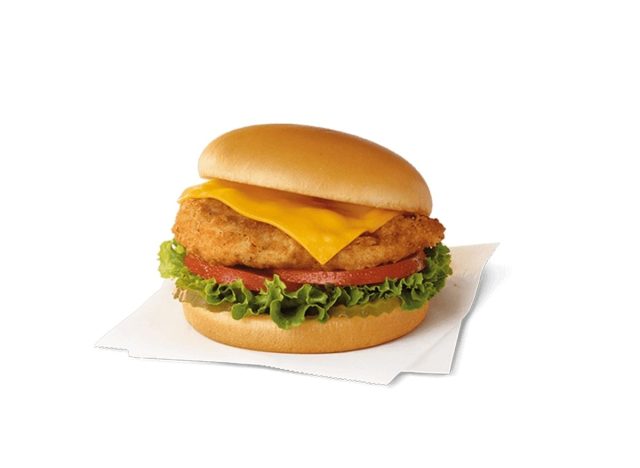
Calories: 490
Fat: 22 g (Saturated Fat: 6 g)
Sodium: 1,700 mg
Carbs: 43 g (Fiber: 1 g, Sugar: 7 g)
Protein: 32 g
Chick-Fil-A’s deluxe sandwich with American cheese has 1,700 milligrams of sodium. Save 230 milligrams of sodium by skipping the American cheese and going for the regular chicken sandwich. Choosing a different cheese doesn’t cut the sodium by much, so if you’re looking for a lower-salt option, consider ditching the cheese entirely.
Bojangles Bo’s Chicken Sandwich
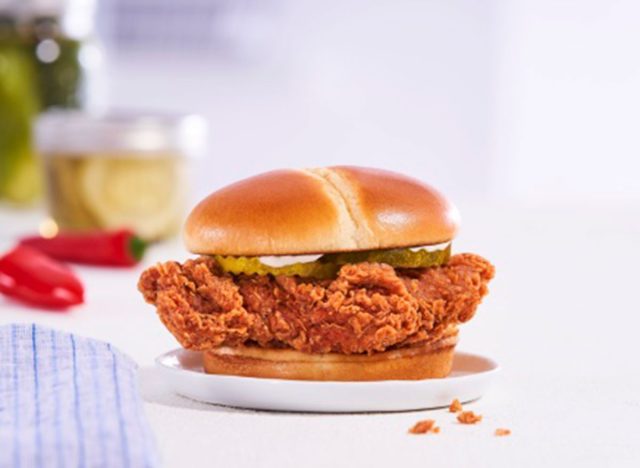
Calories: 670
Fat: 36 g (Saturated Fat: 8 g)
Sodium: 1,730 mg
Carbs: 95 g (Fiber: 0 g, Sugar: 8 g)
Protein: 31 g
The Bo’s Chicken Sandwich at Bojangles has a similar sodium profile as other chicken sandwiches on this list. However, it contains considerably more carbohydrates than similarly sized sandwiches. Although carbohydrates are necessary for energy and health, eating too many refined carbohydrates—from white bread or flour—can contribute to health conditions down the line.
RELATED: The 14 Best & Worst Menu Items at Bojangles
Smashburger’s Truffle Mushroom Swiss Crispy Chicken Sandwich
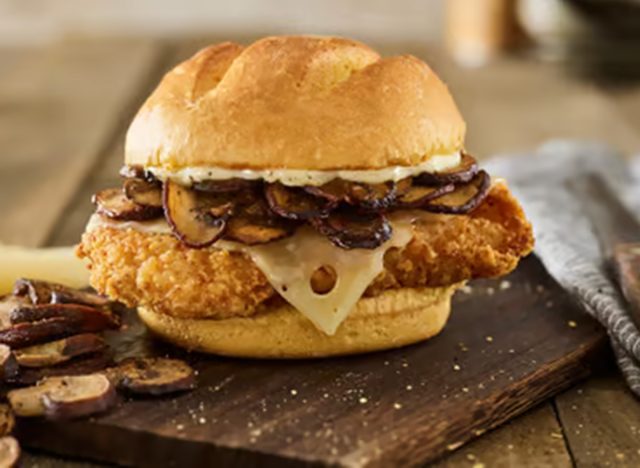
Calories: 780
Fat: 42 g (Saturated Fat: 15 g)
Sodium: 1,790 mg
Carbs: 55 g (Fiber: 3 g, Sugar: 2 g)
Protein: 43 g
Smashburger’s Truffle Mushroom Swiss Crispy Chicken Sandwich contains 1,790 milligrams of sodium. It uses Swiss, a lower-sodium cheese, and trades typical sandwich toppings like lettuce, tomatoes, and pickles for mushrooms. Ask for the chicken grilled instead of fried to reduce the sodium content to 1,190 milligrams.
Chick-Fil-A’s Honey Pepper Pimento Sandwich with Spicy Filet
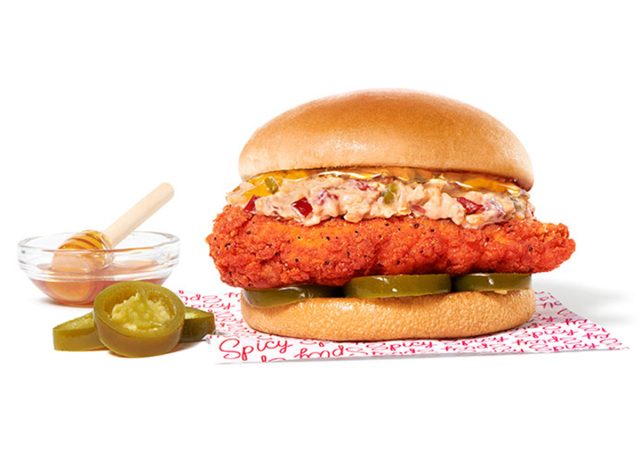
Calories: 620
Fat: 31 g (Saturated Fat: 9 g)
Sodium: 1,950 mg
Carbs: 56 g (Fiber: 2 g, Sugar: 16 g)
Protein: 33 g
Chick-Fil-A’s honey pepper pimento sandwich with spicy filet has 1,950 milligrams of sodium, nearly 85% of the 2,300-milligram sodium limit recommended by the U.S. Dietary Guidelines. This chicken sandwich also has 16 grams of sugar—more than 30% of the 50-gram added sugar limit set by the U.S. Dietary Guidelines. Eating a diet high in added sugars can increase your risk of developing type 2 diabetes.
Arby’s Buffalo Chicken Sandwich
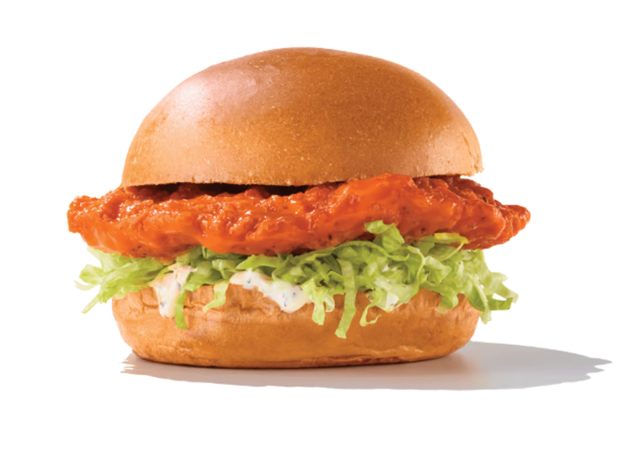
Calories: 531
Fat: 22 g (Saturated Fat: 5 g)
Sodium: 2,095 mg
Carbs: 59 g (Fiber: 4 g, Sugar: 12 g)
Protein: 24 g
Arby’s Buffalo Chicken Sandwich is loaded with sodium, containing 2,095 milligrams per sandwich. Some of the sandwich’s sodium likely comes from the sauces. Salt is one of the main ingredients in Buffalo sauce, with some sauces containing nearly 1,000 mg per two-tablespoon serving. The Parmesan peppercorn ranch also contributes a significant amount of sodium; Parmesan is known to be a saltier cheese.
Buffalo Wild Wings Nashville Hot Chicken Sandwich
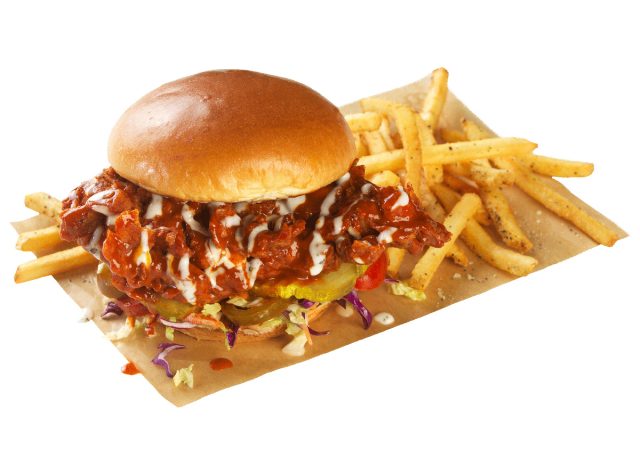
Calories: 810
Fat: 47 g (Saturated Fat: 14 g)
Sodium: 2,690 mg
Carbs: 67 g (Fiber: 4 g, Sugar: 13 g)
Protein: 31 g
The Nashville Hot Chicken Sandwich at Buffalo Wild Wings boasts 2,690 milligrams of sodium—nearly 17% more than recommended. Despite its greater vegetable content from slaw, pickled peppers, and pickles, this sandwich is still the highest sodium chicken sandwich option at Buffalo Wild Wings. The hot sauce and ranch contribute to the high salt content, as do the pickles and pickled hot peppers. If you’re looking for a chicken sandwich at Buffalo Wild Wings, opt for the classic instead, which has half of the sodium as the hot chicken.
Zaxbys Signature Club with Spicy Zax Sauce
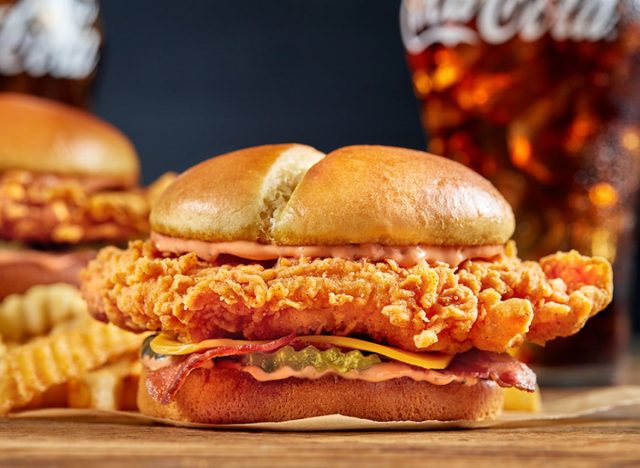
Calories: 710
Fat: 40 g (Saturated Fat: 9 g)
Sodium: 2,740 mg
Carbs: 46 g (Fiber: 2 g, Sugar: 8 g)
Protein: 39 g
Zaxbys’ Signature Club with Spicy Zax Sauce has 2,740 mg of sodium, exceeding the recommended limit of 2,300 milligrams. Eating significant amounts of salt raises blood pressure and increases the risk of heart disease and stroke. On average, Americans eat more than 3,400 milligrams of sodium daily—much more than what’s recommended. Sauces and condiments like pickles add even more salt to an already-salty dish. When you have the option, opt for a sandwich without sauce or get the sauce on the side to control it.
Carl’s Jr. Hand-Breaded Bacon Swiss Chicken Sandwich
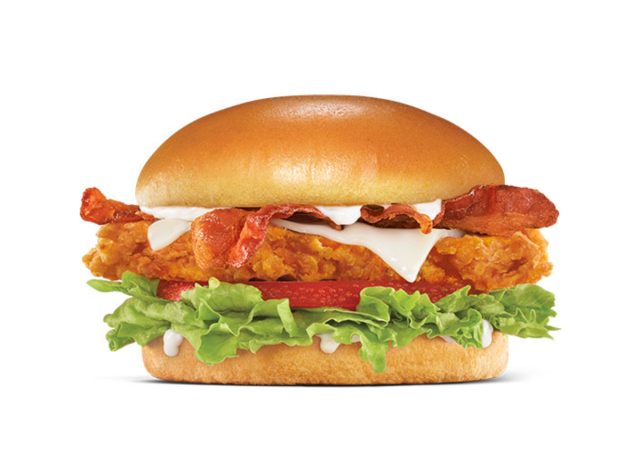
Calories: 780
Fat: 42 g (Saturated Fat: 10 g)
Sodium: 3,100 mg
Carbs: 61 g (Fiber: 2 g, Sugar: 8 g)
Protein: 41 g
Even with Swiss cheese instead of American cheese, the Carl’s Jr. Hand-Breaded Bacon Swiss Chicken Sandwich still has 3,100 milligrams of sodium. Swiss cheese is lower in sodium, with almost 48 milligrams per slice compared to the 256 milligrams in a slice of American cheese. Still, this sandwich contains about as much sodium as Americans consume on average daily, but it comes from one meal instead of multiple ones.
Ruby Tuesday Ultimate Crispy Chicken Sandwich
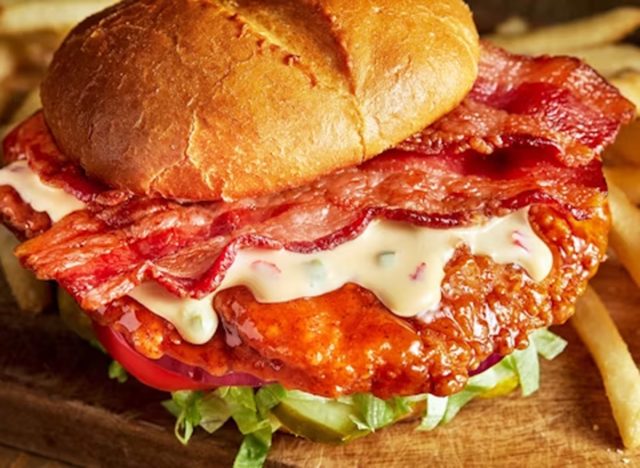
Calories: 1,070
Fat: 51 g (Saturated Fat: 13 g)
Sodium: 3,180 mg
Carbs: 98 g (Fiber: 3 g, Sugar: 33 g)
Protein: 45 g
The Ultimate Crispy Chicken Sandwich from Ruby Tuesday has 3,180 milligrams of salt in one sandwich. Unlike some other sandwiches on the list, this one is also high in sugar, contributing 66% of the recommended added sugar. While the honey mustard and honey garlic sauces add flavor, they also up the sugar and salt content. If you want to improve this sandwich’s nutrition profile, ask for it without the sauces. Or, get the sauces on the side to control how much goes on the sandwich.
The Cheesecake Factory’s Chicken Parmesan Sandwich
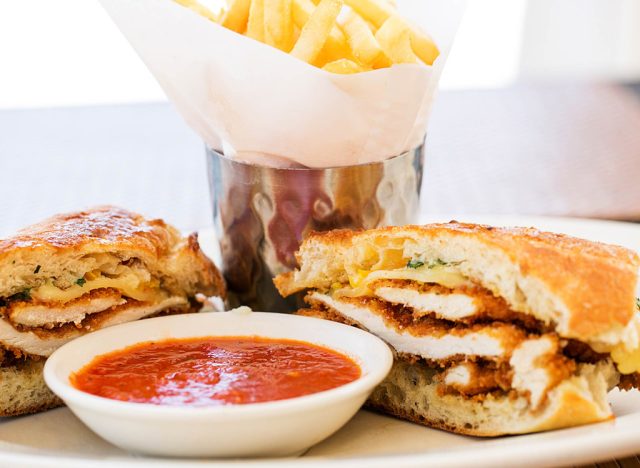
Calories: 1,830
Fat: 120 g (Saturated Fat: 62 g)
Sodium: 3,600 mg
Carbs: 100 g (Fiber: 5 g, Sugar: 7 g)
Protein: 87 g
The Chicken Parmesan Sandwich at the Cheesecake Factory contains 3,600 milligrams of sodium and is high in fat, protein, and calories. This sandwich is enormous: One sandwich contains 62 grams of saturated fat, nearly three times the recommended 22 grams. The Centers for Disease Control and Prevention recommends keeping saturated fat below 10% of total calories to reduce the risk of heart disease. The American Heart Association encourages people to keep saturated fat at less than 13 grams daily.
The Saltiest Chicken Sandwich Is… Chili’s Buffalo Chicken Ranch Sandwich
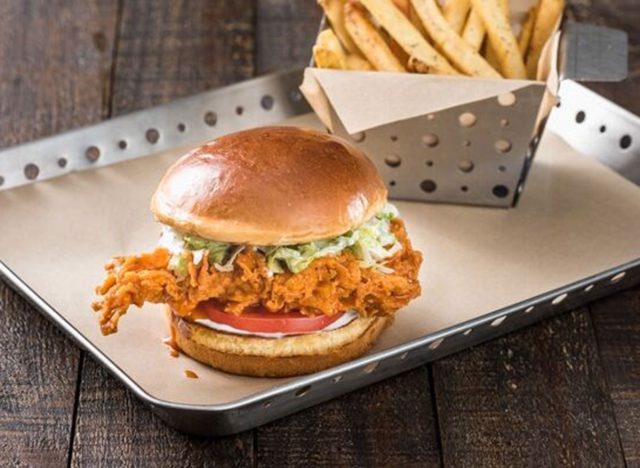
Calories: 980
Fat: 51 g (Saturated Fat: 9 g)
Sodium: 4,290 mg
Carbs: 84 g (Fiber: 6 g, Sugar: 13 g)
Protein: 46 g
Last on the list, with the highest sodium content, is the Buffalo Chicken Ranch Sandwich from Chili’s. With a whopping 4,290 milligrams of sodium, this sandwich is best avoided if you monitor your salt intake.
The post 25 Saltiest Chicken Sandwiches in America—Ranked appeared first on Eat This Not That.
]]>The post 7 Best Low-Carb Alcoholic Drinks to Order at the Bar appeared first on Eat This Not That.
]]>Low-carb alcoholic drinks offer a solution by striking a balance between abstaining and indulging. By omitting sugary flavorings, mixes, and juices, these drinks allow you to enjoy a lower-carb and often lower-calorie option.
Even with low-carb alcoholic drinks, it’s important to monitor alcohol intake. Alcohol provides calories without nutritional value and can affect your health goals. It lowers inhibition and impairs your ability to sense hunger and fullness, leading to increased cravings and appetite.
In this article, we’ll define low-carb alcoholic drinks and suggest what to order at the bar.
What Are Low-Carb Alcoholic Drinks?
Alcohol is naturally carb-free. Liquors like rum, vodka, whiskey, tequila, and gin have zero carbohydrates.
But just because alcohol is low-carb doesn’t mean cocktails are also low-carb. Flavorings, juices, syrups, tonics, and other ingredients used to make cocktails contribute sugars and carbohydrates. Regular cocktails like a margarita can have upwards of 36 grams of carbohydrates per drink, pushing it into high-carb territory.
Low-carb alcoholic drinks skip the juices, syrups, tonics, and other flavorings. Instead, the alcohol is consumed neat, on the rocks, or with sparkling water. Sometimes, a wedge of citrus or a splash of juice is added for flavor.
Already-made drinks like canned cocktails or beer can be produced low-carb. Changes in fermentation and processing methods create a low-carb beverage that retains some of the taste and mouthfeel of traditional drinks.
RELATED: 9 Best Low-Calorie Alcoholic Drinks
Low-Carb Drinks to Order
You can order plenty of low-carb drinks at the bar. Below are some recommendations, but this list is not exhaustive. When in doubt, pair your favorite spirit with soda water and a lemon, lime, or orange wedge for a low-carb alcoholic beverage.
Vodka Soda
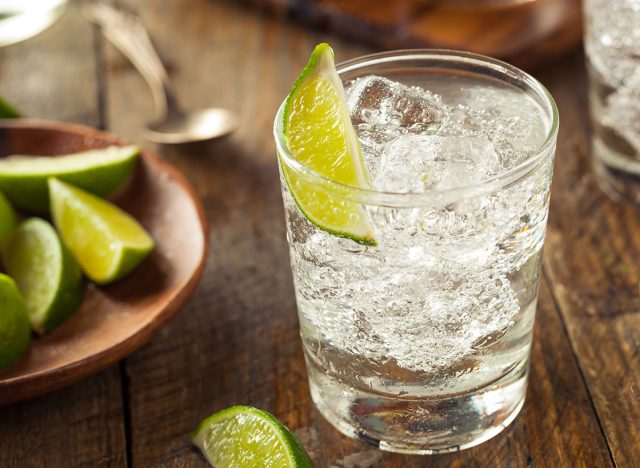
Calories: 133
Carbs: 0
Sugar: 0
ABV (Alcohol By Volume): 8%
Vodka soda is the classic low-carb drink. It is a great cocktail choice with no carbohydrates or added sugar. Sparkling water dilutes the vodka, making the drink last longer without impacting the nutrition profile. Citrus fruits are lower in sugar and carbohydrates than other fruits. Squeeze a lime, orange, or grapefruit wedge into the beverage for some flavor without affecting the calorie or carbohydrate content.
RELATED: The 6 ‘Healthiest’ Types of Alcohol to Drink
Tequila and Lime

Calories: 65
Carbs: <1 g
Sugar: <1 g
ABV: 33%
A tequila and lime is a lower-calorie alternative to a margarita. Instead of a pre-made margarita mix that is high in carbohydrates, this alternative sticks to the basics: tequila and lime. Ask for a splash of lime juice or flavor the tequila with a lime wedge—both options keep the drink low-carb.
Unless you’re reaching for top-shelf tequila, opt for silver tequila. Top-shelf darker tequilas achieve their coloring from aging processes, whereas lower-quality tequilas use additives like syrups for their gold coloring.
Martini

Calories: 241
Carbs: <1 g
Sugar: <1 g
ABV: 29%
A martini is essentially all alcohol. It contains vodka or gin and dry vermouth, an aromatic fortified wine used for flavoring. The high alcohol content contributes to the higher amount of calories per 4-ounce drink. Still, the martini is low-carb. Vodka and gin are zero-carb. Conversely, vermouth contains carbohydrates. However, only a small amount of vermouth is added to a martini, so the carbs are low.
RELATED: I Tried 5 Ready-to-Drink Espresso Martinis & One Was a Clear Winner
Dry Wine

Calories: 122
Carbs: 3 g
Sugar: 0 g
ABV: 11%
Dry wines are a great low-carb drink, with each 5-ounce pour containing about 3 grams of carbohydrates. The fermentation process converts most of the sugar into alcohol, leaving little residual sugar. Because the entire pour contains alcohol, dry wines have a higher ABV than other low-carb alcoholic drinks.
Low-carb dry wines include sauvignon blanc, chardonnay, pinot noir, cabernet sauvignon, and pinot grigio.
Light Beer
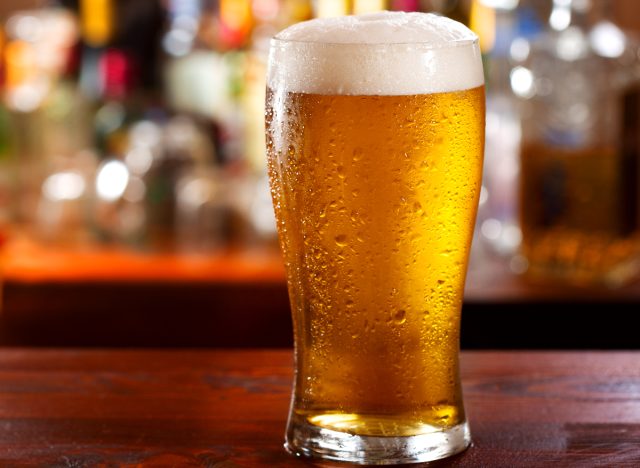
Calories: 103
Carbs: 6 g
Sugar: <1 g
ABV: 3%
Light beers are lower in calories and alcohol than regular beer. Fewer malted grains are used to produce a light beer, and other ingredients like rice and corn are often added to build flavor and body. Light beers may have a weaker taste than regular beer due to changes in the brewing process to create lower-carb and calorie beer. Still, light beers are a suitable low-carb alternative.
RELATED: 15 Healthy Light Beers To Drink This Summer
Rum and Diet Cola
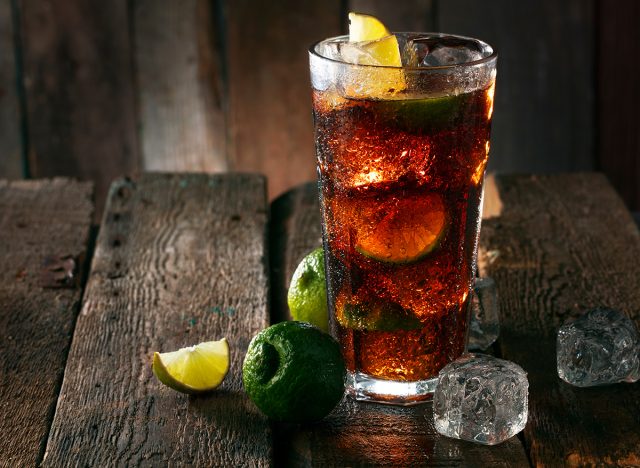
Calories: 135
Carbs: 0.5 g
Sugar: 0
ABV: 8%
Despite being derived from sugarcane, rum is naturally low-carb and sugar-free. However, be aware that some brands add sugar after processing, which can increase the carbohydrate and calorie content. To make an informed choice, check out this list of sugar content in different rums.
Opt for white rum instead of dark rum, as some dark rums use molasses for coloring, which adds to the alcohol’s calorie and carbohydrate content. Use diet cola to reduce the carbohydrate and calorie content of rum and cola. A rum and diet cola has less than one gram of carbohydrate per 8-ounce serving compared to the nearly 18 grams of carbohydrates in a regular rum and cola.
Hard Seltzer

Calories: 99
Carbs: 2 g
Sugar: 2 g
ABV: 5%
Hard seltzers are everywhere these days. They combine soda water, alcohol, and flavoring for a convenient low-carb cocktail. Although the nutrition profile of hard seltzer varies depending on the brand, most are low-carb. Yes, hard seltzers contain sugar cane. But if you look at the nutrition facts panel, added sugar is usually just 1% of the daily value, so hard seltzer is still low-carb. Plus, the different flavors provide multiple options for alcoholic drinks to order at the bar.
RELATED: 10 Low-Calorie Hard Seltzers to Sip All Summer
The post 7 Best Low-Carb Alcoholic Drinks to Order at the Bar appeared first on Eat This Not That.
]]>The post The Healthiest Orders at Moe’s Southwest Grill —and What to Avoid appeared first on Eat This Not That.
]]>Sticking to health goals at fast-casual restaurants can be difficult, but it is possible. Knowing what to look for and how to adjust your order to amplify nutrition is key. Although you should limit some ingredients, like fried items, we want to focus on what foods you can add to your meals, namely vegetables.
Here, we explain how to order at Moe’s and provide examples of healthy meals that preserve the satisfaction and flavors you crave.
How to Make Healthy Choices at Moe’s
One of the great things about Moe’s is that you can customize any order based on preferences or nutrition and health goals. This helps you make healthier choices at Moe’s. Here are some factors to consider when ordering at Moe’s when you want to eat healthy:
- Opt for sauce-free proteins: Choose grilled or plain menu options, like white chicken meat instead of the saucier adobo chicken.
- Focus on what you can add to the dish: Include vegetables, fresh herbs, or pickled items for more flavor and nutritional balance. Not all vegetables at Moe’s are fresh. Still, adding grilled onions or peppers provides a fiber and vitamin boost.
- Opt for small mains: A salad or taco will be your best bet at Moe’s. Still, as mentioned, you can customize any dish. Use this list of healthy orders at Moe’s as a guide—if your meal of choice isn’t on here, consider if you can tweak it to boost the nutrition while retaining the flavors you love.
RELATED: 6 Healthiest Fast-Food Tacos to Try Right Now
What to Avoid at Moe’s
- High-fat options: Restaurant food is cooked in more oil and salt than homemade meals, so calories and fat content can add up quickly. Moe’s offers fatty ingredients such as toppings like sour cream, queso, and bacon bits. If you include these items, add fresh vegetables for a more balanced meal.
- Large portion sizes: Portions are larger at restaurants than at home. Even the healthier choice at Moe’s can comprise half of your daily calories. Keep calories in check by ordering salads without the taco shell salad bowl, which adds 455 calories. Most burritos at Moe’s are made with a 12-inch tortilla, which provides 310 calories. Instead, ask for the 10-inch tortilla, which has 200 calories and is used for quesadillas. You can always save some food as leftovers and use it later as a component of another meal.
- Free chips and salsa: Ditch the chips and salsa that accompany each meal. Chips and salsa add more calories to the already large portion size without enhancing nutrition. Instead, add salsa to your meal to boost freshness and vegetables.
- Unhealthier menu options: Although you can customize any meal at Moe’s, some dishes should be limited. Nachos come in large portions with many toppings that quickly add calories. Instead of nachos, try a salad or burrito bowl. Or, if you want to retain the crunch of nachos but with fewer calories, opt for a taco with a crunchy shell and add vegetables and lean proteins like white meat chicken or tofu for a well-balanced dish.
Now that you know some general tips for choosing healthy orders off the Moe’s menu, read on to learn about 7 of the healthiest orders you can make. Then, check out the 8 Unhealthiest Restaurant Tacos to Stay Away From.
The Best Healthy Orders at Moe’s
Burritos
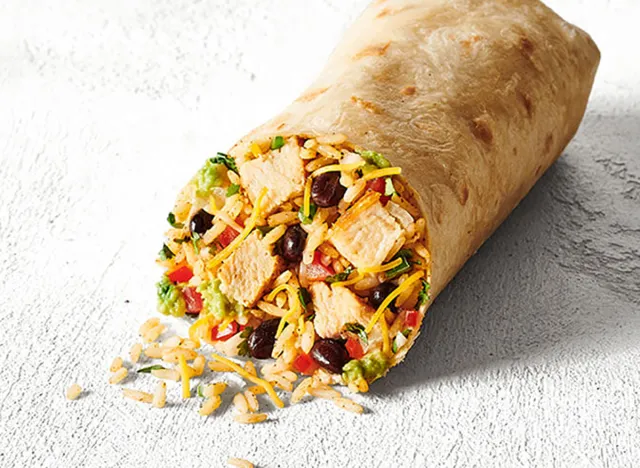
Ingredients: flour tortilla, white meat chicken, pinto beans, grilled onions, grilled peppers, shredded lettuce, pico de gallo, shredded cheese
Calories: 742
Fat: 27 g (Saturated fat: 13 g)
Carbs: 84g (Fiber: 15 g, Sugar: 6 g)
Protein: 51 g
Controversial opinion: rice isn’t necessary in a burrito. Skipping the rice reduces calorie content by 150 calories, but the burrito remains satisfying because of the fiber and protein. Fiber in the beans and grilled peppers contribute to satiety.
Although this burrito ditches the rice, it isn’t technically low-carb. With 84 grams of carbohydrates per serving, this burrito remains satisfying with its carbohydrates from the flour tortilla and pinto beans.
Plus, this burrito is a significant source of protein. Adults are encouraged to consume 0.8 to 1 gram of protein per kilogram of body weight. For a 150-pound person, this equates to 54 to 68 grams of protein daily. One burrito provides 51 grams of protein, or 94% of recommended protein, mostly from the white meat chicken and pinto beans.
RELATED: 8 Unhealthiest Restaurant Tacos to Stay Away From Right Now
Burrito Bowls
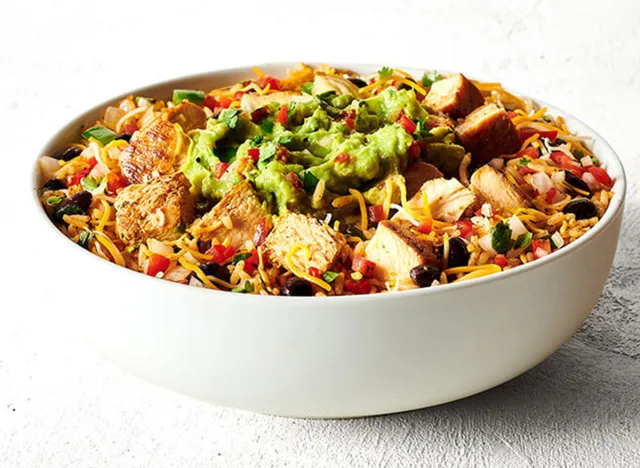
Ingredients: White meat chicken, pinto beans, seasoned rice, grilled onions, grilled peppers, shredded lettuce, pico de gallo
Calories: 611
Fat: 11 g (Saturated fat: 6 g)
Carbs: 97 g (Fiber: 16 g, Sugar: 7 g)
Protein: 41 g
Calories can quickly add up with burritos, given the flour tortilla and range of toppings. Burrito bowls ditch the tortilla for a lower-calorie alternative to a burrito. Skip fattier toppings like cheese, sour cream, and queso, and instead, load up on vegetable toppings full of fiber, vitamins, and minerals. Select the white meat chicken, which has fewer calories and less sodium than the adobo chicken.
We also recommend choosing the seasoned rice instead of the cilantro lime rice, which contains more than 40% of your daily sodium. The seasoned rice has 380 milligrams of sodium, compared to the 992 milligrams in one serving of cilantro lime rice. For reference, the Dietary Guidelines for Americans recommend keeping sodium intake to less than 2,300 milligrams daily.
Nachos
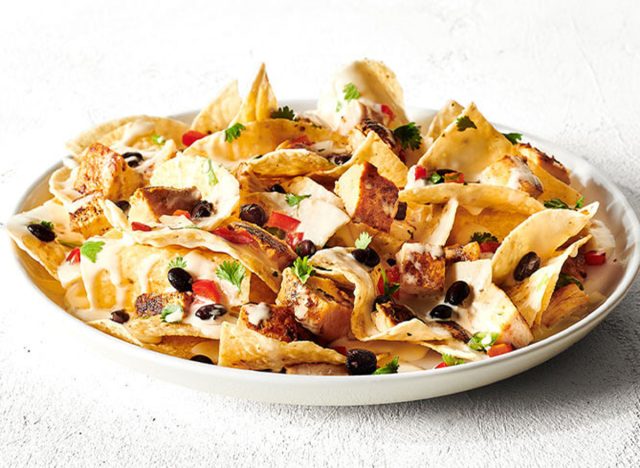
Ingredients: chips, steak, pinto beans, pickled jalapenos, pico de gallo, shredded cheese
Calories: 1,059
Fat: 55 g (Saturated fat: 16 g)
Carbs: 117 g (Fiber: 21 g, Sugar: 3 g)
Protein: 41 g
Although a higher-calorie and fat option, nachos can be healthified by adding pinto beans. The fiber in pinto beans contributes to its health benefits, and a 2001 study found that eating one ounce of beans daily increased longevity by approximately eight years.
A high-fiber diet is associated with reduced risks of diabetes, high cholesterol, and inflammation—factors that affect longevity. Pickled jalapenos add heat and more nutrition: Jalapenos are an excellent vegetable source of vitamin C.
RELATED: 8 Healthiest Chipotle Orders
Stacks
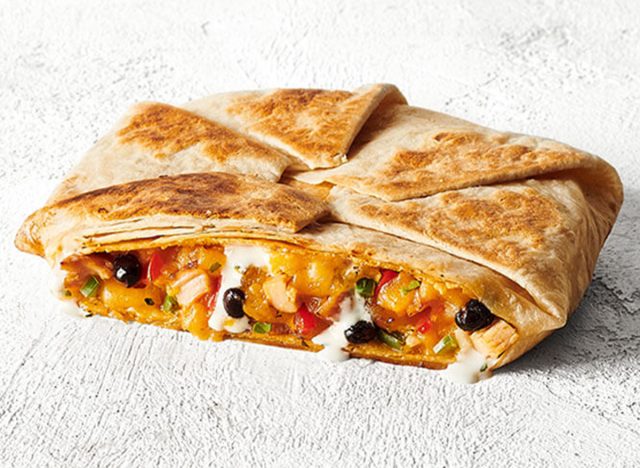
Ingredients: shredded cheese, corn tortillas, ground beef, pinto beans, shredded lettuce, pico de gallo
Calories: 527
Fat: 29 g (Saturated fat: 14 g)
Carbs: 49 g (Fiber: 16 g, Sugar: 4 g)
Protein: 33 g
Stacks are unique to Moe’s. They feature a flour tortilla enveloping a crunchy taco shell and filling. Adding pinto beans increases the Stacks’ nutritional content, namely fiber. With 16 grams of fiber per serving, this stack provides more than 50% of the daily fiber recommended by the Dietary Guidelines for Americans. Fiber benefits gut and heart health and is essential to weight management. Include beans in your next order for a satisfying and satiating stack.
Quesadillas
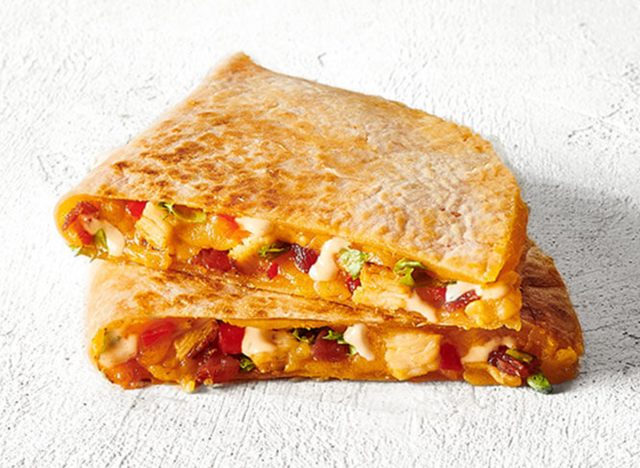
Ingredients: flour tortilla, white meat chicken, grilled peppers, pico de gallo, shredded cheese
Calories: 484
Fat: 21 g (Saturated fat: 10 g)
Carbs: 40 g (Fiber: 3 g, Sugar: 3 g)
Protein: 38 g
Enhance the nutrition content of the classic quesadilla by adding white meat chicken and grilled peppers. Chicken provides protein, one of the essential macronutrients. Aiming for at least 20 grams of protein per meal ensures you stay full and meet daily protein goals. Additionally, protein is required to maintain and gain muscle mass. Grilled peppers add a pop of color and essential micronutrients like vitamin C, necessary for collagen production and immune health.
RELATED: 20 Fattiest Fast-Food Orders in America—Ranked
Tacos
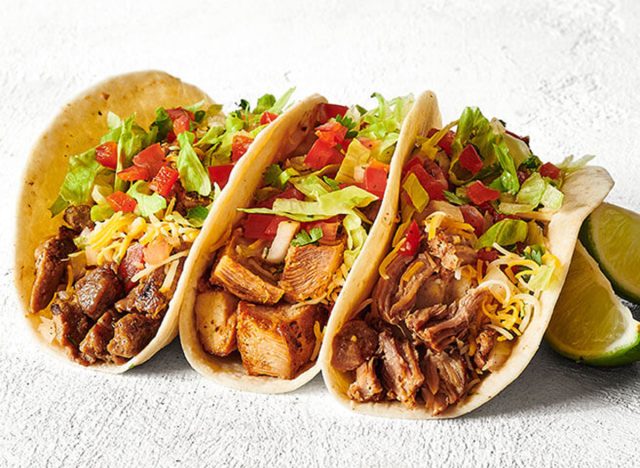
Ingredients: crispy corn tortilla, chicken, grilled onions, shredded lettuce, pico de gallo, shredded cheese
Calories: 199
Fat: 15 g (Saturated fat: 7 g)
Carbs: 17g (Fiber: 4 g, Sugar: 4 g)
Protein: 17 g
A healthier order shouldn’t sacrifice texture and flavor. The crispy corn tortilla has nutrition similar to the regular corn tortilla but provides crunch, contributing to overall meal satisfaction. Perhaps not the first thing you think of when eating vegetables, tacos are an excellent vehicle for consuming more produce. Pico de gallo, shredded lettuce, and grilled onions help you meet daily vegetable recommendations while supplying additional layers of flavor and texture.
RELATED: 8 Best & Worst Tacos at Taco Bell
Salads
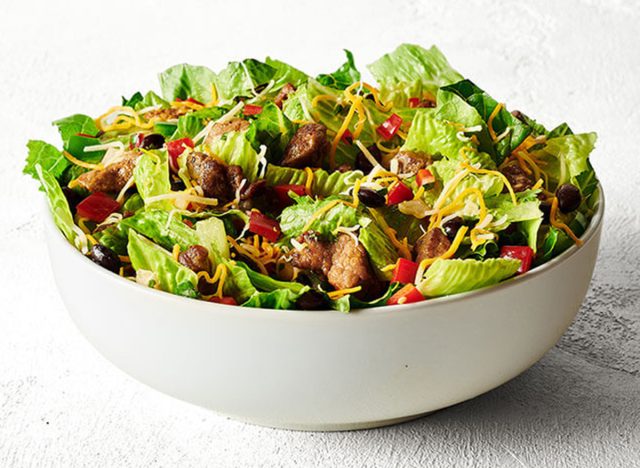
Ingredients: romaine lettuce, tofu, pinto beans, cilantro, tomatoes, corn pico, grilled onions, grilled peppers, cucumbers, black olives, Southwest vinaigrette
Calories: 456
Fat: 26 g (Saturated fat: 8 g)
Carbs: 45 g (Fiber: 19 g, Sugar: 8 g)
Protein: 25 g
Although we often consider salads healthier, that’s not always the case. Creamy dressings, crispy toppings, and other add-ins quickly convert a salad from a healthy alternative to a high-calorie, high-fat option.
Skip the tortilla shell and stick with chopped lettuce for the base of the salad. Instead, opt for corn pico for starchiness and a boost of fiber. Try tofu and beans for a lower-fat and lower-calorie salad. Not only are beans and tofu inherently low-fat and low-calorie but diets higher in plant-based proteins are linked with longer lives. Order your dressing on the side if you want to keep your calories and fat on the lower end.
The post The Healthiest Orders at Moe’s Southwest Grill —and What to Avoid appeared first on Eat This Not That.
]]>The post The 10 Healthiest Low-Sugar Fruits You Can Eat appeared first on Eat This Not That.
]]>Added and natural sugar are often lumped together when discussing nutrition, but that doesn’t tell the whole story. Although the body metabolizes both added and natural sugar the same, the health effects of each are vastly different. Natural sugar in fruit contains vitamins, minerals, antioxidants, water, and fiber—all nutrients supporting health.
Research shows that people who regularly eat fruit have a reduced risk of certain health conditions such as heart disease and type 2 diabetes.
The adage “an apple a day keeps the doctor away” may ring true. To maintain health, consider increasing your fruit intake. After learning about these low-sugar fruits, you’ll be ready to add them to your daily food routine. And if you’re trying to incorporate more fruit while monitoring blood sugar, these low-sugar fruits are a great place to start.
Let’s delve into the 10 healthiest low-sugar fruits, according to research. Read on, and for more, don’t miss 10 Best Fruits To Reduce Inflammation.
Grapefruit
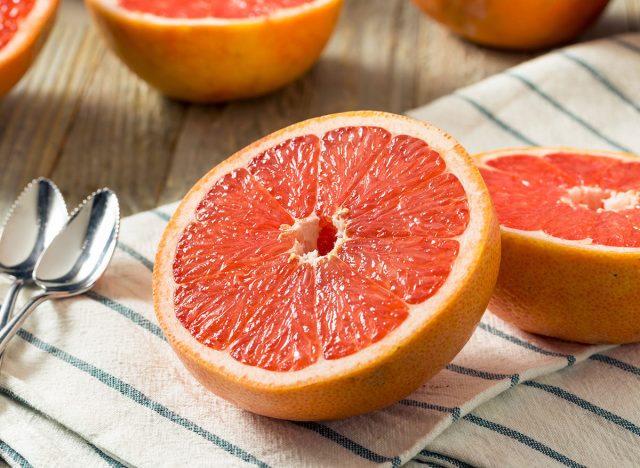
Sugar per 1/2 grapefruit serving: 10 grams
Grapefruit is a subtropical citrus fruit loaded with nutrients. According to a study in Advances in Nutrition, grapefruit is a potent source of naringin, a polyphenol linked to reduced blood pressure and insulin resistance (the underlying cause of type 2 diabetes).
Additionally, a half-serving grapefruit contains 13% of your daily vitamin A. Vitamin A is essential for health. It supports healthy vision and immune function, helps form collagen, and promotes bone strength. Because vitamin A can be toxic in high amounts, supplementation is not recommended unless under medical supervision. Regularly consuming grapefruit ensures you’re getting enough vitamin A.
RELATED: 10 Best Fruits & Vegetables To Eat for Longevity
Blackberries
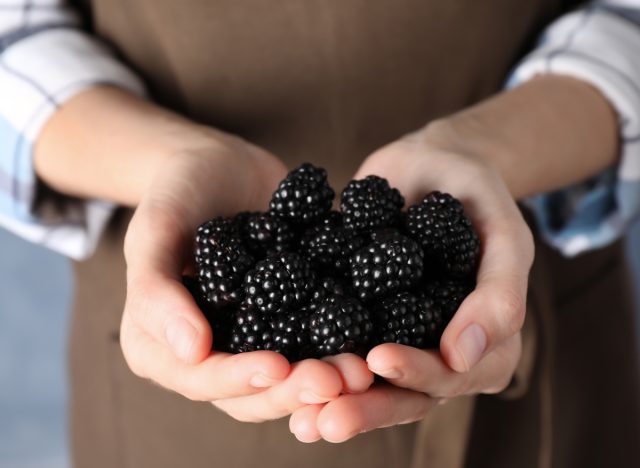
Sugar per 1 cup serving: 7 grams
Blackberries are rich in anthocyanins, a polyphenol responsible for red, blue, and purple hues. Research suggests berry anthocyanins positively influence pathways involved in blood glucose regulation.
A 2018 randomized controlled trial observed increased fat oxidation and improved glucose control among overweight or obese men fed a high-fat diet with 600 grams (4 cups) of blackberries daily for one week compared to those given a calorie and carbohydrate-matched amount of gelatin. Specifically, the men given blackberries demonstrated greater insulin sensitivity, an essential factor for preventing type 2 diabetes.
Strawberries

Sugar per 1 cup serving: 7 grams
Besides their low sugar, nutrients in strawberries are associated with improvements in cardiovascular risk factors. Polyphenols, fiber, vitamins, and minerals contribute to strawberries’ heart-healthy benefits. Research presented in the British Journal of Nutrition shows that strawberries reduce c-reactive protein levels (an inflammatory marker) and lower low-density lipoprotein and total cholesterol in people with elevated cholesterol. Another 2019 meta-analysis suggests that eating 10–454 grams of strawberries (one medium strawberry to 2 3/4 of a cup of strawberries) reduces risk factors associated with heart health.
RELATED: 12 Best High-Protein, High-Fiber Foods You Can Eat
Kiwi
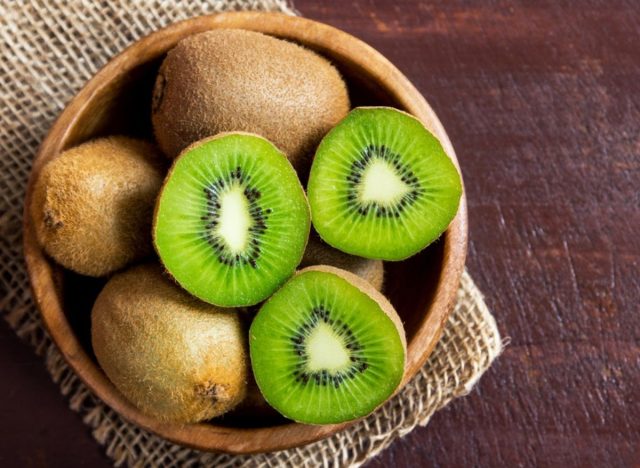
Sugar per 1 medium kiwi serving: 6 grams
Besides its low sugar content, kiwi is packed with other beneficial nutrients.
Extensive research supports kiwis for managing constipation because of their soluble and insoluble fiber content. Soluble and insoluble fibers soften and add bulk to stool, making it easier to pass. A 2010 study found that eating two kiwis daily for four weeks increased the frequency of bowel movements in healthy adults and those with constipation-dominant irritable bowel disease, or IBS. A 2022 meta-analysis observed similar results with kiwifruit but also noted improvements in IBS-related symptoms like abdominal pain and straining.
Guava
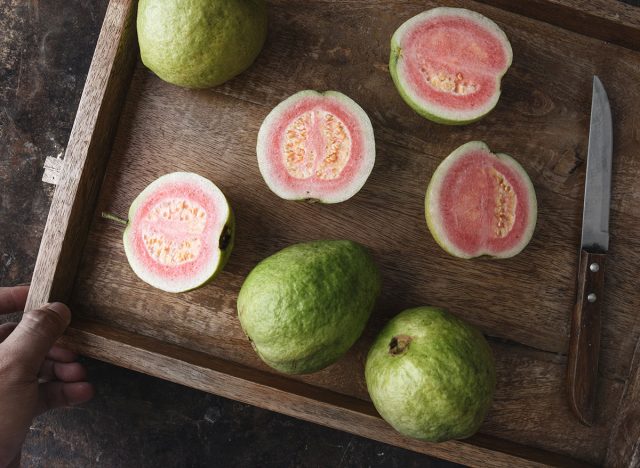
Sugar per 1 small guava serving: 5 grams
Guava packs a significant amount of vitamin C—more than four times that of oranges. Vitamin C is a potent antioxidant often sought to alleviate the common cold. A 2023 meta-analysis in BMC Public Health found that consuming 1 gram daily of vitamin C reduced the duration of severe cold symptoms. One small guava contains 125 mg of vitamin C, so you would need to eat eight guavas to reach the recommended amount. Still, guava’s antioxidant and vitamin content can reduce a cold’s symptoms and duration.
RELATED: 25 Best Antioxidant-Rich Fruits & Vegetables
Raspberries

Sugar per 1 cup serving: 5 grams
Raspberries are a rich source of fiber and polyphenols, food components that influence the body’s absorption of sugar and the development of chronic diseases.
Research indicates eating raspberries with a meal reduces postprandial blood sugar in people with prediabetes or diabetes. Moreover, a 2019 study published in the Annals of Nutrition and Metabolism observed that a mid-afternoon raspberry snack reduced inflammation, a key contributor to the onset of chronic conditions like type 2 diabetes.
Apricots
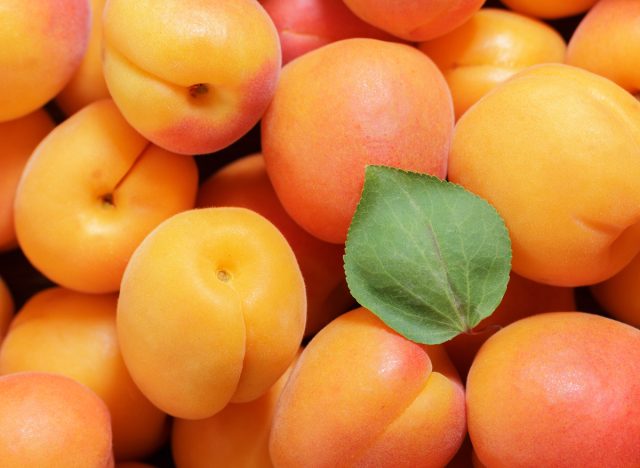
Sugar per 1 medium apricot serving: 3 grams
Drinking water is not the only way to stay hydrated; eating fruit with a high water content also contributes to hydration. Apricots are roughly 86% water, making them nutritious and hydrating.
Maintaining hydration is essential for health. Hydration lubricates and protects joints and tissues, removes waste from the body, and helps regulate body temperature. Dehydration is associated with health conditions such as gastrointestinal disorders.
RELATED: 10 Best Fruits To Reduce Inflammation
Tomatoes
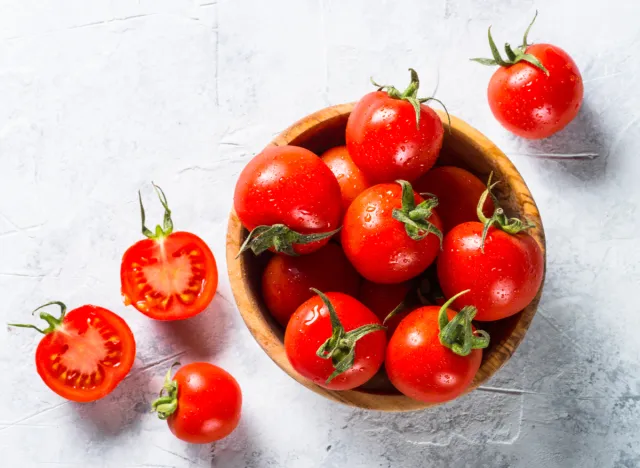
Sugar per 1 medium tomato serving: 3 grams
Although often considered a vegetable, tomatoes are, in fact, fruits. Lycopene is a carotenoid that provides tomatoes with their orange and red color. One medium tomato provides 3 milligrams of lycopene.
Lycopene from tomatoes acts as an antioxidant to protect cells from damage. Specifically, lycopene decreases the risk of prostate cancer. According to one review, eating 200 grams of tomatoes weekly (about two medium tomatoes) decreases the risk of prostate cancer by 13%. Consuming 1,000 grams of tomatoes (roughly nine to 10 medium tomatoes) weekly reduces prostate cancer risk by 46%.
Lemons
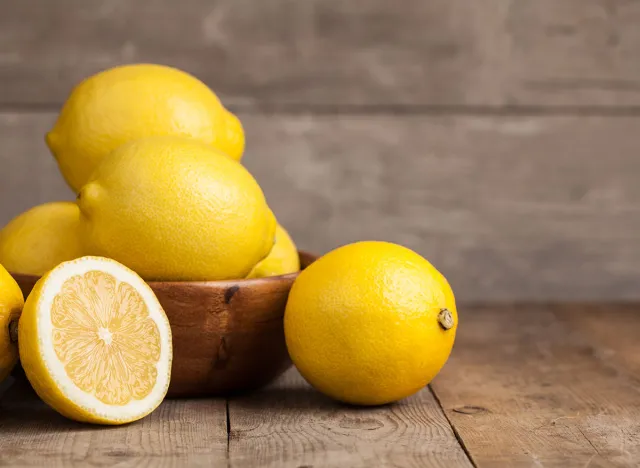
Sugar per 1 medium lemon serving: 2 grams
Lemons may be too tart to eat by themselves, but squeezing lemon juice into water can provide health benefits.
Lemons abound with flavonoids, natural compounds with beneficial health effects. Flavonoids influence many aspects of metabolism, namely how the body regulates glucose and fat. Moreover, flavonoids protect against cell damage implicated in chronic diseases. A review in the journal Nutrients reveals flavonoids may play a vital role in diabetes by attenuating inflammation and damage from persistently elevated blood sugar.
RELATED: 25 Easy Ways to Eat More Fruits & Veggies at Every Meal
Avocado
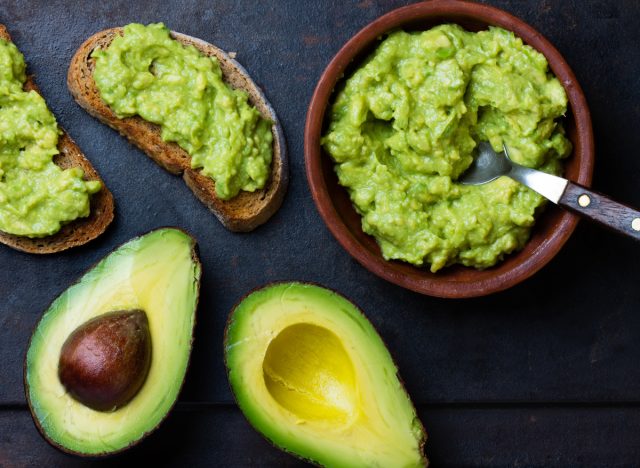
Sugar per 1 medium avocado serving: less than 1 gram
Avocados develop from flowering plants, so they are considered fruits.
A 2018 review in the journal Nutrients highlighted the weight control benefits of avocados, sharing that eating one avocado daily reduced body weight and body mass index (BMI). A 2013 study observed a 23% increase in satisfaction over five hours when participants consumed half an avocado with lunch. This satisfaction carried over to dinner, where participants who had avocado at lunch consumed less food. Another benefit of avocados: Substituting saturated fats with avocados reduces triglyceride, low-density lipoproteins, and total cholesterol, according to one meta-analysis.
Adding fruit to your diet provides a slew of benefits, from supporting gut health and reducing cold symptoms to weight management. Reap fruit’s nutritional benefits while managing blood sugar with these 10 options.
The post The 10 Healthiest Low-Sugar Fruits You Can Eat appeared first on Eat This Not That.
]]>