The post 5 Chair Exercises That Restore Leg Muscle Faster Than Squats After 65 appeared first on Eat This Not That.
]]>“While squats are king, joint pain or balance issues can limit some people,” explains Steve Stonehouse, Vice President of Programming and Education at Body Fit Training (BFT). “We can often use exercises that provide continuous tension or isolate quads and hamstrings without the systemic fatigue of a full squat.”
Below, Stonehouse breaks down five productive chair exercises to add to your leg day.
Seated Leg Extension
- Begin sitting tall with your back supported against the chair.
- Place your feet flat on the floor.
- Hold the sides of the chair for added stability.
- Straighten your left leg out in front of you until your knee is completely extended. For max quad engagement, keep your toes flexed toward your shin the entire time.
- Hold for 2 seconds at the top before lowering.
- Repeat on the other side, performing 3 sets of 10 to 12 reps.
RELATED: 4 Standing Exercises Men Should Do Daily to Stay Young After 50
Slow Sit-to-Stands
- Begin seated at the front of a sturdy chair with your feet placed on the floor under your knees.
- Lean forward slightly.
- Try to stand up without using your knees, hands, or additional support.
- Use control to slowly sit back down.
- See how many sit-to-stands you’re able to complete in 30 seconds.
- Rest briefly before repeating.
- Perform 3 sets of 10 to 12 reps.
RELATED: These 5 Daily Moves Reverse Muscle Loss Faster Than Gym Workouts After 45
Seated “Hamstring Drags”
- Begin sitting tall on a sturdy chair with one leg extended straight ahead of you and the other foot flat on the ground.
- Position the heel of the extended leg lightly on the ground.
- Engage your core and maintain a tall chest.
- As you press your heel into the floor, gradually “drag” it back toward the chair without moving it very much, creating resistance.
- Hold for a moment before releasing.
- Perform 3 sets of 10 to 12 reps.
RELATED: If You Can Do These 3 Balance Tests at 60, Your Body Age Is 20 Years Younger
Chair-Supported Split Squats
- Start by standing tall with one hand placed on the back of a sturdy chair for support.
- Step your left foot forward about 2 to 3 feet to assume a staggered stance.
- Bend both knees, lowering the bottom toward the ground.
- Press through your front heel to rise back up.
- Repeat on the other side.
- Perform 3 sets of 10 to 12 reps.
RELATED: 5 Easy Bodyweight Tests That Show Your Real Fitness After 45
Isometric Chair Squeezes
- Sit tall on a sturdy chair with your feet planted flat on the floor.
- Place a pillow, rolled towel, or Pilates ball between your knees.
- Engage your core and maintain a tall chest.
- Press your knees inward as you squeeze the object in between your legs.
- Hold for 30 seconds before releasing.
- Perform 3 sets.
The post 5 Chair Exercises That Restore Leg Muscle Faster Than Squats After 65 appeared first on Eat This Not That.
]]>The post 4 Chair Exercises That Build Leg Strength Faster Than Weight Lifting After 60 appeared first on Eat This Not That.
]]>What Makes Chair-Based Workouts Safe and Effective
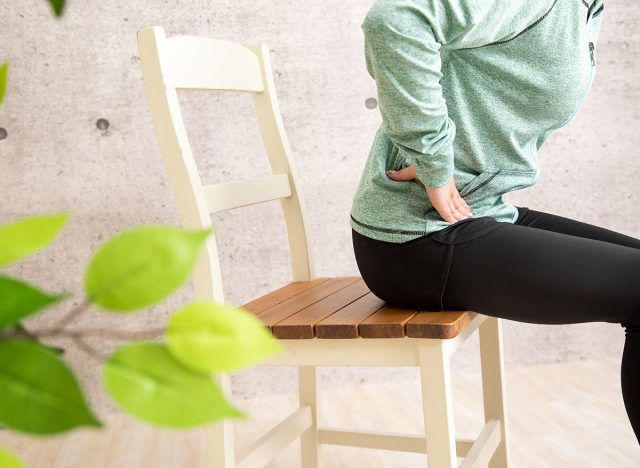
“Chair exercises provide stability and a stopping point in the population over 60 years of age so that they can still exercise with less risk of falling,” explains Guevara. “If someone that’s 60+ years old tries to do a squat and can’t balance themselves at the bottom or they don’t have the strength to come back up, they can fall and get injured.”
Working with a chair provides a “safety net” and a cue so you know exactly how far down you are.
Below, Guevara shares four chair exercises that help build leg strength after 60.
Chair Squats
“Squats are a good all around quads, hamstrings, and glute builder that carry over to everyday activities like getting in and out of a chair, getting in and out of a car, when using the toilet, etc.,” Guevara explains.
- Begin by standing tall in front of a sturdy chair with your feet hip-width apart on the ground.
- Activate your core and keep your chest lifted.
- Bend at the knees and hips and lower slowly into a squat—as if you’re about to sit down. Make sure your weight stays in your heels.
- Lightly touch the surface of the chair with your glutes.
- Press through your heels to rise back up.
RELATED: If You Can Do This Many Squats After 50, You Are in Great Shape
Calf Raises
“Standing calf raises can be done by hanging on to the backrest of a chair and going up and down on your toes,” Guevara says.
- Begin by standing tall with your feet hip-width apart, facing a sturdy chair with your hands lightly resting on the backrest.
- Engage your core.
- Rise onto your toes slowly.
- Hold for 2 to 3 seconds at the top.
- Lower back down with control.
RELATED: This 9-Minute Bodyweight Strength Flow Builds More Muscle Than 45 Minutes of Gym Machines After 40
Lunges
- Stand tall, perpendicular to the back of a sturdy chair with your feet parallel and hip-width apart.
- Step one foot forward, using the chair for support.
- Engage your core as you bend your knees, lowering to form 90-degree bends in both legs.
- Keep your upper body straight.
- Press through your front heel and the ball of your back foot to rise back up.
RELATED: 4 Standing Exercises That Build Muscle the Old-School Way After 60
Squat Holds
- Begin standing tall in front of a sturdy chair with your feet hip-width apart and arms extended ahead of you.
- Squat down to the point where your glutes are just above the seat.
- Hold for 5 to 10 seconds.
- Sit down to relax before repeating.
The post 4 Chair Exercises That Build Leg Strength Faster Than Weight Lifting After 60 appeared first on Eat This Not That.
]]>The post The 6-Minute Chair Routine That Builds Leg Muscle Faster Than Squats After 60 appeared first on Eat This Not That.
]]>Short routines like the one below work best when you think of them as a fitness snack rather than a full meal. They don’t replace your regular workouts. Instead, they supplement them. In my coaching work, I often encourage clients to sprinkle in quick strength blocks like this throughout the week. These short sessions help reinforce movement patterns, stimulate muscles, and maintain progress on days when a full workout isn’t on the schedule.
The 6 Minute Chair Routine That Builds Leg Muscle Faster Than Squats After 60 targets the lower body’s major muscles with simple seated movements. Each exercise focuses on controlled reps and steady tension to help strengthen the thighs and hips. All you need is a sturdy chair and a few focused minutes.
The Workout Name: The 6 Minute Chair Routine That Builds Leg Muscle After 60
What you need: A sturdy chair and six focused minutes. This routine uses controlled seated exercises to challenge your legs while keeping the setup simple and joint-friendly.
The Routine:
- Chair Squats
- Seated Knee Extensions
- Seated Marches
Directions
Perform the exercises in the order listed. Move with control and focus on feeling your leg muscles working during each rep. Rest only as prescribed. The full sequence takes about six minutes to complete. Read on for the detailed instructions.
RELATED: If You Can Hold a Squat This Long After 60, Your Lower-Body Strength Is Top-Tier
Chair Squats
Chair squats strengthen the quads and glutes, which play a major role in standing, walking, and climbing stairs. This movement reinforces one of the most important patterns your body uses every day. I like starting with chair squats because they quickly wake up the largest muscles in the lower body while staying approachable for many fitness levels. Over time, stronger legs translate directly into smoother everyday movement.
Muscles Trained: Quadriceps, glutes, hamstrings, and core.
How to Do It:
- Stand in front of your chair with your feet about hip-width apart.
- Brace your core and keep your chest lifted.
- Push your hips back and bend your knees to lower toward the chair.
- Lightly tap the chair with your hips.
- Drive through your whole foot to stand tall again.
- Repeat for the target reps.
Recommended Sets and Reps: Perform 2 sets of 10 to 12 reps. Rest for 30 seconds between each set.
Best Variations: Pause chair squats, slow tempo squats, hands-free squats.
Form Tip: Keep your weight through your whole foot to stay balanced as you stand.
Seated Knee Extensions
Seated knee extensions place focused tension on the quadriceps, the muscles at the front of your thighs. These muscles play a major role in leg strength and knee stability. I often include this movement because it isolates the quads in a joint-friendly position while still building muscular endurance. Consistent reps help restore strength and firmness through the thighs.
Muscles Trained: Quadriceps and hip flexors.
How to Do It:
- Sit tall near the front edge of the chair.
- Place both feet flat on the floor.
- Brace your core lightly and keep your posture upright.
- Extend one leg until it is straight.
- Pause briefly at the top.
- Lower with control and switch legs.
- Continue alternating.
Recommended Sets and Reps: Perform 2 sets of 12 reps per side. Rest for 30 seconds between each set.
Best Variations: Slow tempo extensions, hold at the top, alternating rhythm.
Form Tip: Fully straighten your knee at the top of each rep.
RELATED: The 8-Minute Daily Routine That Builds More Core Strength Than Planks After 65
Seated Marches
Seated marches strengthen the hip flexors and supporting core muscles while improving coordination between the hips and legs. This movement reinforces the same mechanics your body uses during walking and stair climbing. I like using seated marches as a finisher because they keep the legs working while also building endurance through the hips. Over time, this helps your lower body feel stronger and more responsive.
Muscles Trained: Hip flexors, lower abdominals, and core stabilizers.
How to Do It:
- Sit tall with your hands resting at your sides.
- Brace your core and keep your chest lifted.
- Lift one knee toward your chest.
- Lower with control.
- Lift the opposite knee.
- Continue alternating for the full set.
Recommended Sets and Reps: Perform 2 sets of 30 seconds. Rest for 30 seconds between each set.
Best Variations: Higher knee marches, slower marches, hands-free marches.
Form Tip: Stay tall through your spine as you lift each knee.
RELATED: If You Can Hold a Plank This Long After 60, Your Core Strength Is Stronger Than 90% of Peers
Best Daily Habits to Build Leg Strength After 60
Leg strength improves fastest when short training sessions pair with supportive daily habits. Your muscles respond well to frequent activation and steady movement throughout the week. In my coaching experience, adults over 60 see the best results when they combine structured workouts with small strength “snacks” like this routine. These quick sessions help reinforce the work you’re already doing. Consistency drives progress. Use the habits below to support your results.
- Train your lower body several days per week. Frequent stimulus supports muscle retention.
- Add short strength snacks throughout the week. Quick sessions keep your legs active.
- Walk regularly during the day. Daily steps reinforce leg strength and coordination.
- Focus on controlled reps. Slower movement increases time under tension.
- Prioritize protein intake. Adequate protein supports muscle repair and growth.
- Progress gradually over time. Small increases in reps keep your legs adapting.
Stay consistent with this six-minute chair routine and these habits, and many adults over 60 begin to notice stronger legs, better movement control, and more confidence during everyday activities.
References
- Bičíková, Marie et al. “Movement as a Positive Modulator of Aging.” International journal of molecular sciences vol. 22,12 6278. 11 Jun. 2021, doi:10.3390/ijms22126278
- Iversen, Vegard M et al. “No Time to Lift? Designing Time-Efficient Training Programs for Strength and Hypertrophy: A Narrative Review.” Sports medicine (Auckland, N.Z.) vol. 51,10 (2021): 2079-2095. doi:10.1007/s40279-021-01490-1
- Mohammadi, Zahra et al. “Comparison the effect of Otago and chair squat exercises on the fear of falling and the quality of life of the older adults, a clinical trial study.” Aging clinical and experimental research vol. 37,1 66. 3 Mar. 2025, doi:10.1007/s40520-025-02951-7
The post The 6-Minute Chair Routine That Builds Leg Muscle Faster Than Squats After 60 appeared first on Eat This Not That.
]]>The post If You Can Hold a Squat This Long After 60, Your Lower-Body Strength Is Top-Tier appeared first on Eat This Not That.
]]>Your lower body acts as the foundation for daily activity. Standing up from a chair, climbing stairs, stepping over obstacles, and maintaining balance all rely on the muscles in your hips and legs. Well-developed quads and glutes support those movements and help maintain stability from the ground up. When these muscles stay strong, walking feels easier, and physical tasks require far less effort.
Leg strength also supports long-term health and mobility. The muscles in the lower body rank among the largest in the body and play a major role in maintaining circulation, joint stability, and physical independence. Maintaining strength in these muscles helps people stay active, confident, and capable well into later decades.
A simple squat hold offers a quick snapshot of how your lower body is performing. The position challenges your quads, glutes, and core, maintaining tension while keeping your body stable. The length of time you can hold that position reveals a lot about your lower-body strength and endurance. Up next, you’ll learn why the squat hold works so well, how to perform it correctly, what your hold time means, and how to build even stronger legs.
RELATED: The 8-Minute Daily Routine That Builds More Core Strength Than Planks After 65
Why the Squat Hold Is a Functional Movement
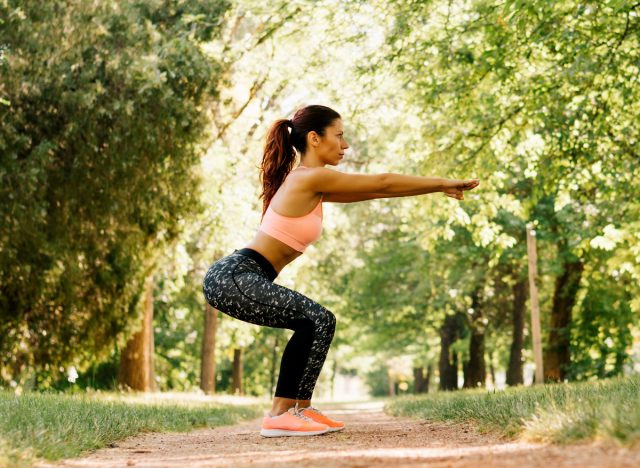
The squat pattern appears constantly in daily life. Sitting down, standing up, picking items off the floor, and lowering your body toward a chair all rely on the same basic mechanics. Training the squat pattern helps reinforce the strength and coordination required to move safely and efficiently.
Holding the squat position further increases the challenge. Instead of briefly lowering and standing back up, your muscles must maintain tension while your joints stay aligned. The quads and glutes work continuously to support your body weight, while your core stabilizes your torso, keeping your posture upright.
The squat hold also builds strength and endurance in the muscles surrounding your hips and knees. Those muscles act like shock absorbers for your body. When they remain strong, they protect your joints and help maintain balance during walking, hiking, and other everyday activities.
How to Perform the Best Squat Hold Technique
A clean squat hold requires strong positioning and consistent tension. Your goal is to maintain a stable posture in which your hips, knees, and ankles share the workload evenly. When your alignment stays steady, the exercise challenges your muscles rather than placing unnecessary strain on your joints.
How to Do It:
- Stand with your feet about shoulder-width apart, and your toes slightly turned out.
- Brace your core by tightening your midsection before lowering into the squat.
- Sit your hips back and down while bending your knees under control.
- Lower until your thighs are parallel to the floor or in your deepest, most comfortable squat position.
- Keep your chest tall and your weight balanced across your heels and midfoot.
- Hold the squat while maintaining steady breathing until your posture begins to break.
Best Variations: Wall Sit, Goblet Squat Hold, Box Squat Hold, Banded Squat Hold, Heels-Elevated Squat Hold.
RELATED: If You Can Hold a Plank This Long After 60, Your Core Strength Is Stronger Than 90% of Peers
Squat Hold Strength Rankings After 60
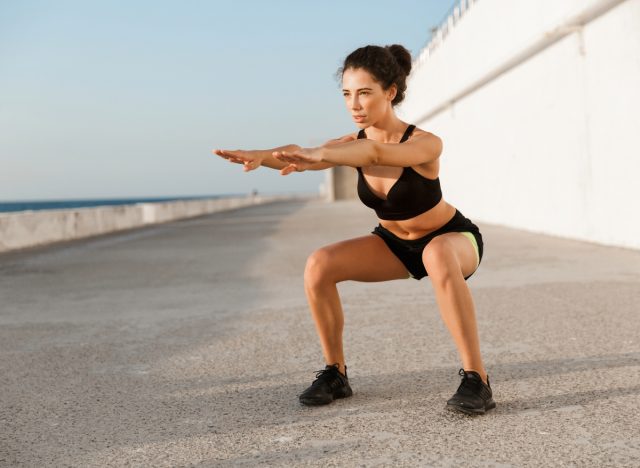
This test measures how long you can maintain a stable squat position with good form. Start the timer once you reach your full squat depth.
- Under 20 seconds: Needs Improvement
This range suggests your lower-body strength and endurance could benefit from targeted training.
- 20 to 45 seconds: Average
Your legs can support most everyday tasks, though fatigue may appear during longer activities.
- 45 to 75 seconds: Above Average
This score reflects strong quads and glutes with good muscular endurance.
- 75+ seconds: Top-Tier
This level shows excellent lower-body strength and stability. Your legs maintain force output and joint control even as fatigue builds.
RELATED: The 7-Minute Standing Routine That Shrinks Hip Dip Fat After 45, According to a Trainer
The Best Tips for Building Stronger Legs After 60
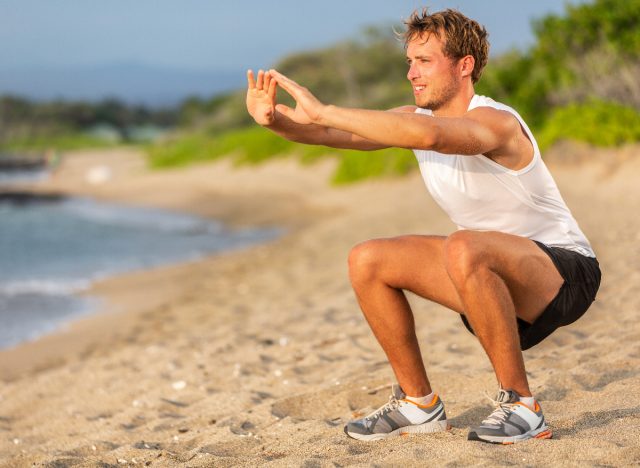
Lower-body strength responds well to consistent, controlled training. These strategies help improve squat hold performance while supporting healthy joints and long-term mobility.
- Train your legs two to three times per week: Regular exposure builds strength without overwhelming recovery.
- Use controlled tempos: Slower squats increase time under tension and reinforce strong movement patterns.
- Add step-based exercises: Step-ups and split squats strengthen the hips and improve balance.
- Strengthen your glutes: Bridges and hip thrusts build the hip power that supports strong squat positions.
- Maintain mobility in your hips and ankles: Better joint mobility helps you reach deeper squat positions comfortably.
Strong legs play a huge role in staying active and independent after 60. If you can hold a squat for an extended period with solid posture, you’re showing that your lower body remains powerful, stable, and ready for whatever challenges the day brings.
References
- Dunn, M.T., Quach, P.T.M., McGraw, M., Preus, R.I., Barefoot, R.C., Lancaster, W.C., Ponder, J. and Singh, H. (2025), Using Isometric Squat Strength to Predict Concentric and Eccentric Squat Strength in Young and Older Adults. Physiother Res Int, 30: e70034. https://doi.org/10.1002/pri.70034
- Straub, Rachel K, and Christopher M Powers. “A Biomechanical Review of the Squat Exercise: Implications for Clinical Practice.” International journal of sports physical therapy vol. 19,4 490-501. 1 Apr. 2024, doi:10.26603/001c.94600
The post If You Can Hold a Squat This Long After 60, Your Lower-Body Strength Is Top-Tier appeared first on Eat This Not That.
]]>The post 4 Bed Exercises That Restore Thigh Strength Faster Than Leg Press After 65 appeared first on Eat This Not That.
]]>“Because the thighs contain some of the largest muscles in the body, primarily the quadriceps and hamstrings, weakness here has a direct effect on mobility. Declining thigh strength can make it harder to stand up from a chair, climb stairs, walk long distances, or recover from a stumble,” explains Karen Ann Canham, CEO and founder of Karen Ann Wellness, Board-Certified Wellness Coach, and Nervous System Specialist who has almost two decades of experience in wellness and corporate leadership. “Research consistently shows that lower-body strength is one of the strongest predictors of fall prevention and long-term independence in adults over 65.”
Bed exercises provide a safer alternative for older individuals because they come with greater stability and less compression on the joints.
“Leg press machines place load through the spine and knees, which can aggravate arthritis or existing joint issues. They also require getting on and off gym equipment, which may not be practical for many seniors,” Canham points out.
Below, she breaks down four bed exercises to help restore thigh strength.
Glute Bridges
According to Canham, “Glute bridges strengthen the hips, hamstrings, and supporting thigh muscles while improving pelvic stability.”
- Lie flat on your back with bent knees and feet hip-width apart, arms at your sides with palms pressing into the mattress.
- Press through your heels to lift your hips until your body forms a straight line from head to heels.
- Squeeze your buttocks, holding at the top for 2 seconds.
- Lower your hips back to the start position.
- Perform 2 to 3 sets of 10 to 12 reps.
RELATED: If You Can Do These 8 Lower-Body Moves, Your Leg Strength Is Elite
Straight-Leg Raises
“Straight-leg raises activate the quadriceps and build knee stability,” Canham says.
- Start by lying flat on your back with your arms extended overhead and legs out straight.
- Activate your core as you lift both legs off the mattress, keeping them extended and your lower back pressed into the mat.
- Hold for a moment at the top, then use control to lower your legs back toward the bed without letting them touch it.
- Perform 2 to 3 sets of 10 reps on each leg.
RELATED: 5 Daily Exercises That Smooth and Tone Your Legs for Beginners After 50
Heel Slides
“Heel slides strengthen the quadriceps and hamstrings while improving knee mobility,” Canham points out.
- Start by lying flat on your back with your legs on the mattress.
- Place your arms at your sides and gently press your lower back into the mattress.
- Slide one heel back toward your hips before lengthening it back out.
- Complete 2 to 3 sets of 10 to 12 reps on each leg.
RELATED: 4 Chair Exercises That Strengthen Legs Faster Than Squats After 55
Side-Lying Leg Lifts
- Begin by lying on one side with your legs stacked, your head resting on your bottom arm, and your top hand placed on your hip.
- Lift your top leg upward.
- Hold it for a moment.
- Slowly lower.
- Repeat on the other side.
- Perform 2 to 3 sets of 10 to 12 reps on each leg.
The post 4 Bed Exercises That Restore Thigh Strength Faster Than Leg Press After 65 appeared first on Eat This Not That.
]]>The post 5 Park Bench Exercises That Restore Leg Muscle Faster Than Squats After 60 appeared first on Eat This Not That.
]]>Why Leg Muscle Loss Is So Dangerous
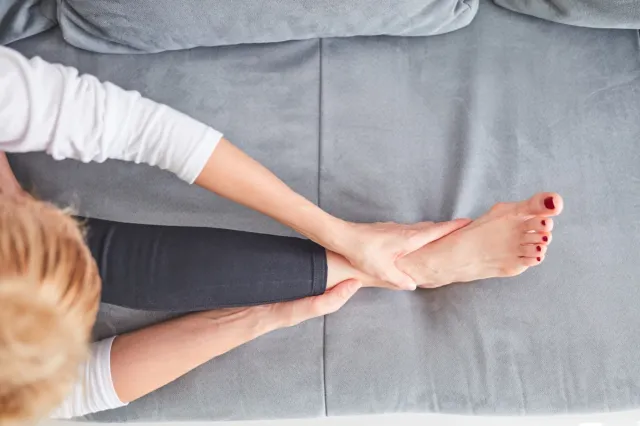
After we reach 60, our legs lose muscle faster than anywhere else in the body. This is called sarcopenia, and it affects the lower body at around double the rate of the upper body. The quadriceps (front of our thighs) and glutes deteriorate the fastest — losing 1-2% of their mass each year if we don’t do anything to prevent it.
The danger isn’t just about how your legs look. Weak legs directly predict falls, which are the leading cause of injury-related death in people over 65. When your leg muscles can’t support you properly, your balance suffers. When you trip or stumble, weak legs can’t react fast enough to catch you. That’s when fractures happen — and for older adults, a hip fracture can be life-changing.
Your legs are also your metabolic engine. Muscle tissue burns calories even at rest. When you lose leg muscle, your metabolism slows down, making weight management harder. This creates a cycle — less muscle means less activity, which means more muscle loss.
The most overlooked danger is loss of independence. Weak legs make it harder to get up from chairs, climb stairs, carry shopping, or even get off the toilet. These aren’t small inconveniences — they’re the difference between living independently and needing help with basic tasks.
RELATED: 5 Chair Exercises That Build Arm Strength Faster Than Weight Training After 60
Why Squats Fall Short After 60
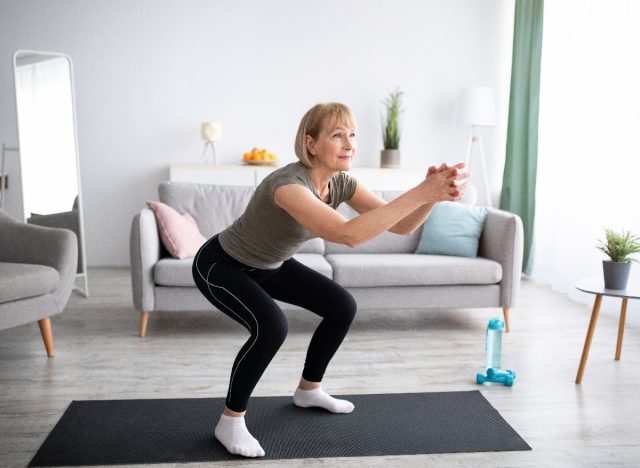
Traditional squats require a level of mobility, balance, and strength that many people over 60 simply don’t have anymore. Ankle mobility decreases with age. Hip flexibility reduces. Knee joints might have some wear and tear. Asking someone with these limitations to perform a perfect squat from standing is setting them up to either do it incorrectly (which risks injury) or avoid it entirely (which means no progress).
There’s also the fear factor. Standing squats feel unstable when your balance isn’t what it used to be. The lower you go, the more your brain screams at you to stop. This fear is protective, but it prevents you from working your muscles through their full range of motion.
Park bench exercises solve all of these problems. The bench gives you a reference point — you know exactly how low to go. When you feel the bench, you sit. This removes the guesswork and the fear. You’re not wondering if you’ll be able to get back up because you can use your hands on the bench to assist if needed.
Most park benches sit at around 16-18 inches high, which is slightly lower than a standard chair but not so low that it’s unrealistic for beginners. This height challenges your leg muscles without putting excessive stress on your knees. And because park benches don’t move, you have the confidence to push yourself harder without worrying about the bench shifting underneath you.
Bench Sit-to-Stand
This is the foundation of the routine. The bench sit-to-stand targets your quadriceps, glutes, and hamstrings — the exact muscles you need to get out of chairs, beds, and cars without using your hands. After 60, these muscles weaken faster than others, making daily movements progressively harder.
Muscles Trained: Quadriceps, glutes, hamstrings
How to Do It:
– Stand in front of the bench with your feet hip-width apart, about 6 inches away from it
– Lower yourself down slowly until you’re sitting on the bench — don’t collapse into the seat, control the descent
– Once seated, lean forward slightly
– Push through your heels and stand back up
– That’s one rep
Modifications:
– For balance issues: keep your hands on the bench beside you as you sit down and stand up
– For knee pain: don’t sit all the way down — go as low as comfortable, hold for a second, then stand back up
– For extra support: place your hands on the backrest as you stand
How to Progress:
– Remove hand support gradually: start with both hands, then one hand, then fingertips only, then no hands
– Once that’s comfortable, slow down the sitting phase — take 3-4 seconds to lower yourself down
– The slower descent increases time under tension, which builds more strength
Avoid These Mistakes:
– Don’t stand up by leaning too far forward and using momentum instead of your leg muscles
– Keep your chest up, push through your heels, and stand by straightening your legs — not by throwing your upper body forward
RELATED: 5 Daily Exercises That Restore Back Strength Faster Than Floor Workouts After 55
Bench Step-Up
This works your quadriceps, glutes, and hip stabilizers. It’s one of the best exercises for improving your ability to climb stairs and step up onto curbs — both of which become harder with age as leg strength declines.
Muscles Trained: Quadriceps, glutes, hip stabilizers
How to Do It:
– Stand facing the bench
– Place your right foot flat on the bench seat, making sure your whole foot is in contact — not just your toes
– Push through your right heel and step up onto the bench, bringing your left foot up to meet it
– Step back down with your left foot first, then your right
– That’s one rep on your right leg
– Complete the same number of reps on your left leg
Modifications:
– For balance: keep one hand on the backrest of the bench for support
– For knee pain: start with a lower step — find a curb or lower bench to practice on first
– Make sure you’re pushing through your heel, not your toes, as this reduces knee stress
How to Progress:
– Remove hand support, then slow down the movement
– Eventually, try stepping down with the same leg you stepped up with (right foot up, right foot down) rather than alternating — this is harder on your muscles and mimics climbing stairs more closely
Avoid These Mistakes:
– Don’t push off with your bottom foot to help yourself up — the foot on the bench should do all the work
– Your bottom foot should barely touch the ground; think of it as just brushing the floor for balance
Single-Leg Bench Squat
This targets your quadriceps, glutes, and balance. Working one leg at a time corrects strength imbalances — most people have one stronger leg — and dramatically improves stability, both of which reduce fall risk.
Muscles Trained: Quadriceps, glutes, balance stabilizers
How to Do It:
– Stand on your right leg in front of the bench, left foot hovering off the ground
– Extend your left leg out in front of you for balance
– Lower yourself down slowly until you’re sitting on the bench
– Stand back up on your right leg alone, keeping your left foot off the ground the entire time
– Complete all reps on one leg, then switch
Modifications:
– For balance: hold onto the backrest with both hands
– For knee pain: don’t sit all the way down — go as low as comfortable
– If this is too difficult: start by barely lifting your other foot off the ground — keep your toes touching for balance but do most of the work with one leg
How to Progress:
– Reduce hand support gradually
– Add a 2-3 second pause while seated before standing back up
– Eventually, try hovering just above the bench without sitting — lower until you’re an inch from the seat, then stand back up
Avoid These Mistakes:
– Don’t twist your body or lean to one side to compensate for weak leg muscles
– Keep your hips level and your chest facing forward
– If you can’t maintain this, use more hand support — don’t compromise form for the sake of removing support too soon
RELATED: 4 Bed Exercises That Restore Muscle Tone Faster Than Gym Machines After 55
Bench Bulgarian Split Squat
This works your quadriceps, glutes, hamstrings, and hip flexors. It’s excellent for improving your stride length when walking and your ability to step over obstacles — both of which deteriorate with age.
Muscles Trained: Quadriceps, glutes, hamstrings, hip flexors
How to Do It:
– Stand about 2 feet in front of the bench, facing away from it
– Place the top of your left foot on the bench seat behind you so your shoelaces are in contact with the bench
– Position your right foot far enough forward that when you lower down, your right knee doesn’t go past your toes
– Lower your body by bending your right knee until your left knee nearly touches the ground
– Push back up and complete all reps on one leg, then switch
Modifications:
– For balance: hold onto a tree or the backrest of another bench in front of you
– For knee pain: don’t go as deep — lower only as far as comfortable
– If putting your back foot on the bench feels too unstable: rest it on the ground behind you instead (this is called a split squat rather than Bulgarian)
How to Progress:
– Remove hand support, then add a pause at the bottom position
– Eventually, try holding light weights in your hands — water bottles work perfectly
Avoid These Mistakes:
– Don’t lean too far forward — keep your torso upright
– Your front shin should stay as vertical as possible
– If your front knee is shooting forward past your toes, your front foot is too close to the bench — step further forward
Bench Calf Raise
This targets your calf muscles, which are critical for balance, walking, and preventing ankle injuries. Weak calves contribute to shuffling gait patterns that increase fall risk.
Muscles Trained: Calves (gastrocnemius, soleus)
How to Do It:
– Stand facing the bench with your hands on the backrest for support
– Place the balls of your feet on the edge of the bench seat, heels hanging off
– Rise up onto your toes as high as possible
– Hold for a second at the top
– Lower your heels below the level of the bench to get a stretch in your calves
– That’s one rep
Modifications:
– For balance: keep both hands on the backrest throughout
– For ankle pain or stiffness: don’t lower your heels below bench level — go from flat foot to toes and back
– If standing on the edge feels unstable: do this exercise standing on flat ground instead
How to Progress:
– Move to one hand for support, then fingertips, then no hands
– Once you’re confident, try single-leg calf raises — same movement, but on one foot at a time
Avoid These Mistakes:
– Don’t bounce through the movement instead of controlling it
– Go slow — pause at the top and bottom of each rep
– If you’re bouncing, you’re using momentum instead of muscle strength
RELATED: 5 Chair Exercises That Build Core Strength Faster Than Planks After 60
How to Structure Your Weekly Routine
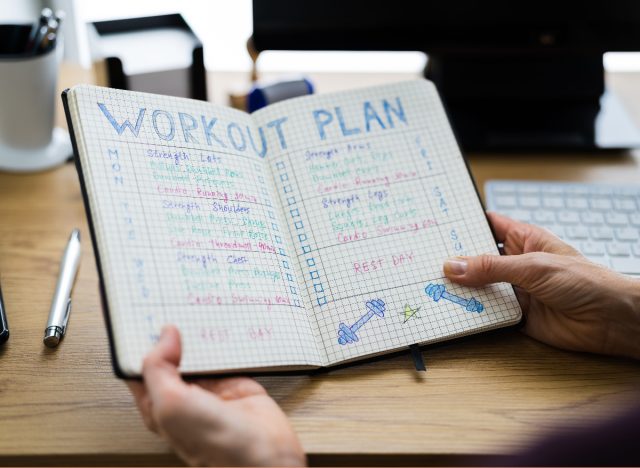
Start with three sessions per week — Monday, Wednesday, Friday works well. You need rest days between sessions to let your muscles recover and rebuild. This is when the strength gains actually happen.
For the first two weeks, do 2 sets of 8-10 reps of each exercise. This will take about 20 minutes including rest between sets. Rest for 60-90 seconds between sets — enough time to recover without cooling down completely.
After two weeks, increase to 3 sets of 10-12 reps. Your sessions will now take 25-30 minutes. After another two weeks, increase to 3 sets of 12-15 reps.
The order matters. Do them in the sequence listed here — sit-to-stands, step-ups, single-leg squats, Bulgarian split squats, calf raises. This goes from exercises using both legs to exercises using one leg, which allows you to maintain good form as you tire.
If you’re very deconditioned or haven’t exercised in years, start with just 1 set of 8 reps of the first three exercises only. Add exercises and sets gradually as your confidence builds.
Don’t skip rest days. Your muscles grow stronger during recovery, not during the workout itself. If you’re still sore two days after a session, take an extra day off before your next workout.
The Best Time to Go (and Why the Walk Counts)
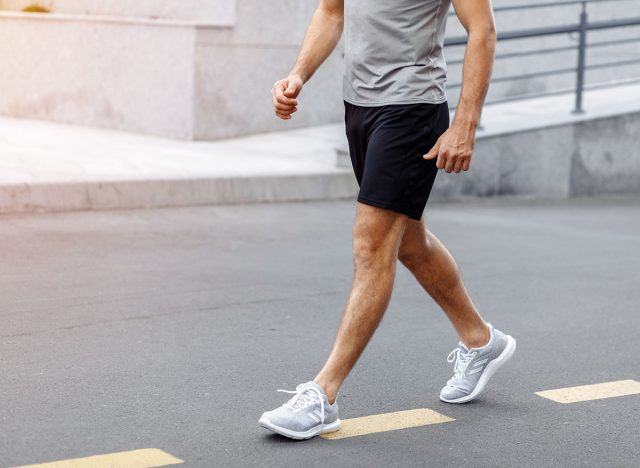
Morning is generally better for most people over 60. Your joints are stiffer first thing, so the walk to the park serves as a natural warm-up. By the time you arrive, your body is ready to move. Morning sessions also mean you’re less likely to skip them — the day hasn’t had a chance to derail your plans yet.
That said, if you feel weak or unsteady in the morning, wait until mid-morning or early afternoon when you’ve been up and moving for a few hours. Listen to your body’s natural rhythm.
The walk to and from the park absolutely adds benefit. Walking is low-impact cardiovascular exercise that complements the strength work you’re doing at the bench. A 10-15 minute walk each way gets your heart rate up, improves circulation to your muscles, and counts towards the 150 minutes of moderate activity per week that’s recommended for older adults.
Don’t stretch before you’ve moved — cold muscles don’t stretch well. Walk to the park, do your bench exercises, then walk home. If you want to stretch, do it after your session when your muscles are warm.
Weather permitting, getting outside in natural light also helps regulate your circadian rhythm, which improves sleep quality. Better sleep means better recovery, which means better strength gains.
RELATED: 4 Bed Exercises That Shrink Stubborn Midsection Faster Than Ab Workouts After 60
What to Expect in 4-6 Weeks

Week 1: You’ll feel a little sore in your legs when you wake up in the morning. That’s a good thing — your muscles are working. By the end of Week 2, the soreness will have dissipated as your body adjusts.
Week 2: You’ll feel stronger while you’re doing the exercises. The things that seemed difficult on Day 1 won’t seem so bad anymore. You won’t notice much of a difference in your daily life yet, but your nervous system is getting more efficient at using the muscles in your legs.
Week 4: You’ll notice that it’s easier to get up out of your chair — you won’t be using the armrests as much. You won’t be avoiding the stairs as much either. You might even be taking the stairs instead of the elevator. You’ll feel more stable when standing or walking on uneven surfaces.
Week 6: Other people will start to notice that you’re walking better. You’ll be moving a little faster, even though you aren’t trying to. Getting in and out of the car will be easier. You’ll be standing up straighter because your leg and core muscles are helping you hold yourself up.
You won’t see much of a difference in the amount of muscle you have at this stage — that generally takes 8-12 weeks. But you will see a difference in your functional strength. You’ll be better able to do the things you need to do during your day because your nervous system adjusts faster than your muscles.
Week 6 is also when most people notice the greatest improvement in their confidence. You’ll be trusting your legs again. You won’t be questioning every move you make. And that is just as important as being physically stronger — because you’ll stop placing limits on yourself.
The post 5 Park Bench Exercises That Restore Leg Muscle Faster Than Squats After 60 appeared first on Eat This Not That.
]]>The post 4 Standing Exercises That Restore Thigh Strength Faster Than Squats After 60 appeared first on Eat This Not That.
]]>“After 60, muscle loss accelerates due to sarcopenia, the age-related decline in muscle mass and strength. Adults can lose 3–8% of muscle mass per decade, and the rate often increases in the 60s and beyond,” explains Karen Ann Canham, CEO and founder of Karen Ann Wellness, Board-Certified Wellness Coach, and Nervous System Specialist who has almost two decades of experience in wellness and corporate leadership. “Hormonal shifts, reduced activity levels, and changes in neuromuscular signaling all contribute. The body also loses fast-twitch muscle fibers, which are responsible for power and quick reactions.”
Because your thighs house some of the biggest and most essential muscles in the entire body, weakness in this area can majorly impact mobility.
“Declining thigh strength can make everyday movements—like climbing stairs, standing up from a chair, walking long distances, or catching yourself during a loss of balance—much more difficult,” Canham tells us. “Maintaining strong thigh muscles is strongly linked to fall prevention, walking speed, and long-term independence.”
Below, Canham shares four standing exercises that can help restore thigh strength quicker than squats after 60.
Stair Step-Ups
- Begin by standing tall, facing a low step. Hold an optional lightweight dumbbell in each hand.
- Place your left foot firmly onto the surface, keeping your core engaged and chest tall.
- Press through your left heel to lift your body until your left leg is straight and you’re standing on the surface.
- Use control to lower back to the start position.
- Repeat on the other side.
- Perform 2 to 3 sets of 8 to 10 reps on each leg.
RELATED: 5 Easy Bodyweight Tests That Show Your Real Fitness After 45
Reverse Lunges
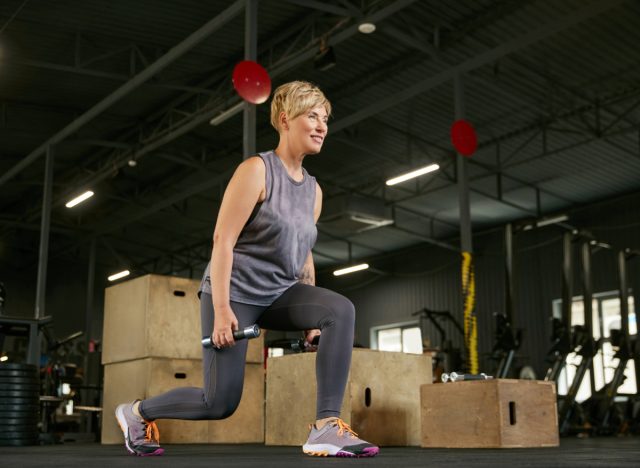
- Stand tall with your feet hip-distance apart and arms at your sides, holding a dumbbell in each hand.
- Step your left foot back a few feet, making sure to land on the ball of your foot.
- Lower into a lunge position until your front thigh is parallel to the ground and your back knee hovers just above the floor.
- Press through your front heel to rise back up to standing.
- Perform 2 to 3 sets of 8 to 10 reps on each leg.
RELATED: These 5 Daily Moves Reverse Muscle Loss Faster Than Gym Workouts After 45
Lateral Band Walks
- Begin by placing a resistance band around your ankles or thighs.
- Slightly bend your knees and step sideways, keeping your movement controlled.
- Perform 2 to 3 sets of 10 to 12 steps in each direction.
RELATED: If You Can Do These 3 Balance Tests at 60, Your Body Age Is 20 Years Younger
Supported Split Squats
- Start by standing tall holding onto a sturdy chair or wall for support.
- Step your left foot forward about 2 to 3 feet to assume a staggered stance.
- Bend both knees, lowering the bottom toward the ground.
- Press through your front heel to rise back up.
- Perform 2 to 3 sets of 8 to 10 reps on each leg.
The post 4 Standing Exercises That Restore Thigh Strength Faster Than Squats After 60 appeared first on Eat This Not That.
]]>The post If You Can Do This Many Squats After 60, Your Leg Strength Is Stronger Than 90% of Peers appeared first on Eat This Not That.
]]>Squats test the strength and coordination of multiple muscle groups at the same time. The quadriceps, glutes, hamstrings, calves, and core all work together to lower the body and push it back up again. Because the movement mimics everyday actions like sitting and standing, it provides an honest look at how well the lower body supports daily activity.
Many people assume they need complicated equipment or long workouts to evaluate their fitness. In reality, a basic squat test can offer a clear picture of leg strength and muscular endurance. I often use this test with new clients because it reveals both strength and movement control within a few seconds.
If you want to see how your leg strength compares with others in your age group, this simple test provides a powerful benchmark. The number of controlled squats you can perform without stopping often reflects how well your lower body supports movement and balance.
RELATED: 5 Chair Exercises That Shrink Apron Belly Faster Than Gym Classes After 60
How to Perform the Squat Test Properly
Before counting repetitions, proper squat form ensures the muscles perform the work safely and effectively. Good technique protects the knees and lower back while making the results more meaningful.
Stand with your feet roughly shoulder-width apart and your chest lifted. Slowly push your hips backward while bending your knees, lowering your body as if sitting into a chair. Keep your heels on the floor and maintain an upright torso as you descend.
Lower until your thighs approach parallel with the floor or until you reach a comfortable depth. From there, press through your heels and tighten the glutes to stand back up. Continue performing controlled repetitions while maintaining steady breathing and good posture.
What Your Results Mean
The number of squats you can complete without stopping reveals a great deal about your lower-body muscular endurance and strength. Because the movement recruits several major muscle groups at once, fatigue often appears quickly when those muscles lack conditioning.
Here’s a general benchmark many trainers use for adults over 60 performing controlled bodyweight squats:
- Under 10 squats: Leg strength needs improvement
- 10–20 squats: Average strength for this age group
- 20–30 squats: Strong lower-body endurance
- 30–40 squats: Excellent leg strength
- 40+ squats: Stronger than roughly 90% of peers
These ranges assume proper form and continuous movement without long pauses between repetitions. Even small improvements in squat count often indicate meaningful increases in leg strength.
RELATED: 5 Standing Exercises That Restore Glute Strength Faster Than Squats After 60
How to Improve Your Squat Results
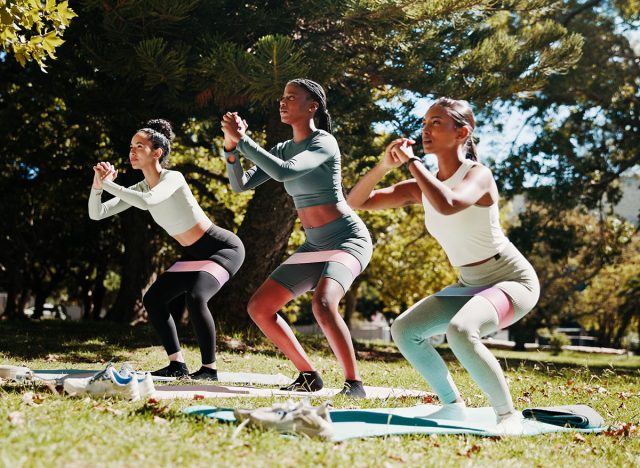
Improving squat performance requires strengthening the muscles that power the movement while gradually increasing muscular endurance. In my experience training older adults, the fastest progress comes from practicing squats regularly while supporting them with a few simple lower-body exercises.
Start by practicing bodyweight squats two or three times per week. Focus on slow, controlled repetitions while keeping the chest lifted and pushing through the heels. If performing full squats feels difficult at first, chair squats provide a great starting point. Simply sit down on a chair and stand back up repeatedly to build strength safely.
Additional movements like glute bridges, step-ups, calf raises, and wall sits strengthen the supporting muscles involved in squatting. As these muscles grow stronger, the body becomes more comfortable lowering and rising repeatedly without fatigue.
With consistent practice, many adults over 60 quickly increase their squat count within a few weeks. Stronger legs don’t just improve test results, they also make everyday activities like walking, climbing stairs, and standing up feel noticeably easier.
The post If You Can Do This Many Squats After 60, Your Leg Strength Is Stronger Than 90% of Peers appeared first on Eat This Not That.
]]>The post 5 Standing Exercises That Restore Glute Strength Faster Than Squats After 60 appeared first on Eat This Not That.
]]>Squats tend to shift workload toward the quadriceps if posture, depth, or hip engagement isn’t correct. That’s why I frequently introduce standing exercises that directly target the glutes while reducing knee strain. These movements allow people to focus on squeezing and activating the glute muscles rather than simply moving up and down through a squat pattern.
Another benefit of standing glute exercises involves functional carryover. Because these movements happen in an upright position, the muscles strengthen in the same posture used for walking, balancing, and climbing stairs. When clients train the glutes this way consistently, they often regain strength and stability faster than they do with traditional squatting routines alone.
The following standing exercises focus on activating the glutes from multiple angles while keeping the joints comfortable. Perform each movement slowly and concentrate on squeezing the glute muscles during every repetition. Over time, these exercises help restore the strength and power that keep the body moving confidently.
RELATED: 5 Daily Exercises That Restore Hip Mobility Faster Than Floor Stretches After 55
Standing Hip Extensions
Standing hip extensions directly target the gluteus maximus, the largest muscle responsible for pushing the leg backward and propelling the body forward during walking. I often start clients with this movement because it isolates the glutes without requiring complicated coordination or heavy resistance.
Extending the leg behind the body forces the glutes to contract while the hips remain stable. Many clients quickly realize how little these muscles were working during their previous workouts. With consistent practice, the glutes begin firing more naturally during everyday activities.
How to Do It
- Stand tall while holding a chair for balance
- Extend one leg straight behind you
- Squeeze the glutes at the top
- Lower the leg slowly
- Alternate legs steadily.
Standing Kickbacks
Kickbacks strengthen the glutes through a slightly larger range of motion than basic hip extensions. I frequently use this movement once clients become comfortable activating their glute muscles.
The key involves keeping the torso upright while moving only the leg. When performed slowly, the glutes remain under tension throughout the lift and the return. This continuous engagement helps rebuild muscle endurance and strength.
How to Do It
- Stand tall with hands on a chair
- Lift one leg backward in a controlled motion
- Keep the knee slightly bent
- Squeeze the glutes at the top
- Lower slowly and switch legs.
RELATED: If You Can Hold These 3 Bed Positions After 60, Your Core Is Stronger Than 90% of Peers
Standing Side Leg Raises
Side leg raises activate the gluteus medius, a smaller but extremely important muscle that stabilizes the hips during walking and balancing. Weakness here often leads to hip instability and lower back discomfort.
I include this movement in nearly every glute-strength routine because it strengthens the muscles that keep the pelvis level while the body moves. Many clients notice improved balance after just a few weeks of practice.
How to Do It
- Stand tall beside a chair
- Lift one leg out to the side
- Keep the torso upright
- Lower the leg slowly
- Repeat and switch sides.
Step-Back Toe Taps
Step-back toe taps strengthen the glutes while improving balance and coordination. This exercise mimics the backward hip motion used during walking and stepping, making it highly functional.
I often add this movement because it forces the glutes to control both the backward step and the return to standing. The muscles remain engaged throughout the entire movement, building strength and stability simultaneously.
How to Do It
- Stand tall with feet hip-width apart
- Step one foot backward and tap the floor
- Return to the starting position
- Keep your torso upright
- Alternate legs steadily.
RELATED: 5 Bed Exercises That Restore Leg Strength Faster Than Squats After 60
Standing Glute Squeeze
The standing glute squeeze may look simple, but it teaches the body how to fully activate the glute muscles. Many people lose the ability to contract these muscles strongly over time, which limits strength during other exercises.
I often use this movement as a finishing drill because it reinforces strong glute engagement. When clients learn to contract these muscles deliberately, other lower-body exercises become far more effective.
How to Do It
- Stand tall with feet hip-width apart
- Tighten both glute muscles firmly
- Hold the contraction for a few seconds
- Relax briefly
- Repeat several times.
The post 5 Standing Exercises That Restore Glute Strength Faster Than Squats After 60 appeared first on Eat This Not That.
]]>The post 5 Bed Exercises That Restore Leg Strength Faster Than Squats After 60 appeared first on Eat This Not That.
]]>In my coaching work, I’ve found that people often stick with routines that minimize barriers. When an exercise feels easy to start and repeat, consistency increases. Bed-based movements are surprisingly effective because they provide support while still allowing the hips and thighs to work through meaningful ranges of motion. Clients often tell me their legs feel more awake and stable within just a few minutes.
The five exercises below target the glutes, thighs, and hips while encouraging smooth, controlled movement. They build strength in the muscles responsible for balance and stability. Perform them regularly, and you’ll build stronger legs, better coordination, and a morning routine that starts your day on a high note.
Glute Bridge
The glute bridge activates the glutes and hamstrings while encouraging strong hip extension. Many people spend long periods sitting during the day, which can make the glutes less active. This exercise quickly wakes up those muscles and helps restore strength in the hips. The movement also supports the lower back by strengthening the muscles that stabilize the pelvis. With consistent practice, glute bridges help rebuild lower-body strength and improve overall leg stability.
Muscles Trained: Glutes, hamstrings, and core stabilizers.
How to Do It:
- Lie on your back with your knees bent and your feet flat on the bed.
- Place your arms at your sides for support.
- Press through your heels and lift your hips upward.
- Squeeze your glutes at the top of the movement.
- Slowly lower your hips back to the starting position.
Recommended Sets and Reps: Perform 3 sets of 12 to 15 reps. Rest for 45 seconds between each set.
Best Variations: Single-leg glute bridge, pause glute bridge, elevated glute bridge.
Form Tip: Drive through your heels and focus on squeezing your glutes at the top.
RELATED: 5 Standing Exercises That Flatten Stubborn Belly Pooch Faster Than Crunches After 55
Glute Bridge Marching
Glute bridge marching adds a stability challenge, forcing the hips and core to work harder. Holding the bridge position while lifting one foot encourages the glutes and hamstrings to stay active. This variation also strengthens the stabilizing muscles around the hips. Over time, these muscles improve balance and coordination during everyday activities. The movement builds strength while teaching the body to control each leg independently.
Muscles Trained: Glutes, hamstrings, and core stabilizers.
How to Do It:
- Begin in a glute bridge position with your hips lifted.
- Brace your core and keep your hips steady.
- Lift one foot a few inches off the bed.
- Lower the foot back down with control.
- Alternate legs while maintaining the bridge position.
Recommended Sets and Reps: Perform 3 sets of 10 to 12 marches per leg. Rest for 45 seconds between each set.
Best Variations: Slow tempo bridge march, pause bridge march, banded bridge march.
Form Tip: Keep your hips level as you alternate lifting each foot.
Sit-to-Stand
The sit-to-stand movement strengthens the thighs while reinforcing one of the most important patterns in daily life. Standing up from a seated position requires coordination between the quads, glutes, and hips. Practicing this movement repeatedly builds strength and confidence in the legs. The exercise also improves balance and encourages proper squat mechanics. Over time, it helps restore the strength needed for everyday activities.
Muscles Trained: Quads, glutes, hamstrings, and core.
How to Do It:
- Sit on the edge of the bed with your feet flat on the floor.
- Lean your torso slightly forward.
- Press through your feet and stand up.
- Pause briefly at the top.
- Lower yourself back down with control.
Recommended Sets and Reps: Perform 3 sets of 10 to 12 reps. Rest for 45 seconds between each set.
Best Variations: Slow tempo squat-to-stand, pause squat-to-stand, assisted squat-to-stand.
Form Tip: Drive through your heels and keep your chest tall as you stand.
RELATED: 4 Standing Exercises That Restore Stair-Climbing Strength Faster Than Lunges After 60
Side-Lying Leg Lifts
Side-lying leg lifts strengthen the outer hips and glutes, which play an important role in balance and stability. These muscles help control hip alignment during walking and standing. Strengthening them improves overall leg strength and coordination. The controlled lift also encourages the hips to move through a comfortable range of motion. With regular practice, this exercise helps build stronger hips and more stable legs.
Muscles Trained: Glutes, outer hips, and hip stabilizers.
How to Do It:
- Lie on your side with your legs stacked.
- Support your head with your lower arm.
- Keep your top leg straight.
- Lift the leg upward slowly.
- Lower it back down with control.
Recommended Sets and Reps: Perform 3 sets of 12 to 15 reps per leg. Rest for 30 seconds between each set.
Best Variations: Banded leg lift, slow tempo leg lift, pulse raises.
Form Tip: Keep your hips stacked and avoid leaning backward during the lift.
Supported Split Squats
Supported split squats strengthen the legs while improving balance and coordination. The staggered stance encourages each leg to work independently. This helps rebuild strength evenly between both sides of the body. Holding onto the bed for support allows the movement to feel more stable and controlled. Over time, the exercise helps restore leg strength and improve confidence during single-leg movements.
Muscles Trained: Quads, glutes, hamstrings, and hips.
How to Do It:
- Stand beside the bed and hold the edge for support.
- Step one foot backward into a staggered stance.
- Bend both knees to lower into a lunge.
- Keep your chest upright and your core engaged.
- Push through your front foot to return to standing.
Recommended Sets and Reps: Perform 3 sets of 8 to 10 reps per leg. Rest for 45 seconds between each set.
Best Variations: Assisted split squat, pause split squat, tempo split squat.
Form Tip: Keep your front heel firmly planted throughout the movement.
RELATED: 5 Exercises You Can Do in Your Bedroom That Restore Full-Body Strength After 60
Best Daily Tips for Restoring Leg Strength After 60
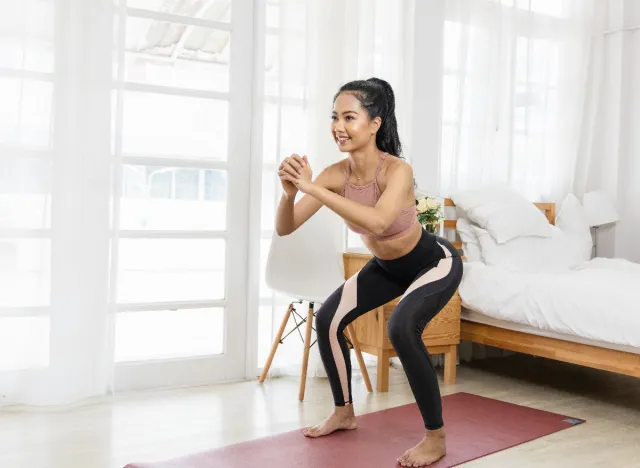
Rebuilding leg strength after 60 often comes down to consistency and smart exercise selection. The body responds best when the muscles receive regular stimulation through controlled movement. Small daily routines can create meaningful improvements in strength and stability over time.
- Focus on movements that mimic daily activities: Squatting, lunging, and bridging help strengthen the muscles used throughout the day.
- Move with control: Slow, steady repetitions improve muscle activation and joint stability.
- Train one leg at a time: Single-leg exercises help build balance and strengthen stabilizing muscles.
- Stay consistent with your routine: Short daily sessions often produce better results than occasional long workouts.
- Listen to your body: Progress gradually and increase effort as strength improves.
Stick with these exercises and your legs will grow stronger, steadier, and more capable with each passing week.
References
- Schumacher, Leah M et al. “Consistent Morning Exercise May Be Beneficial for Individuals With Obesity.” Exercise and sport sciences reviews vol. 48,4 (2020): 201-208. doi:10.1249/JES.0000000000000226
- Schumacher, Leah M et al. “Consistent exercise timing as a strategy to increase physical activity: A feasibility study.” Translational journal of the American College of Sports Medicine vol. 8,2 (2023): e000227. doi:10.1249/tjx.0000000000000227
The post 5 Bed Exercises That Restore Leg Strength Faster Than Squats After 60 appeared first on Eat This Not That.
]]>