The post 5 Standing Exercises That Build Walking Endurance Faster Than Treadmills After 65 appeared first on Eat This Not That.
]]>Treadmills repeat the same motion over and over, but they don’t always correct the weak links that limit endurance. If the hips feel unstable or the calves lack push-off power, the body compensates and tires faster. That’s why targeted standing exercises often deliver faster, more noticeable results. They train the body to move with strength, balance, and control.
Another advantage of standing work involves posture. Walking endurance improves when the body stays upright, stable, and efficient. These exercises reinforce that alignment while strengthening the exact muscles used during walking. Over time, that translates into longer walks, smoother strides, and less fatigue.
The following movements focus on building the strength and coordination behind every step. Move with control, stay tall through your posture, and focus on muscle engagement rather than speed. With consistency, walking endurance starts to rebuild in a way that actually lasts.
RELATED: If You Can Hold a Bridge This Long After 55, Your Core Strength Is Top-Tier
Standing March With Hold
This movement sharpens the exact motion used during walking while forcing the core and hips to stabilize. I rely on this drill often because it rebuilds coordination and endurance at the same time. When clients struggle with shorter stride length or fatigue, this usually becomes one of the first exercises I introduce.
Lifting the knee and holding it briefly forces the body to balance on one leg while the core stays engaged. That single-leg control directly translates into stronger, more efficient walking mechanics. Over time, each step starts to feel lighter and more controlled.
How to Do It
- Stand tall with feet hip-width apart
- Lift one knee to hip height
- Hold for 2–3 seconds
- Lower slowly
- Alternate legs continuously
Step-Through Lunges (Controlled Range)
This variation builds forward-driving strength without the strain of deep lunges. I use this often for clients who need stride power but don’t tolerate traditional lunges well. The movement teaches the body to push forward with control rather than drop into the knees.
Stepping forward lightly and returning to center builds strength in the quads and glutes while reinforcing balance. When done with a shorter range and strict control, the movement feels smooth and joint-friendly.
How to Do It
- Stand tall with feet together
- Step one foot forward lightly
- Bend slightly through the front leg
- Push back to standing
- Alternate legs steadily.
RELATED: 5 Bed Exercises That Flatten Stubborn Midsection Faster Than Crunches After 60
Standing Heel-to-Toe Raises
This movement targets the calves and ankles, which play a critical role in walking endurance. I’ve seen many clients improve their walking distance simply by strengthening their push-off power through the lower legs.
Rolling from heels to toes builds coordination and endurance through the entire foot and ankle. That improved control allows each step to feel smoother and more efficient, reducing fatigue over longer walks.
How to Do It
- Stand tall with feet hip-width apart
- Lift toes slightly off the ground
- Roll forward onto your toes
- Pause briefly
- Return slowly and repeat.
Standing Side Steps
Side steps strengthen the hips, which stabilize the body during walking. Weak hips often lead to side-to-side sway, which wastes energy and reduces endurance. I include this exercise in nearly every walking program because it builds that missing stability.
Stepping side to side while staying low and controlled forces the outer hips to engage continuously. That stability helps keep the body aligned during walking, which makes each step more efficient.
How to Do It
- Stand tall with slight bend in knees
- Step one foot out to the side
- Bring the other foot to meet it
- Stay controlled and steady
- Continue side to side.
RELATED: 5 Chair Exercises That Restore Leg Muscle Faster Than Squats After 65
Standing Hip Extensions With Pause
This movement targets the glutes, which drive the body forward during walking. I always emphasize glute strength when building endurance because weak glutes force other muscles to compensate, leading to early fatigue.
Adding a pause at the top increases muscle engagement and builds endurance in the glutes. When these muscles fire properly, walking feels more powerful and requires less effort.
How to Do It
- Stand tall holding a chair if needed
- Extend one leg behind you
- Pause and squeeze the glutes
- Lower slowly
- Alternate legs steadily.
The post 5 Standing Exercises That Build Walking Endurance Faster Than Treadmills After 65 appeared first on Eat This Not That.
]]>The post 5 Daily Exercises That Restore Walking Endurance Faster Than Treadmills After 65 appeared first on Eat This Not That.
]]>True walking endurance depends on more than cardiovascular fitness. Strong hips, stable knees, active glutes, and responsive ankle muscles all contribute to how long someone can walk comfortably. When any of these areas weaken, fatigue sets in quickly and walking begins to feel like a chore rather than a natural movement.
That’s why targeted exercises often outperform treadmill sessions when rebuilding endurance. Instead of simply repeating the walking motion, these drills strengthen the muscles that power each step and keep the body balanced. Many clients notice that after just a few weeks of strengthening these areas, their walking distance increases without feeling winded.
The following exercises focus on the muscles that control stride length, balance, and push-off strength. Practice them daily with slow, controlled movement and steady breathing. Over time, these drills help restore the strength and stability that allow longer, more comfortable walks.
Standing March
Standing marches strengthen the hip flexors and core muscles responsible for lifting the leg during each step. This movement closely mirrors the mechanics of walking while allowing greater control and muscle activation. Many clients over 65 rediscover smoother stride patterns once these muscles regain strength.
When the hip flexors weaken, people often shuffle rather than stride. The standing march corrects that pattern by training the body to lift the knee confidently and maintain upright posture. Practicing this movement daily helps rebuild the rhythm and coordination required for longer walks.
How to Do It
- Stand tall with feet hip-width apart
- Lift one knee to hip height
- Tighten your core muscles
- Lower the leg slowly
- Alternate legs in a marching rhythm.
RELATED: 5 Chair Exercises That Firm Inner Thigh Looseness Faster Than Squats After 55
Sit-to-Stand
The sit-to-stand exercise strengthens the glutes and quadriceps, two muscle groups responsible for pushing the body forward during walking. In my experience training older adults, improving these muscles quickly translates into stronger, more confident steps.
This movement also improves overall lower-body endurance because it trains the same muscles used during walking uphill or climbing stairs. As the legs grow stronger, the body requires less effort with every stride.
How to Do It
- Sit in a sturdy chair
- Place feet flat on the floor
- Stand up using your legs
- Lower yourself back down slowly
- Repeat with controlled movement.
Standing Heel Raises
Heel raises strengthen the calf muscles responsible for push-off power during walking. Every step requires the calves to propel the body forward, yet these muscles often weaken with age and inactivity.
Many of my clients feel immediate improvements in walking stamina after strengthening the calves. Stronger calves allow the body to move forward more efficiently, which reduces fatigue during longer walks.
How to Do It
- Stand tall with feet hip-width apart
- Rise onto your toes slowly
- Pause briefly at the top
- Lower heels back down
- Repeat steadily.
RELATED: If You Can Complete These 5 Standing Exercises Without Rest After 55, Your Endurance Is Elite
Side Leg Raises
Side leg raises target the hip abductors, muscles that stabilize the pelvis while walking. Weak hips often cause side-to-side sway, which wastes energy and reduces endurance.
I frequently add this movement to programs for clients who feel unstable while walking. Strengthening the outer hips improves balance and keeps the body aligned during each step.
How to Do It
- Stand tall beside a chair
- Lift one leg out to the side
- Keep torso upright
- Lower the leg slowly
- Repeat and switch sides.
RELATED: 5 Morning Exercises That Flatten Apron Belly Faster Than Gym Machines After 60
Step-Back Lunges
Step-back lunges strengthen the glutes, hamstrings, and core while reinforcing balance. This combination builds the strength necessary for longer strides and improved walking endurance.
Unlike forward lunges, the step-back variation places less pressure on the knees while still activating the major walking muscles. Many clients feel their stride length increase after consistently practicing this movement.
How to Do It
- Stand tall with feet hip-width apart
- Step one foot backward
- Lower into a gentle lunge
- Push through front heel to stand
- Alternate legs.
The post 5 Daily Exercises That Restore Walking Endurance Faster Than Treadmills After 65 appeared first on Eat This Not That.
]]>The post 5 Exercises That Restore Walking Endurance After 65, According to a Trainer appeared first on Eat This Not That.
]]>When I build programs for older adults who want to move better and stay active, I rarely jump straight into more walking volume. Instead, I focus on strengthening the muscles and energy systems that support efficient strides. Over the years of coaching both everyday clients and master’s athletes, I’ve watched simple, well-chosen movements bring back stamina faster than endless miles alone.
The five exercises below target leg strength, hip stability, and cardiovascular fitness, all of which play major roles in how long and comfortably you can walk. Add these into your weekly routine, and you’ll give your body the support it needs to keep going strong.
RELATED: If You Can Hold These 3 Positions After 60, Your Core Strength Is Top-Tier
Sit to Stand
The sit-to-stand builds foundational leg strength that directly supports walking mechanics. Every strong stride starts with the ability to produce force through the hips and knees. I often program this early because it closely mirrors daily movement patterns. For many adults over 65, improving this pattern quickly translates to easier walking and better stamina.
Muscles Trained: Quadriceps, glutes, hamstrings, and core
How to Do It:
- Sit tall near the front edge of a sturdy chair with your feet flat on the floor.
- Brace your core and lean your torso slightly forward.
- Press through your heels and stand up under control.
- Fully extend your hips at the top without leaning back.
- Lower yourself slowly back to the chair and lightly touch down.
Recommended Sets and Reps: Perform 3 sets of 8 to 12 reps. Rest for 60 to 90 seconds between each set.
Best Variations: Hands-free sit to stand, goblet sit to stand, tempo sit to stand
Form Tip: Drive through your heels and keep your chest proud as you stand.
Standing March
The standing march reinforces single-leg stability and hip flexor strength, both of which support efficient walking rhythm. Many older adults lose stride quality before they lose pure strength. This drill helps rebuild coordination while also challenging balance in a safe, controlled way.
Muscles Trained: Hip flexors, glutes, core, and calves
How to Do It:
- Stand tall with your feet hip-width apart and your hands on your hips or holding a support.
- Brace your core and shift your weight onto one leg.
- Lift the opposite knee up to hip height.
- Pause briefly while maintaining balance.
- Lower the foot under control and repeat on the other side.
Recommended Sets and Reps: Perform 3 sets of 10 to 12 reps per side. Rest for 45 to 60 seconds between each set.
Best Variations: Supported march, band resisted march, slow tempo march
Form Tip: Stay tall through your torso and avoid leaning side to side.
RELATED: 7 Chair Exercises That Reverse Rounded Posture After 50, According to Experts
Step Ups
Step-ups build real-world leg strength and increase cardiovascular demand simultaneously. They closely resemble walking uphill or climbing stairs, which makes them extremely valuable for endurance carryover. I use these often with clients who want to extend their walking distance without fatigue setting in too early.
Muscles Trained: Glutes, quadriceps, hamstrings, and calves
How to Do It:
- Stand facing a sturdy step or low box.
- Place your entire right foot on the step.
- Press through your right heel and step up.
- Bring your left foot to meet the right at the top.
- Step down under control and repeat on the same side.
Recommended Sets and Reps: Perform 3 sets of 8 to 10 reps per side. Rest for 60 to 90 seconds between each set.
Best Variations: Low box step-ups, alternating step-ups, weighted step-ups
Form Tip: Keep your knee tracking over your toes as you step up.
Heel to Toe Walk
Walking endurance depends heavily on balance and foot control. The heel-to-toe walk sharpens gait mechanics and improves stability with every step. I like this drill because it challenges coordination in a very joint-friendly way while reinforcing efficient walking patterns.
Muscles Trained: Anterior tibialis, calves, foot stabilizers, and core
How to Do It:
- Stand tall in an open space.
- Step forward, placing your heel directly in front of your opposite toes.
- Roll smoothly from heel to toe.
- Continue walking forward in a straight line.
- Turn carefully and repeat back to the start.
Recommended Sets and Reps: Perform 3 sets of 20 to 30 controlled steps. Rest for 45 seconds between each set.
Best Variations: Supported heel-to-toe walk, slow tempo walk, eyes forward walk
Form Tip: Move slowly and stay focused on smooth, controlled steps.
RELATED: 5 Exercises Women Over 55 Should Do Each Morning to Reduce Bra Bulge, According to a Trainer
Brisk Walking Intervals
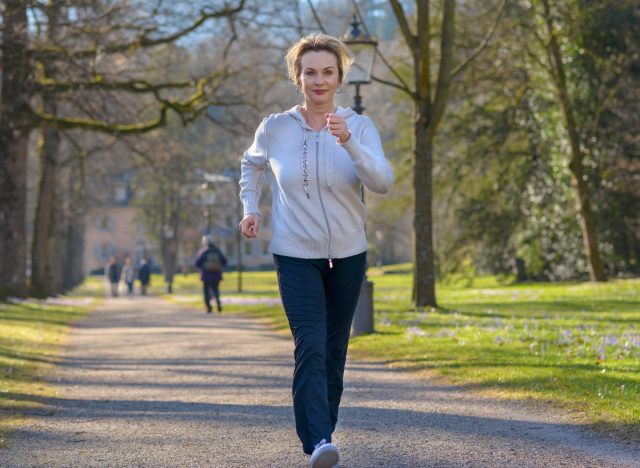
Strength work builds the engine, but intervals teach your body how to use it efficiently. Short bursts of faster walking improve cardiovascular capacity and help extend overall endurance. This method works extremely well for adults over 65 because it allows effort without prolonged fatigue.
Muscles Trained: Full lower body and cardiovascular system
How to Do It:
- Begin with a comfortable five-minute warm-up walk.
- Increase your pace to a brisk walk for 30 to 60 seconds.
- Return to an easy pace for 60 to 90 seconds.
- Repeat the interval sequence for the planned duration.
- Finish with a slow cooldown walk.
Recommended Sets and Reps: Perform intervals for 10 to 20 minutes total, two to three times per week.
Best Variations: Hill intervals, longer brisk phases, treadmill intervals
Form Tip: Pump your arms naturally to help drive your walking rhythm.
RELATED: The 8-Minute Bedtime Routine That Tightens Arm Flab After 60, According to a Trainer
The Best Tips to Improve Walking Endurance After 65

Rebuilding walking stamina takes a blend of strength, consistency, and smart progression. Many adults over 65 regain impressive endurance once they support their walking with targeted training. I’ve seen clients add meaningful distance and confidence in just a few months when they follow a structured plan. Focus on steady progress rather than rushing the process. Your body responds best to consistent effort applied week after week. Use the tips below to keep moving forward.
- Walk most days of the week: Frequent, moderate walks build endurance more effectively than occasional long outings.
- Strength train two to three times weekly: Stronger legs delay fatigue and support better stride mechanics.
- Increase distance gradually: Add about 5-10% more walking time each week.
- Prioritize good footwear: Supportive shoes improve comfort and reduce unnecessary fatigue.
- Stay tall while walking: Good posture helps your lungs and hips work more efficiently.
- Fuel and hydrate well: Proper nutrition supports energy levels and recovery.
- Stay consistent above all else: Small weekly improvements add up to major endurance gains.
Stick with these exercises and habits, and your walking endurance can improve well beyond what most people expect after 65.
References
- Ungvari, Zoltan et al. “The multifaceted benefits of walking for healthy aging: from Blue Zones to molecular mechanisms.” GeroScience vol. 45,6 (2023): 3211-3239. doi:10.1007/s11357-023-00873-8
- Hwang, Chueh-Lung et al. “The physiological benefits of sitting less and moving more: Opportunities for future research.” Progress in cardiovascular diseases vol. 73 (2022): 61-66. doi:10.1016/j.pcad.2020.12.010
The post 5 Exercises That Restore Walking Endurance After 65, According to a Trainer appeared first on Eat This Not That.
]]>The post Here’s How Long Your Fasted Morning Walk Should Be To Flatten Lower Belly After 60 appeared first on Eat This Not That.
]]>Lower belly fat often becomes more stubborn with age as daily movement declines and metabolism slows. A fasted morning walk helps counter that trend by boosting early-morning calorie burn and improving energy regulation. It also builds momentum, making staying active later feel easier rather than forced.
The key is knowing how long those walks should last to support fat loss without overdoing it. Duration matters, especially when walking before eating, because the goal is steady progress, not fatigue. When timed and paced correctly, fasted walks can play a valuable role in flattening the lower belly after 60.
Why Fasted Morning Walks Help Reduce Lower Belly Fat

Walking in the morning before breakfast encourages your body to rely more heavily on stored fuel. With lower circulating insulin levels, your system becomes more efficient at tapping into fat for energy during low to moderate movement. Over time, that can support gradual reductions in lower belly fat.
Morning walks also increase daily activity totals without competing with strength training or other workouts later in the day. By getting movement done early, you’re less likely to skip it, which improves consistency across the week.
There’s also a behavioral benefit. Fasted morning walks tend to improve appetite awareness and daily routine structure. When the day starts with movement, food choices, and energy levels often follow a more predictable rhythm, which supports long-term fat loss.
RELATED: 5 Bed Exercises That Restore Posture Faster Than Chiropractic After 60
How Long Should Your Fasted Morning Walk Be After 60

Fasted walking works best when sessions stay moderate and repeatable. General activity guidelines suggest 150 to 300 minutes of moderate movement per week for weight management, and morning walks can cover a meaningful portion of that total.
For most adults over 60, a fasted morning walk lasting 20 to 45 minutes strikes the right balance. Shorter walks still offer benefits, especially when done daily, while longer walks increase calorie burn as long as intensity stays controlled.
The goal isn’t to push pace aggressively. Fasted walks should feel steady, comfortable, and energizing rather than exhausting. How you structure the walk determines how sustainable it feels.
Steady Morning Walk Option
- Duration: 30 to 45 minutes
- Pace: Comfortable but purposeful
- Frequency: 5 to 7 days per week
This approach supports consistent calorie burn while keeping stress low. It works well for people who enjoy longer walks and want to build a dependable morning habit.
Shorter Fasted Walk Option
- Duration: 20 to 30 minutes
- Pace: Slightly brisk with relaxed breathing
- Frequency: Daily or near daily
Shorter walks fit easily into most mornings and still contribute meaningfully to weekly activity totals. They’re ideal if energy levels vary or mornings feel tight.
RELATED: The 8-Minute Bed Routine That Rebuilds Muscle Better Than Weight Training After 65
The Smartest Tips for Using Fasted Walks to Flatten Lower Belly After 60

Fasted morning walks are most effective when they support the rest of your routine rather than replace it. When paired with smart training and nutrition habits, they become a steady driver of fat loss.
- Keep intensity moderate: Fasted walks should elevate your heart rate without leaving you breathless or shaky.
- Pair walks with strength training later in the day: Lifting preserves muscle and supports metabolism, while morning walks handle daily calorie burn.
- Stay hydrated before walking: A glass of water helps maintain energy and comfort during fasted movement.
- Focus on posture and rhythm: Standing tall and swinging your arms both improve efficiency and engage more muscle.
- Fuel appropriately after walking: Balanced meals after your walk support recovery and help regulate appetite for the rest of the day.
When fasted morning walks become a routine, they stop feeling like a strategy and become part of your lifestyle. That consistency is what ultimately helps flatten the lower belly and keeps progress moving forward after 60.
References
- Nicklas, Barbara J., et al. “Effect of Exercise Intensity on Abdominal Fat Loss During Calorie Restriction in Overweight and Obese Postmenopausal Women: A Randomized, Controlled Trial.” The American Journal of Clinical Nutrition, vol. 89, no. 4, 2009, pp. 1043–1052, https://doi.org/10.3945/ajcn.2008.26938
- Centers for Disease Control and Prevention. Adult Activity: An Overview | Physical Activity Basics. Centers for Disease Control and Prevention, 20 Dec. 2023, https://www.cdc.gov/physical-activity-basics/guidelines/adults.html. Accessed 10 Feb. 2026.
- Liu, Xiaolong et al. “The Effects of Six Weeks of Fasted Aerobic Exercise on Body Shape and Blood Biochemical Index in Overweight and Obese Young Adult Males.” Journal of exercise science and fitness vol. 21,1 (2023): 95-103. doi:10.1016/j.jesf.2022.11.003
- La New, Jacquelyn M, and Katarina T Borer. “Effects of Walking Speed on Total and Regional Body Fat in Healthy Postmenopausal Women.” Nutrients vol. 14,3 627. 31 Jan. 2022, doi:10.3390/nu14030627
The post Here’s How Long Your Fasted Morning Walk Should Be To Flatten Lower Belly After 60 appeared first on Eat This Not That.
]]>The post Here’s How Long Your Stair Climbing Workout Should Be To Shrink Belly Fat After 55 appeared first on Eat This Not That.
]]>Belly fat tends to hang on when daily movement drops and workouts become less frequent or less demanding. Stair climbing flips that script by increasing effort while keeping sessions manageable. Even brief bouts create a noticeable metabolic response, helping increase total calories burned throughout the day.
The key is understanding how long stair climbing workouts should actually last to support fat loss without overdoing it. When duration and intensity are balanced correctly, stair climbing becomes a powerful tool for shrinking belly fat while supporting strength and overall conditioning.
RELATED: Here’s How Long Your Walking Workout Should Be To Flatten Your Lower Belly After 55
Why Stair Climbing Works So Well for Belly Fat Loss

Stair climbing demands more effort than flat walking, which means your body burns more calories in less time. Each step requires you to lift your body weight against gravity, placing a greater workload on your legs and glutes while keeping your heart rate elevated.
That increased demand also encourages your body to use stored fat for energy, especially when stair sessions are performed consistently throughout the week. Over time, this helps create the calorie deficit needed to reduce belly fat without relying on long workouts.
Stair climbing also pairs well with strength training and other cardio sessions. It builds lower-body endurance, improves coordination, and adds conditioning volume without requiring separate gym equipment. Because sessions can stay relatively short, recovery stays manageable, which supports better training consistency.
RELATED: 5 Daily Exercises That Shrink Muffin Top Faster Than Cardio After 50
How Long Should Your Stair Climbing Workouts Last After 55

Fat loss depends on total calories burned over time, not just how hard a single workout feels. Most activity guidelines recommend 150 to 300 minutes of moderate to vigorous movement each week, and stair climbing can help you reach that target efficiently.
For most adults over 55, stair climbing workouts lasting 15 to 30 minutes work best. Shorter sessions still provide benefits when performed frequently, while slightly longer sessions increase total calorie burn and cardiovascular demand.
How you structure those minutes matters. Continuous stair climbing and interval-based stair workouts stress the body differently, and both can be effective depending on your fitness level and schedule.
Continuous Stair Climbing Option
- Duration: 20 to 30 minutes
- Pace: Steady and controlled, with brief pauses if needed
- Frequency: 3 to 5 days per week
This approach builds cardiovascular endurance and leg strength while keeping intensity predictable. It works well for people who prefer steady effort and want a straightforward routine.
Interval Stair Climbing Option
- Duration: 15 to 25 minutes
- Structure:
- Warm up for 3 to 5 minutes at an easy pace
- Climb stairs briskly for 30 to 60 seconds
- Walk slowly or rest for 60 to 90 seconds
- Repeat for 10 to 15 rounds
- Cool down for 3 to 5 minutes
Intervals increase heart rate quickly and deliver strong metabolic benefits in less time. This option suits busy schedules or anyone looking for a higher challenge without extending workout length.
RELATED: If You Can Do This Many Pushups After 60, Your Upper Body Is Stronger Than 90% of Peers
The Smartest Ways to Shrink Belly Fat With Stair Climbing After 55

Stair climbing works best when it fits into a well-rounded routine that supports recovery and consistency. When used strategically, it enhances strength training and other cardio instead of competing with them.
- Use stair climbing to supplement strength workouts: Adding stair sessions on non-lifting days or after shorter strength workouts increases calorie burn without interfering with muscle recovery.
- Balance intensity across the week: Mixing stair climbing with easier cardio sessions helps manage fatigue while keeping overall activity high.
- Focus on posture and control: Staying tall, driving through your heels, and keeping your core engaged improves efficiency and reduces joint strain.
- Keep sessions frequent and manageable: Shorter, repeatable workouts build better results than infrequent all-out efforts.
- Fuel to support performance: Balanced meals make stair climbing feel stronger and more sustainable, which improves adherence over time.
When stair climbing becomes a regular part of your routine, belly fat loss becomes more attainable. The combination of efficiency, intensity, and consistency makes it one of the most effective tools for staying lean and capable after 55.
References
- Yun, Jeong Eun et al. “Effect of Short Bouts of Vigorous Stair Climbing on Cardiorespiratory Fitness in Women with Overweight and Obesity: A Pilot Feasibility Study.” Journal of obesity & metabolic syndrome vol. 32,4 (2023): 346-352. doi:10.7570/jomes23024
- World Health Organization. Physical Activity. WHO, https://www.who.int/initiatives/behealthy/physical-activity. Accessed 5 Feb. 2026.
The post Here’s How Long Your Stair Climbing Workout Should Be To Shrink Belly Fat After 55 appeared first on Eat This Not That.
]]>The post Here’s How Long Your Walking Workout Should Be To Flatten Your Lower Belly After 55 appeared first on Eat This Not That.
]]>Lower belly fat tends to stick around when daily activity drops, stress creeps up, and calorie burn becomes inconsistent. Walking directly addresses all three. It keeps you moving often, supports steady energy use, and encourages habits that are easier to repeat week after week. Over time, those habits add up in ways short bursts of effort never quite manage.
The real challenge isn’t figuring out whether walking works. It’s understanding how long your walking workouts should last and how to structure them so they actually support fat loss. Once duration and consistency are dialed in, walking becomes a powerful driver for flattening the lower belly without leaving you feeling drained or sore.
RELATED: 4 Daily Exercises That Build More Strength Than Monthly Gym Memberships After 50
The Benefits of Walking for Flattening Your Lower Belly

Walking creates a steady, repeatable calorie burn that complements strength training and higher-intensity cardio. Lifting builds muscle and raises your metabolic baseline, while harder cardio challenges your cardiovascular system. Walking fills the gap by adding low-stress movement that increases total daily energy expenditure without interfering with recovery.
Because walking is easy to recover from, it allows you to stay active on days when heavy lifting or intense cardio wouldn’t make sense. That added movement helps keep calorie output consistent across the week, which plays a major role in fat loss around the lower belly. Instead of replacing your harder sessions, walking enhances them by keeping your body moving between workouts.
Walking also supports circulation, joint health, and overall recovery, which makes it easier to train more consistently over time. When your body feels better between sessions, workouts tend to improve, and adherence stays high. That combination of consistency, recovery, and daily movement is what makes walking such a powerful tool for flattening the lower belly after 55.
How Long Your Walking Workout Should Be To Flatten Your Lower Belly After 55
Fat loss comes down to creating a steady calorie deficit over time, and walking plays a major role in that equation. Most activity guidelines recommend 150-300 minutes of moderate physical activity per week, providing a clear target for sustainable weight loss. Hitting that range consistently matters more than pushing any single workout too hard.
For most adults over 55, this usually means walking for 30 to 60 minutes per session. Shorter walks still help, especially when they’re done daily, but longer sessions increase total calorie burn and build endurance that supports more movement overall.
How those minutes are accumulated can vary. Steady-state walks and interval-based walks both work well, and each has its place depending on your schedule, energy levels, and preferences.
RELATED: If You Can Hold This Position for 30 Seconds After 65, Your Core Stability Is Top-Tier
Steady-State Walking Option

- Duration: 45 to 60 minutes
- Pace: Brisk enough to raise your heart rate while still allowing conversation
- Frequency: 4 to 6 days per week
This approach works well if you enjoy longer walks or want something relaxing and predictable. The extended duration increases total calories burned while staying gentle on joints and connective tissue.
Interval Walking Option
- Duration: 25 to 40 minutes
- Structure:
- Warm up for 5 minutes at an easy pace
- Walk fast for 1 to 2 minutes
- Walk easily for 2 to 3 minutes
- Repeat for 20 to 30 minutes
- Cool down for 5 minutes
Interval walking raises heart rate more quickly and delivers strong metabolic benefits in less time. It’s a solid option when time is limited or when you want a little more challenge without extending your workout.
Flattening your lower belly works best when walking is supported by smart daily habits. Walking lays the foundation, but progress accelerates when the rest of your routine reinforces it rather than fighting against it.
- Prioritize frequency over perfection: Walking more days per week keeps calorie burn steady and easier to manage.
- Add strength training to the mix: Building muscle improves metabolism and helps your body handle carbs more efficiently.
- Use incline walks strategically: Adding a mild incline increases calorie burn and glute engagement without increasing joint impact. Even short uphill segments can raise heart rate, improve lower-body strength, and make walking workouts more effective for trimming lower belly fat.
- Pay attention to posture: Standing tall, swinging your arms, and lightly engaging your core increases overall muscle involvement.
- Break movement into smaller chunks: Short walks after meals support blood sugar control and daily calorie expenditure.
- Fuel for movement: Balanced meals keep energy high and make walking feel easier, not forced.
When walking becomes a regular part of your day, fat loss starts to feel less stressful and more automatic. Over time, those consistent steps create changes that last well beyond the scale.
RELATED: 5 Indoor Exercises That Build More Strength Than Cold-Weather Walks After 55
References
- Serwe, Katrina M et al. “Effectiveness of long and short bout walking on increasing physical activity in women.” Journal of women’s health (2002) vol. 20,2 (2011): 247-53. doi:10.1089/jwh.2010.2019
- Ungvari, Zoltan et al. “The multifaceted benefits of walking for healthy aging: from Blue Zones to molecular mechanisms.” GeroScience vol. 45,6 (2023): 3211-3239. doi:10.1007/s11357-023-00873-8
- La New, Jacquelyn M, and Katarina T Borer. “Effects of Walking Speed on Total and Regional Body Fat in Healthy Postmenopausal Women.” Nutrients vol. 14,3 627. 31 Jan. 2022, doi:10.3390/nu14030627
The post Here’s How Long Your Walking Workout Should Be To Flatten Your Lower Belly After 55 appeared first on Eat This Not That.
]]>The post 5 Incline Walking Exercises That Shrink Belly Overhang Faster Than Flat Walking After 55 appeared first on Eat This Not That.
]]>Steady Incline Endurance Walk
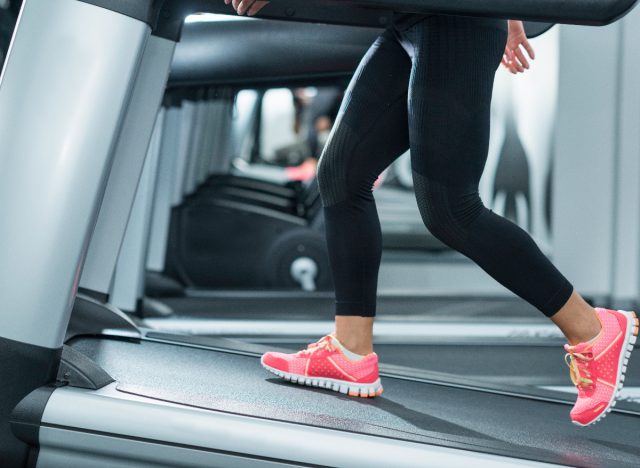
Set the treadmill to a 4 to 6 percent incline at a pace where you can still talk in short sentences but feel challenged. Walk for 20 to 30 minutes. This builds real cardiovascular endurance while strengthening the glutes and hamstrings without the joint impact of jogging. Fifty-five is not fragile, and this is a great place to prove to yourself you can handle more than flat ground.
RELATED: 4 Daily Chair Exercises That Rebuild Hip Strength Faster Than Floor Stretches After 60
Incline Intervals

Alternate 2 minutes at a 7 to 10 percent incline with 2 minutes at a 2 to 3 percent incline for recovery. Repeat 5 to 8 rounds. These intervals safely bring you into that slightly breathless zone that supports heart health and fat loss, without long, exhausting efforts. This is where fitness starts to improve, just outside your comfort zone.
Posture-Focused Hill Walk
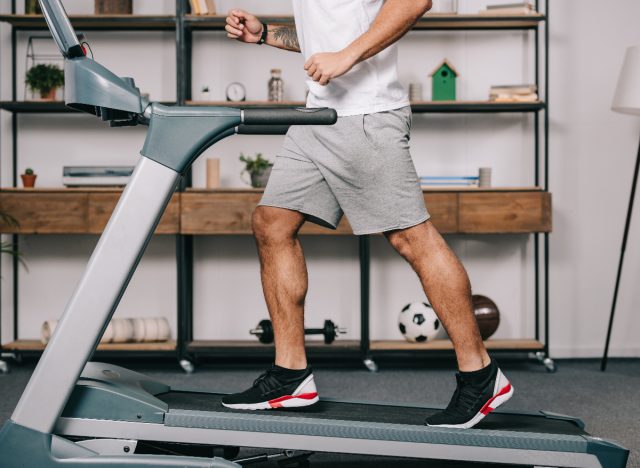
At a 5 to 7 percent incline, slow the pace slightly and focus on tall posture, light core engagement, and driving through the heels. Walk for 10 to 15 minutes. Adding in 10 to 20 second glute squeezes every few minutes can really wake up muscles that tend to “go offline” with age. This turns walking into a strength and posture session that helps counteract the forward rounding many adults develop over time.
RELATED: Over 60? If You Can Perform These Four Core Moves, Your Strength is Exceptional
Progressive Hill Climb
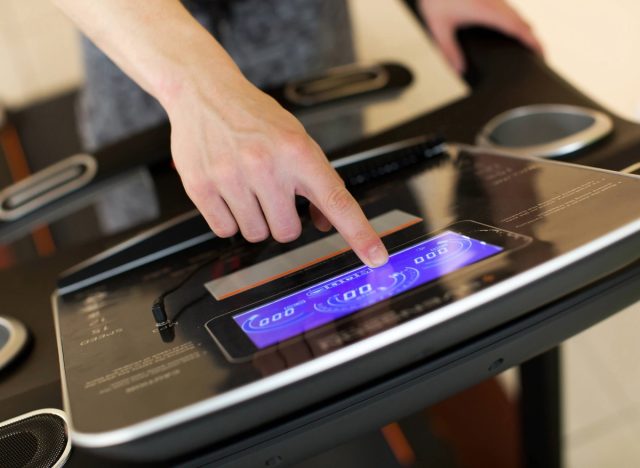
Start at a 3 percent incline and increase by 1 to 2 percent every 2 to 3 minutes until you reach 10 to 12 percent, then gradually come back down. If your treadmill allows, include 2 to 3 minutes at a slight decline at the end. Total time 20 minutes. This mimics walking up and down real hills outdoors and builds leg strength, balance, and heart health in a very joint-friendly way.
Short Hill “Strength” Repeats

Walk at a challenging incline of 9 to 12 percent for 30 to 60 seconds, then lower to 2 to 3 percent for 1 to 2 minutes to recover. Repeat 6 to 10 times. These short climbs help maintain lower-body muscle, especially the glutes, which are essential for balance, metabolism, and keeping up with grandkids, stairs, and everyday life.
RELATED: 5 Standing Exercises That Flatten Lower Belly Pooch Faster Than Cardio After 55
Incline Walking Raises the Heart Rate More Efficiently

Why are there added benefits of incline walking over flat? “Incline walking increases the training effect without needing to move faster, which is especially valuable for adults over 55,” Anderson says. “First, it raises heart rate more efficiently. Walking uphill challenges the cardiovascular system at a manageable speed, making it easier on the joints while still helping you get into that slightly breathless zone that improves heart health and calorie burn.”
Incline Walking Recruits More Muscle

Second, it recruits more muscle, especially the glutes, hamstrings, and calves. “These muscles naturally decline with age if we do not challenge them. Incline walking helps maintain the strength needed for balance, posture, and everyday movements like climbing stairs or getting up off the floor. It is also important to avoid hanging onto the treadmill rails whenever possible, even if that means slowing down, so your legs and core do the work,” Anderson says.
RELATED: 5 Bed Exercises That Restore Muscle Strength Faster Than Weight Training After 60
Incline Walking Supports Healthy Weight Management

Third, it supports healthy weight management. “Because more muscle is involved, the body uses more energy during the same amount of time compared to flat walking, which can help with body composition over time,” she says.
Incline Walking Is Lower Impact

Finally, incline walking is lower impact than jogging but delivers many of the same metabolic and cardiovascular benefits. “For adults over 55, that combination of higher return with lower joint stress makes it a powerful, sustainable way to stay strong, capable, and independent for decades to come,” she says.
The post 5 Incline Walking Exercises That Shrink Belly Overhang Faster Than Flat Walking After 55 appeared first on Eat This Not That.
]]>The post 6 Daily Walking Exercises That Build Leg Strength Better Than Gym Machines After 50 appeared first on Eat This Not That.
]]>While gym machines help guide your movements for you by stabilizing your body, dictating the path of motion, and often reducing how much your hips, glutes, and stabilizing muscles need to work, walking is a closed-chain, full-body exercise that forces your legs to support and move your entire bodyweight with every step. Walking with correct posture, pace, and varied terrain will boost your lower body strength, coordination, balance, and endurance.
Studies on walking mechanics and aging show that intentional walking (especially uphill, downhill, and at varied speeds) improves lower-body muscle engagement, joint health, and neuromuscular coordination. Eccentric loading during downhill walking and increased hip extension during faster or uphill walking are particularly important for maintaining muscle mass and resilience as we age.
But with so many different ways to approach walking, it can feel overwhelming to start a daily walking practice. That’s why we chatted with James Brady, CPT, certified personal trainer at OriGym, who shares six effective daily walking practices that build leg strength better than gym machines after 50.
“For those over 50, how you walk matters more than how far you walk,” says Brady. “Small changes to daily walking can build real leg strength without stepping into a gym. You should walk with a purposeful pace, pushing the ground away with each step. This strategy engages the glutes and thighs far more than a slow shuffle. Strong walking is active, not passive.”
In this article, we break down Brady’s six recommended daily walking practices that turn an ordinary walk into a powerful leg-strength routine. Read on to learn more.
(Next up: If You Can Do This Many Squats After 50, Your Leg Strength Is Elite.)
Purposeful Pace Walking

Most people walk aimlessly, shufflling along, letting momentum do the work. Instead, do purposeful pace walking by turning each step into an active push against the ground to help build lower body strength and endurance.
How to do it:
- Stand tall with your chest up and your shoulders relaxed.
- Start walking at a moderate pace that feels deliberate but sustainable.
- Push the ground away with your back leg on every step.
- Engage your glutes with each step as your foot leaves the ground.
- Remember to breathe and maintain a steady walking rhythm without going too fast.
- Continue for 10 to 20 minutes depending on your fitness level.
Uphill Walking

Uphill walking is one of the most effective ways to build leg strength and boost your cardio without equipment because it forces your legs to work harder with every step.
How to do it:
- Find a hill, incline, or sloped path (even a short one).
- Walk uphill at a steady but challenging pace.
- Lean slightly forward from your ankles (not your waist).
- Drive through your heels as you step upward.
- Keep strides shorter to maintain control.
- Focus on squeezing your glutes as you push off with each step.
- Walk uphill for 30 to 90 seconds at a time. Rest for 90 to 120 seconds between walking intervals.
RELATED: If You Can Do This Many Crunches After 55, Your Core Strength Is Elite
Long Stride Push-Back Walking
This practice shifts emphasis from reaching forward to driving backward, which strengthens your hips and posterior chain (backside), both of which are common areas that weaken with age.
How to do it:
- Begin walking on flat ground with short steps.
- Focus on extending your legs behind you and pushing the ground backward forcefully with each step.
- Squeeze the glute of your trailing leg.
- Keep your torso upright and stable with good posture.
- Walk this way for several minutes at a time.
Fast Walking Intervals

Short bursts of faster walking challenge your legs and cardiovascular system together, creating strength that carries over into daily movement.
How to do it:
- Walk at a comfortable pace for several minutes.
- Increase your speed for 30 to 60 seconds.
- Maintain good posture and arm swing.
- Push the ground away more forcefully.
- Breathe steadily and maintain a steady walking rhythm.
- Slow back down to recover.
- Repeat for 3 to 6 rounds during a walk.
RELATED: 5 Standing Exercises That Shrink Belly Fat and Build Core Strength After 55
Controlled Downhill Walking
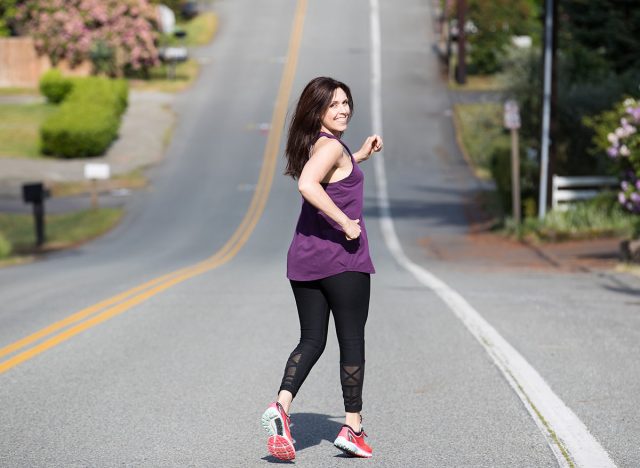
Downhill walking trains your legs eccentrically, meaning your muscles work while lengthening. This is essential for building resilience and joint control.
How to do it:
- Approach a downhill section of your walking route and slow your pace gradually.
- Keep your chest upright and your core engaged.
- Resist gravity instead of letting yourself fall forward.
- Control each step as your foot contacts the ground.
- Feel your thighs and glutes working to brake the movement.
- Continue for short downhill sections, then recover for one to two minutes.
RELATED: 4 Standing Exercises That Restore Core Strength Better Than Planks After 45
Posture-Focused Finish Walking

Ending your walks with posture awareness helps your body develop proper loading patterns and makes sure fatigue doesn’t impact your movement quality.
How to do it:
- For the final few minutes of your walk, stand taller with a straight back.
- Brace your core as if zipping up snug jeans.
- Let your arms swing naturally.
- Keep your gaze forward, not down.
- Walk with intention rather than coasting.
- Maintain smooth, confident steps.
- Finish the walk feeling strong, not slouched.
The post 6 Daily Walking Exercises That Build Leg Strength Better Than Gym Machines After 50 appeared first on Eat This Not That.
]]>The post Here’s How Long Your Incline Walking Workout Should Be To Shrink Hanging Belly Fat After 55 appeared first on Eat This Not That.
]]>That’s where dose becomes everything. Fat loss responds to consistency, intensity, and total output over time, not random effort. When daily calories out reliably outpace calories in, change follows. Miss that balance, and even solid workouts might stall. Nail it, and walking becomes far more than casual cardio. It turns into a repeatable strategy that fits real life and supports long-term weight control.
Incline walking earns its place because it boosts energy demand without beating up joints or recovery. It elevates heart rate, recruits more muscle, and encourages longer sessions without burnout. Pair it with strength training and a balanced diet, and it becomes a powerful lever for trimming stubborn belly fat. Let’s break down exactly how long your incline walking workouts should last, how to structure them, and how to get the most from every step.
RELATED: 4 Chair Exercises That Rebuild Standing Endurance Better Than Walking Programs After 65
Here’s How Long Your Incline Walking Workout Should Be
When it comes to shrinking hanging belly fat after 55, duration matters just as much as consistency. Your body responds best to repeatable effort that creates a steady calorie deficit without overstressing joints or recovery systems. Incline walking hits that balance by raising energy demand while staying sustainable enough to perform multiple times per week. The goal isn’t to walk forever. It’s to walk long enough, often enough, and with purpose.
- Aim for 30 to 45 minutes per session: This range provides enough total work to support fat loss while keeping fatigue manageable. Thirty minutes works well when intensity stays intentional. Forty-five minutes helps when progress slows or daily activity remains low.
- Train four to six days per week: Frequency drives results. Regular sessions create consistent calorie output, which matters more than occasional long workouts.
- Use a moderate incline most of the time: An incline between 5 and 8 percent increases muscle involvement and heart rate without pounding joints. Outdoor hills deliver similar benefits.
- Keep effort at a sustainable intensity: Breathe harder while still maintaining control. Short sentences should feel possible. This keeps sessions effective and repeatable.
- Avoid ultra-long sessions: Walking for more than 60 minutes often reduces intensity and increases fatigue without a meaningful added benefit in fat loss.
Two Incline Walking Workouts That Support Fat Loss After 55
One of the biggest reasons incline walking works so well is flexibility. You can adjust the structure without changing the core movement, which keeps progress moving while avoiding boredom or burnout. Some days call for steady, repeatable effort. Others benefit from brief intensity spikes that raise calorie burn and cardiovascular demand. Both approaches support fat loss when used consistently, and alternating between them often delivers the best long-term results.
RELATED: 6 Daily Exercises That Rebuild Lost Muscle Faster Than Weight Training After 55
Option 1: Steady Incline Walking Workout
This option works best on most days of the week. It keeps stress low, supports recovery, and builds a reliable calorie deficit over time. Use it when energy feels solid, and you want a workout that fits easily into your routine.
- Warm-Up: 5 minutes
- Walk flat or with a very slight incline at an easy pace. Let breathing settle, and posture align.
- Main Walk: 30 to 40 minutes
- Set the incline to 5-8 percent. Choose a brisk pace that raises your heart rate while allowing you to speak short sentences. Focus on smooth, consistent steps.
- Optional Progression
- Every 5 to 10 minutes, slightly increase the speed or incline to prevent your body from settling into cruise mode.
- Cool Down: 5 minutes
- Lower the incline and slow your pace until breathing returns to normal.
Total Time: 40 to 50 minutes
Frequency: Four to six days per week.
RELATED: The 7-Minute Morning Routine That Restores Leg Strength Faster Than Squats After 55
Option 2: Incline Walking Interval Workout
This option adds short bursts of higher effort to increase calorie burn in less time. It works well one to two days per week or on days when time feels tight. The goal is controlled intensity, not exhaustion.
- Warm-Up: 5 minutes
- Walk flat or with a slight incline at an easy pace.
- Interval Block: 20 to 25 minutes, alternating between higher and moderate effort:
- Hard Interval: 1 to 2 minutes at a 7 to 10 percent incline with a brisk pace. Breathing should feel heavy but controlled.
- Recovery Interval: 2 to 3 minutes at a 3 to 5 percent incline at a comfortable pace.
- Repeat this cycle five to seven times.
- Cool Down: 5 minutes, returning to a flat surface or very low incline and walking easily.
Total Time: 30 to 35 minutes
Frequency: One to two days per week.
RELATED: 5 Simple Bed Exercises That Shrink Lower Belly Faster Than Ab Workouts After 60
The Best Tips for Getting the Most Out of Your Walking Workouts After 55

Incline walking delivers results when it’s supported by smart habits. Small details compound over time, turning routine walks into a reliable fat loss tool. These tips help you get more return from every session without adding complexity.
- Walk with intention: Stay tall, engage your arms, and keep your strides purposeful. Strong posture increases muscle recruitment and calorie burn.
- Support workouts with balanced nutrition: Extreme calorie cuts reduce energy and slow recovery. Prioritize protein, fiber, and whole foods so walking feels energizing rather than draining.
- Pair walking with strength training: Two to three strength sessions per week help preserve muscle and support metabolic health. Walking helps with fat loss. Lifting protects lean mass.
- Track weekly minutes, not just workouts: Total volume matters. Aim for 150 to 225 minutes of incline walking per week to support steady fat loss.
- Progress gradually: Increase time or incline in small steps. Sudden jumps raise injury risk and reduce consistency.
- Protect your sleep: Poor sleep disrupts appetite regulation and the release of fat-loss hormones. Walking helps manage stress, but recovery still starts at night.
References
- Silder, Amy et al. “Predicting the metabolic cost of incline walking from muscle activity and walking mechanics.” Journal of biomechanics vol. 45,10 (2012): 1842-9. doi:10.1016/j.jbiomech.2012.03.032
- Howell, Scott, and Richard Kones. “Calories in, calories out” and macronutrient intake: the hope, hype, and science of calories.” American journal of physiology. Endocrinology and metabolism vol. 313,5 (2017): E608-E612. doi:10.1152/ajpendo.00156.2017
- Ungvari, Zoltan et al. “The multifaceted benefits of walking for healthy aging: from Blue Zones to molecular mechanisms.” GeroScience vol. 45,6 (2023): 3211-3239. doi:10.1007/s11357-023-00873-8
The post Here’s How Long Your Incline Walking Workout Should Be To Shrink Hanging Belly Fat After 55 appeared first on Eat This Not That.
]]>The post 6 Daily Walking Routines That Improve Fitness Better Than the Gym After 50 appeared first on Eat This Not That.
]]>Walking routines deliver those essentials when done with intent. Changing arm drive, direction, tempo, and stance transforms walking into a powerful conditioning tool. These variations challenge the cardiovascular system, strengthen muscles, and sharpen coordination without joint punishment or recovery debt.
Performed daily, the following walking routines outperform gym sessions by reinforcing how the body actually moves. They build endurance, stability, and strength simultaneously, the exact qualities that matter most after 50.
Power Walk With Arm Drive
This routine elevates walking from casual movement to full-body conditioning. Aggressive arm drive recruits the shoulders, upper back, and core, increasing energy output without speeding up. The legs work harder simply because the upper body demands more support.
Daily power walks strengthen posture and improve cardiovascular capacity while keeping impact low. Over time, this routine tightens the waist and builds durable endurance.
How to Do It
- Walk tall with chest open
- Drive arms forcefully front to back
- Keep elbows bent near 90 degrees
- Maintain steady, purposeful pace
RELATED: 5 Standing Arm Exercises That Smooth Jiggle Faster Than Weights After 45 (No Equipment)
Interval Pace Walk
Changing pace challenges the heart and lungs more effectively than steady walking. Short bursts of faster steps followed by controlled recovery maintain intensity without exhaustion. This method improves aerobic capacity while remaining repeatable day after day.
Unlike gym intervals, walking pace changes spare joints and allow longer sessions. Consistency compounds results faster than occasional high effort.
How to Do It
- Walk at comfortable pace to start
- Increase speed for short intervals
- Return to moderate pace
- Repeat rhythm throughout walk
Hill or Incline Walk

Inclines recruit the glutes and calves more aggressively, increasing strength and metabolic demand. Uphill walking also reduces joint impact compared to flat, fast walking. The torso must lean slightly forward, engaging the core to maintain balance.
Daily incline walks build leg strength and cardiovascular resilience simultaneously. Even mild hills deliver meaningful gains when used consistently.
How to Do It
- Walk uphill or increase treadmill incline
- Take shorter, controlled steps
- Keep torso slightly forward
- Push through heels with intent
RELATED: If You Can Do This Many Lunges After 60, You’re Fitter Than Most People Half Your Age
Lateral Step Walk
Moving sideways challenges muscles that standard walking neglects. This routine strengthens hips, improves balance, and sharpens coordination. The constant side stepping forces stabilizers to stay engaged, raising total workload without increasing speed.
Daily lateral walks improve joint integrity and reduce fall risk. This added dimension builds fitness the gym often overlooks.
How to Do It
- Step sideways for several steps
- Keep hips low and chest tall
- Change direction periodically
- Move smoothly with control
Loaded Carry Walk
Adding light load transforms walking into strength training. Carrying weights challenges grip, arms, core, and posture simultaneously. The body must stay braced with every step, dramatically increasing muscular involvement.
Performed daily, this routine builds functional strength and endurance faster than isolated gym exercises. Short distances deliver powerful returns.
How to Do It
- Hold weights at sides or chest
- Walk slowly with upright posture
- Keep ribs down and shoulders set
- Stop before form breaks
RELATED: 5 Simple Bed Exercises That Trim Belly Overhang Better Than Ab Workouts After 60
Backward Walk
Walking backward forces the brain and muscles to work harder. This pattern strengthens the knees, improves coordination, and challenges balance safely at low speed. The novelty increases engagement without adding impact.
Daily backward walking sharpens movement control and reinforces lower-body strength. Even brief bouts enhance overall fitness.
How to Do It
- Walk backward slowly in safe area
- Keep steps short and controlled
- Stay upright with eyes forward
- Use support if needed
The post 6 Daily Walking Routines That Improve Fitness Better Than the Gym After 50 appeared first on Eat This Not That.
]]>