The post If You Can Hold a Wall Sit This Long After 60, Your Leg Strength Is Top-Tier appeared first on Eat This Not That.
]]>These muscles also act as stabilizers for your knees and hips. When the lower body stays strong, it absorbs force more efficiently and keeps joints aligned during movement. That support reduces strain on the knees and lower back while helping your body stay steady during prolonged activity.
A wall sit offers one of the simplest ways to test that strength. The position forces your quads and glutes to maintain steady tension while your body remains stable against the wall. The amount of time you can hold that position reveals a lot about the strength and endurance of your lower body. Ahead, you’ll learn why the wall sit works so well, how to perform it correctly, what your hold time says about your leg strength, and how to build stronger legs.
RELATED: The 7-Minute Standing Routine That Restores Core Strength Faster Than Floor Exercises After 60
Why the Wall Sit Is an Important Movement
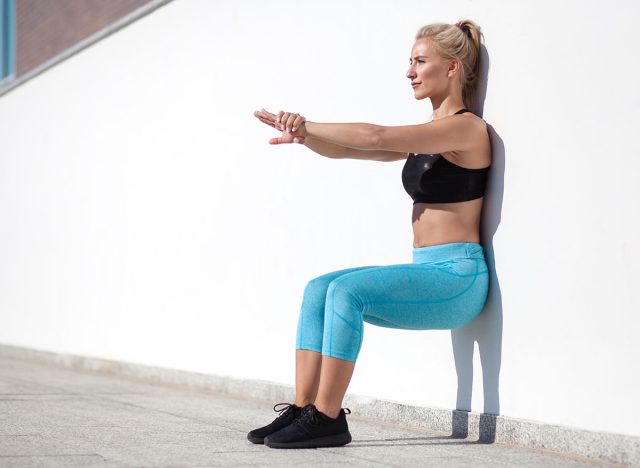
The wall sit challenges your legs to support your body weight while you remain in a fixed position. Many everyday tasks require this same type of muscular endurance. Waiting in line, lowering yourself into a chair, or holding a steady stance during movement all place similar demands on your legs.
Your quads carry most of the load during a wall sit, while your glutes and core help stabilize your posture. Holding the position requires these muscles to stay engaged for an extended period without relying on momentum. That sustained tension helps build fatigue resistance in the muscles responsible for walking, standing, and climbing.
The wall sit also reinforces joint control around the knees and hips. When your legs stay strong in this position, your body learns to maintain alignment even as fatigue builds. That control plays a major role in protecting your joints and supporting long-term mobility.
How to Perform the Best Wall Sit Technique
A proper wall sit requires strong positioning and steady muscular tension. Your goal is to maintain a stable squat position with your back supported by the wall. When your posture stays consistent throughout the hold, the exercise becomes an accurate measure of leg strength and endurance.
How to Do It:
- Stand with your back against a wall and your feet about two feet in front of you.
- Slide your back down the wall while bending your knees.
- Lower until your thighs reach roughly parallel to the floor.
- Place your feet flat on the ground with your knees stacked over your ankles.
- Keep your chest tall and your core braced while maintaining contact with the wall.
- Hold the position until your legs begin to shake or your posture breaks.
Best Variations: Single-Leg Wall Sit, Weighted Wall Sit, Heels-Elevated Wall Sit, Banded Wall Sit, Alternating Leg Lift Wall Sit.
RELATED: 5 Exercises Personal Trainers Recommend for Clients Over 60 Who Haven’t Worked Out in Years
Wall Sit Strength Rankings After 60

This test measures how long you can hold a stable wall sit position without standing up or adjusting your posture.
- Under 20 seconds: Needs Improvement
This range suggests your lower-body strength and endurance could use additional training.
- 20 to 45 seconds: Average
Your legs can support most daily activities, though fatigue may appear during longer efforts.
- 45 to 75 seconds: Above Average
This score reflects strong quads and glutes with good muscular endurance.
- 75+ seconds: Top-Tier
This level demonstrates excellent leg strength and fatigue resistance. Your lower body maintains stability even as the hold becomes demanding.
The Best Tips for Building Stronger Legs After 60
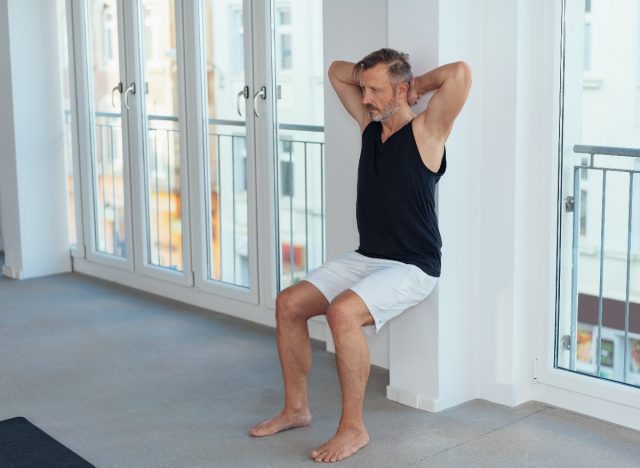
Lower-body strength improves steadily with consistent training and controlled movement. These strategies help increase your wall sit time while supporting joint health and mobility.
- Train your legs two to three times per week: Regular strength work helps build muscular endurance and stability.
- Practice wall sits consistently: Short holds performed several times per week gradually increase your tolerance for the position.
- Add squats and step-ups: These movements target the same muscle groups as wall sits.
- Strengthen your glutes and hips: Bridges and hip thrusts improve hip stability and reduce knee strain.
- Maintain mobility in your hips and ankles: Better joint movement helps you maintain stronger squat positions.
Strong legs support confident movement and long-term independence. If you can hold a wall sit for an extended time with solid posture, your lower body shows the strength and stability needed to stay active for years to come.
References
- Strollo, S E et al. “A review of the relationship between leg power and selected chronic disease in older adults.” The journal of nutrition, health & aging vol. 19,2 (2015): 240-8. doi:10.1007/s12603-014-0528-y
- Cho, Kang Hee et al. “Effect of lower limb strength on falls and balance of the elderly.” Annals of rehabilitation medicine vol. 36,3 (2012): 386-93. doi:10.5535/arm.2012.36.3.386
The post If You Can Hold a Wall Sit This Long After 60, Your Leg Strength Is Top-Tier appeared first on Eat This Not That.
]]>The post If You Can Hold a Bridge This Long After 55, Your Core Strength Is Top-Tier appeared first on Eat This Not That.
]]>Strong glutes and hips play a huge role in how the body performs as it ages. They drive powerful movements like climbing stairs, walking uphill, and rising from chairs. They also help stabilize the pelvis so the lower back doesn’t absorb unnecessary stress. When those muscles stay strong and coordinated, everyday movement feels smoother and more confident.
Hip strength also supports long-term joint health. The glutes help control the position of your knees and spine during movement. That control improves balance, reduces strain on surrounding joints, and keeps your body aligned during walking, lifting, and other daily activities. Many coaches consider the glutes one of the most important muscle groups for maintaining mobility later in life.
The bridge hold offers a clear way to test how well those muscles are doing their job. Holding the position requires your glutes, hamstrings, and deep core muscles to work together without losing tension. Up next, you’ll learn why the bridge is such an effective functional movement, how to perform it correctly, what your hold time says about your core strength, and how to build even stronger hips and glutes.
RELATED: 5 Bed Exercises That Flatten Stubborn Midsection Faster Than Crunches After 60
Why the Bridge Is a Functional Movement
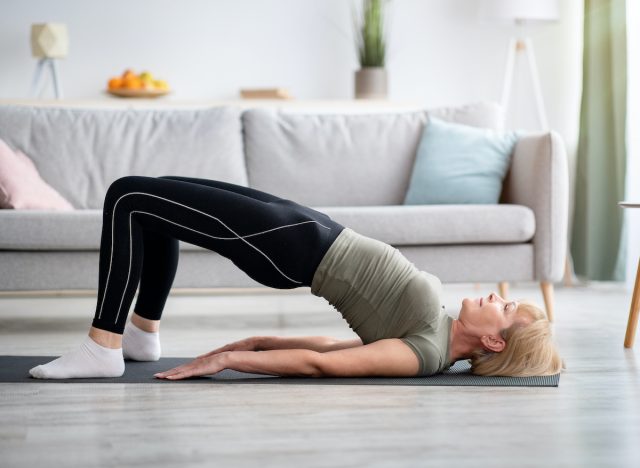
The bridge reinforces one of the body’s most important movement patterns: hip extension. Every step you take, every stair you climb, and every time you stand up from a seated position relies on your hips extending powerfully and under control. Training that pattern helps maintain strength in movements you perform dozens of times every day.
The bridge also teaches your body how to separate hip movement from lower-back movement. Many adults begin to rely too heavily on their lower back when their glutes weaken. The bridge encourages the glutes to take the lead again, improving spinal support and reducing unnecessary strain on the lumbar region.
Another advantage of the bridge is how effectively it challenges muscular endurance. Holding the position forces your glutes and deep core muscles to maintain tension while your pelvis stays level. That sustained effort builds fatigue resistance in the muscles responsible for posture, walking mechanics, and balance.
How to Perform the Best Bridge Technique
Proper technique ensures the test measures glute and core strength rather than compensations from the lower back. A strong setup allows the hips to drive the movement while the spine remains stable. When each second of the hold looks the same as the first, the result becomes a meaningful indicator of core strength.
How to Do It:
- Lie on your back with your knees bent and your feet flat on the floor about hip-width apart.
- Place your arms at your sides with your palms facing the floor.
- Brace your core by tightening your midsection before lifting your hips.
- Press through your heels and lift your hips until your shoulders, hips, and knees form a straight line.
- Squeeze your glutes firmly while keeping your ribs down and your pelvis level.
- Hold the position while breathing steadily until your hips begin to drop or your form breaks.
Once your hips sag or your lower back begins to arch excessively, the hold is complete.
RELATED: 5 Chair Exercises That Restore Leg Muscle Faster Than Squats After 65
Bridge Hold Strength Rankings After 55
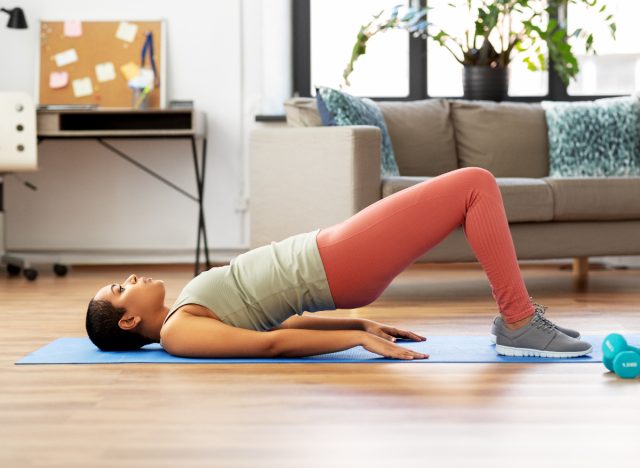
This test measures how long you can hold a clean bridge position without losing alignment. Start your timer once your hips reach full extension.
- Under 30 seconds: Needs Improvement
This range suggests limited endurance in the glutes and core. Fatigue may appear quickly during prolonged walking or standing.
- 30 to 60 seconds: Average
Your hips and core can handle everyday movement demands, though fatigue may show up during longer efforts.
- 60 to 90 seconds: Above Average
This score reflects strong glute endurance and solid pelvic stability.
- 90+ seconds: Top-Tier
This level demonstrates exceptional hip and core endurance. Your glutes maintain force output while your pelvis and spine stay controlled.
RELATED: 5 Dumbbell Exercises That Build Shoulder Strength Faster Than Machines After 60
The Best Tips for Building Stronger Hips and Glutes After 55
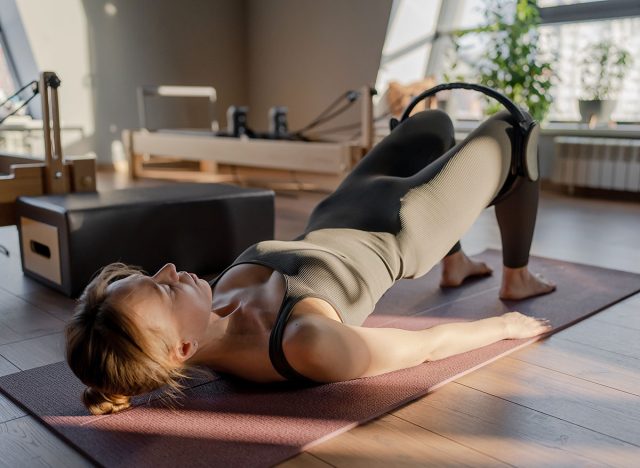
Stronger hips and glutes develop through consistent training that challenges both strength and endurance. These strategies help build a bridge hold that lasts longer while supporting overall movement quality.
- Practice bridges regularly: Perform two to three sets several times per week to build endurance in the glutes and core.
- Add single-leg variations: Single-leg bridges increase hip demand and improve pelvic control.
- Train other hip extension movements: Exercises like step-ups, kettlebell deadlifts, and hip thrusts strengthen the same muscle groups.
- Strengthen your core stabilizers: Planks, dead bugs, and carries improve trunk stability, which supports strong bridge holds.
- Focus on quality tension: Squeezing the glutes and maintaining alignment matter more than simply holding the position longer.
Strong hips and glutes influence nearly every movement you perform throughout the day. If you can hold a bridge for an extended period with clean form, you’re showing that the muscles supporting your spine and pelvis remain powerful, coordinated, and ready for whatever movement the day brings.
References
- Lehecka, B J et al. “BUILDING A BETTER GLUTEAL BRIDGE: ELECTROMYOGRAPHIC ANALYSIS OF HIP MUSCLE ACTIVITY DURING MODIFIED SINGLE-LEG BRIDGES.” International journal of sports physical therapy vol. 12,4 (2017): 543-549.
- Inacio, Mario et al. “Gluteal muscle composition differentiates fallers from non-fallers in community dwelling older adults.” BMC geriatrics vol. 14 37. 25 Mar. 2014, doi:10.1186/1471-2318-14-37
The post If You Can Hold a Bridge This Long After 55, Your Core Strength Is Top-Tier appeared first on Eat This Not That.
]]>The post If You Can Do This Many Pushups After 65, Your Upper-Body Strength Is Stronger Than 90% of Peers appeared first on Eat This Not That.
]]>If you want to determine where your upper-body strength stands, pushups are the perfect test. If you can do this many pushups after 60, know that your upper-body strength is stronger than 90% of your peers.
Why Upper-Body Strength Naturally Declines After 65
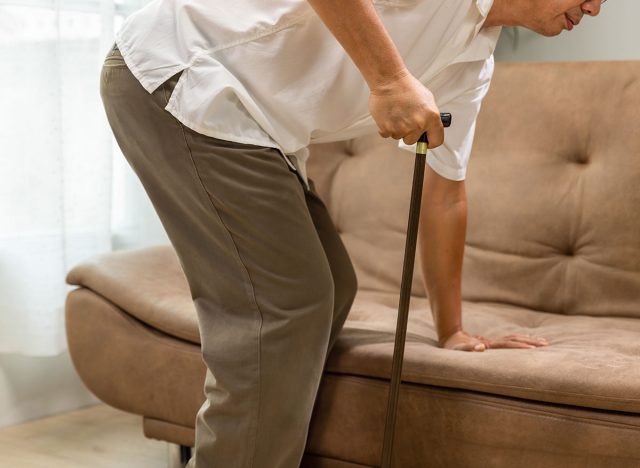
The main culprit behind declining strength after 65 is sarcopenia, the age-related loss of lean muscle mass and quality.
“Hormonal shifts (reduced testosterone and growth hormone), chronic low-level inflammation, and a decrease in “Type II” (fast-twitch) muscle fibers contribute to this decline,” explains Steve Stonehouse, Vice President of Programming and Education at Body Fit Training (BFT). “These fibers are responsible for power and explosive movements.”
RELATED: If You Can Complete These 4 Exercises Without Stopping After 50, Your Body Strength Is Exceptional
Challenges Reduced Strength Presents in Daily Life

Lack of upper-body strength makes it more challenging to catch yourself from a fall or push yourself back up off the ground if you do fall. It also makes performing daily tasks like lifting grocery bags, opening heavy doors, or pushing a vacuum cleaner, difficult.
“[In addition,] getting out of a deep armchair or a bathtub requires a ‘push’ from the arms that many take for granted until that strength begins to fade,” Stonehouse adds.
RELATED: Over 45? If You Can Wall Sit This Long, Your Body Beats Your Age
Muscles Engaged During Pushups
Pushups are a compound exercise, meaning they fire up multiple muscle groups at the same time:
- Pectoralis Major (Chest): These are the main muscle movers utilized during any pushing motion.
- Anterior Deltoids (Front Shoulders): These are essential for lifting objects overhead and reaching forward.
- Triceps Brachii (Back of Arms): These are crucial for extending your elbows, including when pressing yourself up from a seated position.
- The Core (Rectus Abdominis and Obliques): When performing pushups, the core serves as a stabilizer to keep your spine neutral.
RELATED: This 15-Minute Morning Routine Reverses Muscle Loss Faster Than Long Workouts After 45
Importance of Pushups for Older Adults
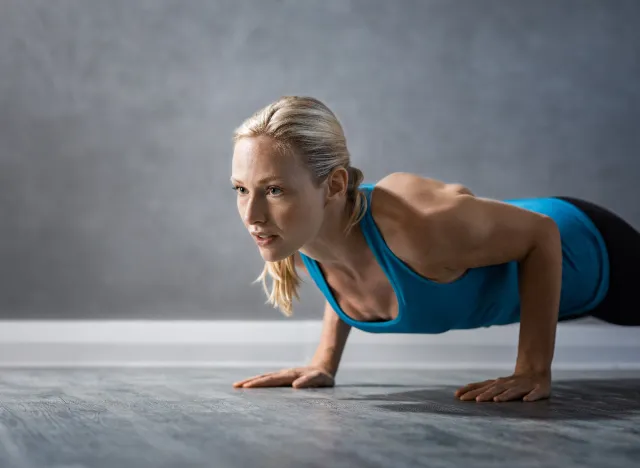
“Strengthening these muscles creates a ‘functional shield,'” Stonehouse tells us. “Strong shoulders and triceps reduce the load on the actual shoulder joint, potentially preventing rotator cuff issues and chronic impingement.”
Fitness experts and healthcare professionals typically use pushups as a “proxy” for overall health, as it reveals more than muscular fitness.
“Because you lift your own body weight, the pushup measures how strong you are relative to your size,” Stonehouse tells us. “Research suggests that the ability to perform a higher volume of push-ups is associated with a lower risk of cardiovascular disease events in men. [In addition,] successful pushup requires the nervous system, muscular system, and skeletal system to work in perfect synchronization. If an adult over 65 can perform a pushup with good form, it indicates high levels of neuromuscular coordination.”
RELATED: If You Can Master These 3 Bodyweight Movements After 60, You’re Stronger Than Most
Pushup Benchmarks
While fitness standards may vary depending on the source, Stonehouse says the following benchmarks signal “above average” to “excellent” categories for those between the ages of 60 to 69.
- Above Average: 12 to 16 reps
- Excellent (Peak): 20 to 24+ reps
“These benchmarks usually refer to ‘standard’ pushups (on toes). If performing modified pushups (on knees), the target numbers are typically higher,” Stonehouse adds.
The post If You Can Do This Many Pushups After 65, Your Upper-Body Strength Is Stronger Than 90% of Peers appeared first on Eat This Not That.
]]>The post If You Can Hold a Squat This Long After 60, Your Lower-Body Strength Is Top-Tier appeared first on Eat This Not That.
]]>Your lower body acts as the foundation for daily activity. Standing up from a chair, climbing stairs, stepping over obstacles, and maintaining balance all rely on the muscles in your hips and legs. Well-developed quads and glutes support those movements and help maintain stability from the ground up. When these muscles stay strong, walking feels easier, and physical tasks require far less effort.
Leg strength also supports long-term health and mobility. The muscles in the lower body rank among the largest in the body and play a major role in maintaining circulation, joint stability, and physical independence. Maintaining strength in these muscles helps people stay active, confident, and capable well into later decades.
A simple squat hold offers a quick snapshot of how your lower body is performing. The position challenges your quads, glutes, and core, maintaining tension while keeping your body stable. The length of time you can hold that position reveals a lot about your lower-body strength and endurance. Up next, you’ll learn why the squat hold works so well, how to perform it correctly, what your hold time means, and how to build even stronger legs.
RELATED: The 8-Minute Daily Routine That Builds More Core Strength Than Planks After 65
Why the Squat Hold Is a Functional Movement
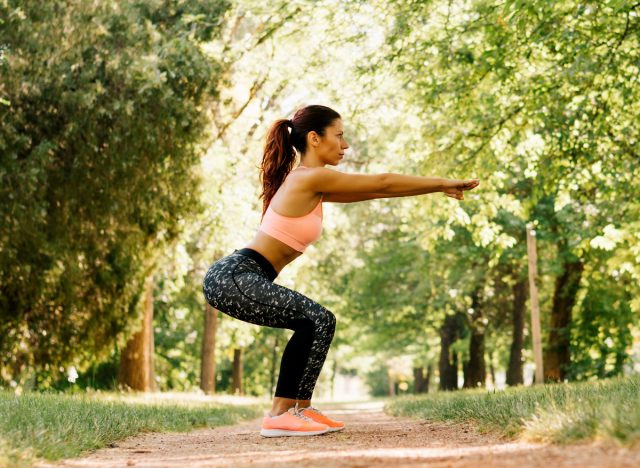
The squat pattern appears constantly in daily life. Sitting down, standing up, picking items off the floor, and lowering your body toward a chair all rely on the same basic mechanics. Training the squat pattern helps reinforce the strength and coordination required to move safely and efficiently.
Holding the squat position further increases the challenge. Instead of briefly lowering and standing back up, your muscles must maintain tension while your joints stay aligned. The quads and glutes work continuously to support your body weight, while your core stabilizes your torso, keeping your posture upright.
The squat hold also builds strength and endurance in the muscles surrounding your hips and knees. Those muscles act like shock absorbers for your body. When they remain strong, they protect your joints and help maintain balance during walking, hiking, and other everyday activities.
How to Perform the Best Squat Hold Technique
A clean squat hold requires strong positioning and consistent tension. Your goal is to maintain a stable posture in which your hips, knees, and ankles share the workload evenly. When your alignment stays steady, the exercise challenges your muscles rather than placing unnecessary strain on your joints.
How to Do It:
- Stand with your feet about shoulder-width apart, and your toes slightly turned out.
- Brace your core by tightening your midsection before lowering into the squat.
- Sit your hips back and down while bending your knees under control.
- Lower until your thighs are parallel to the floor or in your deepest, most comfortable squat position.
- Keep your chest tall and your weight balanced across your heels and midfoot.
- Hold the squat while maintaining steady breathing until your posture begins to break.
Best Variations: Wall Sit, Goblet Squat Hold, Box Squat Hold, Banded Squat Hold, Heels-Elevated Squat Hold.
RELATED: If You Can Hold a Plank This Long After 60, Your Core Strength Is Stronger Than 90% of Peers
Squat Hold Strength Rankings After 60
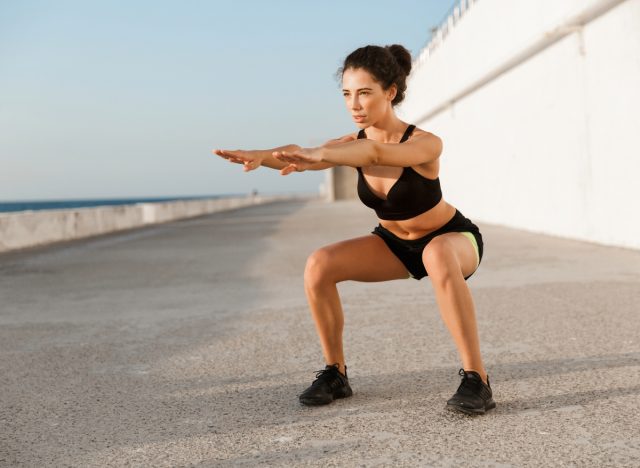
This test measures how long you can maintain a stable squat position with good form. Start the timer once you reach your full squat depth.
- Under 20 seconds: Needs Improvement
This range suggests your lower-body strength and endurance could benefit from targeted training.
- 20 to 45 seconds: Average
Your legs can support most everyday tasks, though fatigue may appear during longer activities.
- 45 to 75 seconds: Above Average
This score reflects strong quads and glutes with good muscular endurance.
- 75+ seconds: Top-Tier
This level shows excellent lower-body strength and stability. Your legs maintain force output and joint control even as fatigue builds.
RELATED: The 7-Minute Standing Routine That Shrinks Hip Dip Fat After 45, According to a Trainer
The Best Tips for Building Stronger Legs After 60
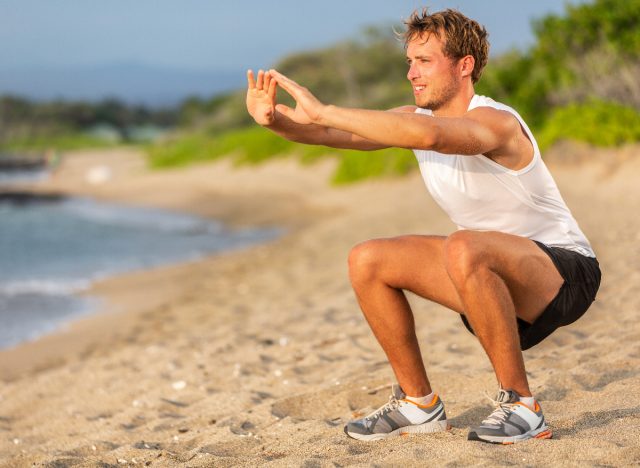
Lower-body strength responds well to consistent, controlled training. These strategies help improve squat hold performance while supporting healthy joints and long-term mobility.
- Train your legs two to three times per week: Regular exposure builds strength without overwhelming recovery.
- Use controlled tempos: Slower squats increase time under tension and reinforce strong movement patterns.
- Add step-based exercises: Step-ups and split squats strengthen the hips and improve balance.
- Strengthen your glutes: Bridges and hip thrusts build the hip power that supports strong squat positions.
- Maintain mobility in your hips and ankles: Better joint mobility helps you reach deeper squat positions comfortably.
Strong legs play a huge role in staying active and independent after 60. If you can hold a squat for an extended period with solid posture, you’re showing that your lower body remains powerful, stable, and ready for whatever challenges the day brings.
References
- Dunn, M.T., Quach, P.T.M., McGraw, M., Preus, R.I., Barefoot, R.C., Lancaster, W.C., Ponder, J. and Singh, H. (2025), Using Isometric Squat Strength to Predict Concentric and Eccentric Squat Strength in Young and Older Adults. Physiother Res Int, 30: e70034. https://doi.org/10.1002/pri.70034
- Straub, Rachel K, and Christopher M Powers. “A Biomechanical Review of the Squat Exercise: Implications for Clinical Practice.” International journal of sports physical therapy vol. 19,4 490-501. 1 Apr. 2024, doi:10.26603/001c.94600
The post If You Can Hold a Squat This Long After 60, Your Lower-Body Strength Is Top-Tier appeared first on Eat This Not That.
]]>The post If You Can Hold a Plank This Long After 60, Your Core Strength Is Stronger Than 90% of Peers appeared first on Eat This Not That.
]]>One thing I’ve noticed coaching clients over the years is that core strength often shows up in subtle ways before people even realize it. Your balance feels steadier. Posture improves. Every day movements feel smoother and less effortful. The core acts like the body’s central support system, quietly doing its job behind the scenes every time you move.
That’s where the plank comes into the picture. This simple position challenges the entire core while also recruiting the shoulders, hips, and legs to work together. Unlike exercises that involve bending or twisting, the plank trains the muscles to stabilize the spine. That ability to maintain control under tension makes it one of the most reliable measures of core strength.
The best part is that the plank works as both a test and a training tool. The longer someone can hold a strong plank position, the greater the endurance of their core muscles. That’s why coaches frequently use plank hold times as a quick benchmark for overall core strength.
RELATED: The 7-Minute Standing Routine That Shrinks Hip Dip Fat After 45, According to a Trainer
How to Execute a Perfect Plank
Before worrying about how long you can hold a plank, it’s important to focus on quality. A strong plank position keeps the body aligned from head to heels while the core muscles stay engaged throughout the hold.
Follow these steps to perform a proper plank:
- Start face down on the floor with your forearms under your shoulders.
- Straighten your legs behind you and plant your toes on the ground.
- Lift your body so it forms a straight line from head to heels.
- Brace your core and squeeze your glutes.
- Hold the position while breathing steadily.
Form Tip: Avoid letting your hips sag or rise too high. Your body should remain in one straight line throughout the hold.
RELATED: 4 Bed Exercises That Restore Thigh Strength Faster Than Leg Press After 65
Plank Strength Rankings After 60
Plank hold times provide a useful way to measure core endurance. The longer someone maintains proper alignment, the stronger and more resilient the stabilizing muscles around the spine become. This matters because those muscles help protect the lower back, support posture, and improve balance during everyday activities.
While everyone’s starting point looks a little different, plank times can give a helpful snapshot of where your core strength stands. Use the rankings below as a general guideline for assessing your performance.
How Do You Rank
- Below Average: Less than 20 seconds
- Average: 20 to 40 seconds
- Good: 40 to 60 seconds
- Very Good: 60 to 90 seconds
- Top 10%: 90 seconds or longer
If you can maintain a strong plank for 90 seconds or more, your core strength likely exceeds 90% of most people in your age group.
How to Improve Your Plank Score
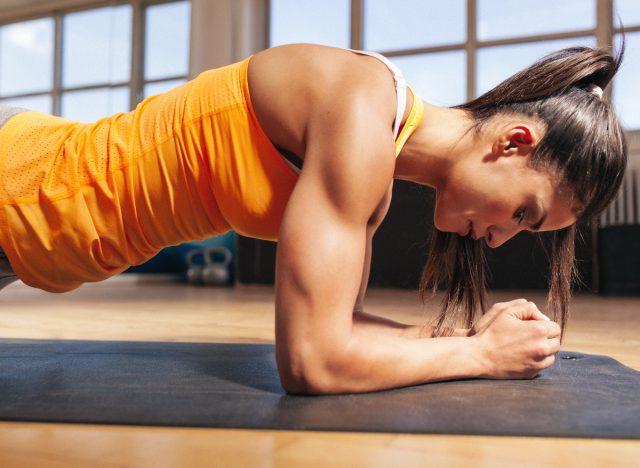
Building a longer plank hold often comes down to consistency and proper progression. The goal is to strengthen the core’s stabilizing muscles while gradually increasing the time they can remain under tension.
Here are several effective strategies for improving your plank score:
- Practice shorter holds more frequently: Multiple sets of 20 to 30 seconds often build endurance faster than a single long hold.
- Focus on perfect alignment: Keeping your body in a straight line activates the correct muscles and prevents energy leaks.
- Strengthen supporting muscles: Exercises like glute bridges, bird dogs, and dead bugs help reinforce core stability.
- Add plank variations: Side planks, plank shoulder taps, and plank marches challenge the core in different ways.
- Progress gradually: Add five to ten seconds to your hold time as your strength improves.
Consistent practice usually produces noticeable improvements within a few weeks.
RELATED: 5 Dumbbell Exercises That Restore Shoulder Strength Faster Than Lifting Weights After 55
Best Daily Tips for Building Core Strength
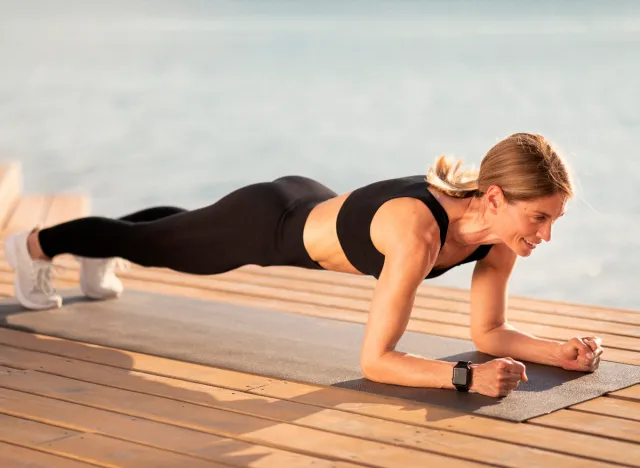
A strong core develops through regular movement and smart training habits. The muscles that stabilize the spine respond well to consistent exercise and controlled repetitions. Small daily habits can make a meaningful difference in how the body feels and moves.
- Train the core regularly: Short sessions performed several times per week help build endurance.
- Strengthen the hips and glutes: These muscles work together with the core to stabilize the body.
- Maintain upright posture throughout the day: Sitting and standing tall encourages the core to stay engaged.
- Prioritize controlled movement: Smooth, deliberate repetitions activate deeper stabilizing muscles.
- Stay consistent with your routine: Regular practice helps the core grow stronger and more resilient.
Stick with these habits and your core will continue supporting stronger movement, better balance, and greater confidence in everyday activity.
Reference
- Kang, Kwon-Young. “Effects of core muscle stability training on the weight distribution and stability of the elderly.” Journal of physical therapy science vol. 27,10 (2015): 3163-5. doi:10.1589/jpts.27.3163
- Park, Sihwa et al. “Effects of plank exercise on respiratory capacity, physical fitness, and immunocytes in older adults.” Journal of exercise rehabilitation vol. 19,6 332-338. 26 Dec. 2023, doi:10.12965/jer.2346536.268
The post If You Can Hold a Plank This Long After 60, Your Core Strength Is Stronger Than 90% of Peers appeared first on Eat This Not That.
]]>The post If You Can Do This Many Squats After 60, Your Leg Strength Is Stronger Than 90% of Peers appeared first on Eat This Not That.
]]>Squats test the strength and coordination of multiple muscle groups at the same time. The quadriceps, glutes, hamstrings, calves, and core all work together to lower the body and push it back up again. Because the movement mimics everyday actions like sitting and standing, it provides an honest look at how well the lower body supports daily activity.
Many people assume they need complicated equipment or long workouts to evaluate their fitness. In reality, a basic squat test can offer a clear picture of leg strength and muscular endurance. I often use this test with new clients because it reveals both strength and movement control within a few seconds.
If you want to see how your leg strength compares with others in your age group, this simple test provides a powerful benchmark. The number of controlled squats you can perform without stopping often reflects how well your lower body supports movement and balance.
RELATED: 5 Chair Exercises That Shrink Apron Belly Faster Than Gym Classes After 60
How to Perform the Squat Test Properly
Before counting repetitions, proper squat form ensures the muscles perform the work safely and effectively. Good technique protects the knees and lower back while making the results more meaningful.
Stand with your feet roughly shoulder-width apart and your chest lifted. Slowly push your hips backward while bending your knees, lowering your body as if sitting into a chair. Keep your heels on the floor and maintain an upright torso as you descend.
Lower until your thighs approach parallel with the floor or until you reach a comfortable depth. From there, press through your heels and tighten the glutes to stand back up. Continue performing controlled repetitions while maintaining steady breathing and good posture.
What Your Results Mean
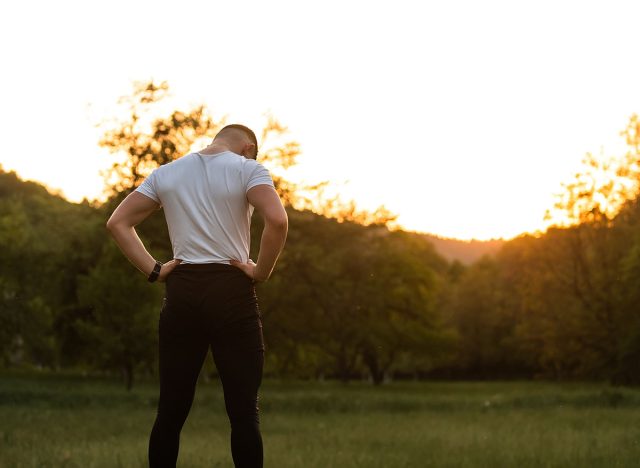
The number of squats you can complete without stopping reveals a great deal about your lower-body muscular endurance and strength. Because the movement recruits several major muscle groups at once, fatigue often appears quickly when those muscles lack conditioning.
Here’s a general benchmark many trainers use for adults over 60 performing controlled bodyweight squats:
- Under 10 squats: Leg strength needs improvement
- 10–20 squats: Average strength for this age group
- 20–30 squats: Strong lower-body endurance
- 30–40 squats: Excellent leg strength
- 40+ squats: Stronger than roughly 90% of peers
These ranges assume proper form and continuous movement without long pauses between repetitions. Even small improvements in squat count often indicate meaningful increases in leg strength.
RELATED: 5 Standing Exercises That Restore Glute Strength Faster Than Squats After 60
How to Improve Your Squat Results
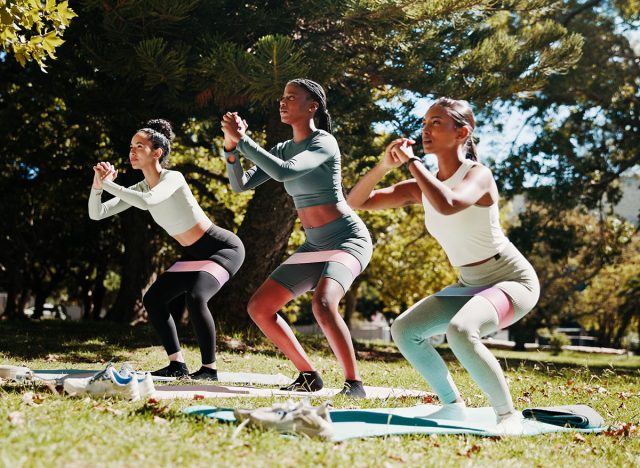
Improving squat performance requires strengthening the muscles that power the movement while gradually increasing muscular endurance. In my experience training older adults, the fastest progress comes from practicing squats regularly while supporting them with a few simple lower-body exercises.
Start by practicing bodyweight squats two or three times per week. Focus on slow, controlled repetitions while keeping the chest lifted and pushing through the heels. If performing full squats feels difficult at first, chair squats provide a great starting point. Simply sit down on a chair and stand back up repeatedly to build strength safely.
Additional movements like glute bridges, step-ups, calf raises, and wall sits strengthen the supporting muscles involved in squatting. As these muscles grow stronger, the body becomes more comfortable lowering and rising repeatedly without fatigue.
With consistent practice, many adults over 60 quickly increase their squat count within a few weeks. Stronger legs don’t just improve test results, they also make everyday activities like walking, climbing stairs, and standing up feel noticeably easier.
The post If You Can Do This Many Squats After 60, Your Leg Strength Is Stronger Than 90% of Peers appeared first on Eat This Not That.
]]>The post If You Can Hold These 3 Bed Positions After 60, Your Core Is Stronger Than 90% of Peers appeared first on Eat This Not That.
]]>“Core strength tends to decline with age primarily because of sarcopenia, reduced physical activity, and changes in neuromuscular coordination,” explains Dr. Walters. “Beginning in midlife and accelerating after about age 60, skeletal muscle mass and strength gradually decrease. At the same time, people often move less, which further reduces the mechanical loading required to maintain trunk muscle capacity.”
In functional terms, the core serves as a “stability system” for both the pelvis and spine as you move. When the muscles encompassing your trunk lose endurance or strength, several things can happen, impacting your posture, mobility, and balance.
“The trunk plays a major role in controlling the body’s center of mass. Reduced trunk strength or endurance can make it harder to correct small balance disturbances,” Dr. Walters says. “In addition, weakness or poor endurance of trunk muscles can contribute to greater spinal flexion or a forward-leaning posture, particularly during prolonged standing or walking.”
It’s important to note that these changes aren’t inevitable. Dr. Walters says research indicates that the trunk muscles stay very responsive to strength exercises—even among the older adult population.
What Makes Bed-Based Exercises Effective
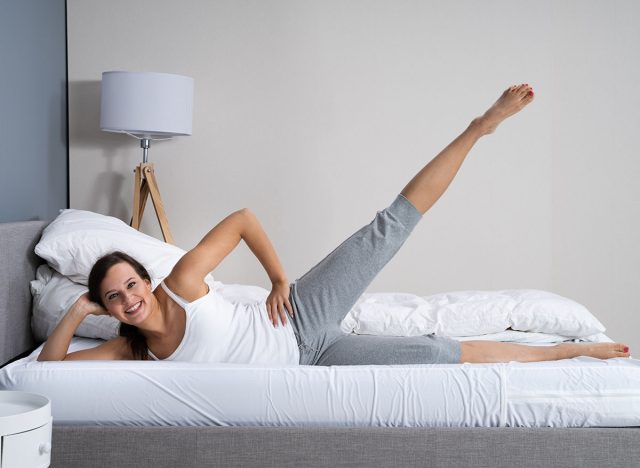
Doing exercises from bed can be surprisingly productive because they reduce hurdles that may be holding you back from exercise.
“Many older adults avoid floor exercises due to joint pain, mobility limitations, or difficulty getting down to and up from the floor,” Dr. Walters explains. “From a biomechanical standpoint, bed-based exercises still challenge the core because they require the trunk to stabilize the spine and pelvis against gravity. Even subtle movements, such as lifting the legs or maintaining a stable trunk while the limbs move, can create meaningful activation of abdominal and spinal muscles.”
RELATED: These 6 Bodyweight Moves Build Core Strength Faster Than Planks After 40
Supine Dead Bug Hold
In the supine dead bug hold, you will lie flat on your back with your hips and knees bent to roughly 90 degrees while keeping your lower back pressed into the mattress.
“This exercise engages the deep abdominal muscles—particularly the transverse abdominis, trains the core to stabilize while the limbs move, [and] mimics the coordination needed for walking and daily movement,” Dr. Walters says.
RELATED: The 7-Minute Bed Routine That Restores Core Strength Faster Than Planks After 55
Glute Bridge Isometric
In the glute bridge isometric, you’ll lie flat on your back with bent knees and lift your hips until your body forms a straight line from your knees to your shoulders.
“This exercise activates the posterior chain, including the glutes and spinal extensors, challenges the trunk to stabilize the pelvis, [and] supports posture and walking mechanics,” Dr. Walters tells us.
RELATED: 5 Beginner Exercises That Build Core Strength Faster Than Planks After 55
Side-Lying Plank
In the side-lying plank, you’ll lie on your side with bent knees and support your body on your forearm while lifting the hips slightly off the mattress.
“This exercise targets the obliques and lateral trunk stabilizers, improves side-to-side trunk stability, which is important for balance, [and] addresses a plane of movement often neglected in traditional exercises,” Dr. Walters notes.
The post If You Can Hold These 3 Bed Positions After 60, Your Core Is Stronger Than 90% of Peers appeared first on Eat This Not That.
]]>The post If You Can Hold a Side Plank This Long After 60, Your Core Stability Is Top-Tier appeared first on Eat This Not That.
]]>We spoke with Karen Ann Canham, CEO and founder of Karen Ann Wellness, a board-certified wellness coach and nervous system specialist with nearly two decades of experience in wellness and corporate leadership, to learn how long you should be able to hold a side plank after 60 for your core stability to rank as top-tier.
Why Core Stability Matters

A strong, stable core is one of the most critical foundations of safe movement as you grow older.
“A strong core helps: maintain upright posture, reducing strain on the spine; stabilize the pelvis during walking, which improves gait efficiency; improve balance reactions when the body is pushed or shifts unexpectedly; [and] reduce fall risk, especially during movements like stepping, turning, or reaching,” Canham notes. “Research consistently shows that older adults with stronger core and hip stabilizers have better balance control and greater confidence in daily movement.”
RELATED: If You Can Hold a Plank This Long After 50, Your Core Is Stronger Than Most
If You Can Hold a Side Plank This Long After 60, Your Core Stability Is Top-Tier
For those 60+, core endurance benchmarks shift naturally due to joint tolerance, muscle mass, and recovery capacity.
“A solid baseline for most healthy adults over 60 is holding a side plank for 15 to 25 seconds per side with good form,” says Canham. “An above-average hold would be 30 to 45 seconds per side, while 60 seconds or more with stable alignment would be considered exceptional for this age group.”
What’s most important is maintaining solid alignment. This means keeping your shoulders stacked, spine neutral, and hips lifted rather than aiming for a longer time while using poor form.
RELATED: If You Can Do This Many Squats After 50, You Are in Great Shape
Muscles Side Planks Activate

Side planks engage several important stabilizing muscles that work in unison to support the pelvis and spine. The main muscles fired up in side planks include the obliques, glute medius, glute maximus, transverse abdominis (also known as the deep “corset” muscle), and quadratus lumborum.
“Together, these muscles create a strong lateral support system for the spine, allowing the body to resist side-to-side movement,” Canham tells us.
RELATED: Over 50? If You Can Do This Many Knee Pushups, Your Upper Body Is Stronger Than Most
Side Planks Train Anti-Lateral Flexion
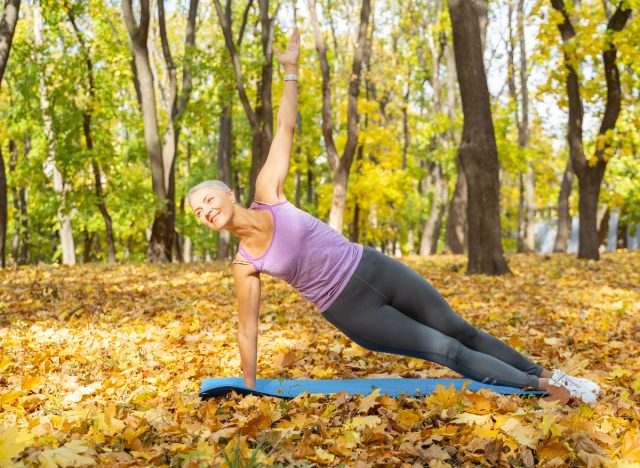
While classic front planks mainly challenge anti-extension strength—which helps your lower back resist arching—side planks train anti-lateral flexion. This means your body must resist the urge to bend sideways.
“This is particularly important because many balance challenges in everyday life occur side-to-side, such as stepping off a curb, carrying a bag, or recovering from a stumble,” Canham explains. “Side planks also activate the obliques and hip stabilizers more directly than front planks, making them especially valuable for improving lateral stability and fall resistance in older adults.”
The post If You Can Hold a Side Plank This Long After 60, Your Core Stability Is Top-Tier appeared first on Eat This Not That.
]]>The post If You Can Hold a Wall Sit This Long After 60, Your Lower-Body Power Is Top-Tier appeared first on Eat This Not That.
]]>Unlike many fitness tests, the wall sit requires no equipment and very little space. The movement challenges the quadriceps, glutes, and core while forcing the body to maintain stability under continuous tension. Holding the position demands muscular endurance and strength at the same time, which makes it a powerful indicator of overall lower-body fitness.
Many of my clients initially underestimate this test. They assume it will feel easy because it involves leaning against a wall rather than performing a dynamic movement like a squat. However, once the thighs begin supporting body weight without movement, the muscles quickly reveal their true endurance level.
If you want to see how your leg strength stacks up, the wall sit provides a clear and honest answer. The time you can maintain the position tells a lot about the strength of your lower body and how well your muscles support daily movement.
RELATED: The 8-Minute Morning Routine That Restores Muscle Tone Faster Than Weight Training After 55
How to Perform the Wall Sit Properly
Before testing your endurance, proper positioning makes a big difference. Good form ensures the right muscles handle the workload while protecting the knees and lower back. When clients perform this test with correct alignment, the results become much more meaningful.
Stand with your back flat against a wall and slowly slide downward until your thighs reach a parallel position with the floor. Your knees should stack directly above your ankles, forming roughly a ninety-degree bend at the knees and hips. Keep your shoulders relaxed against the wall and tighten your abdominal muscles to stabilize your torso.
Once you reach the seated position, hold the posture without placing hands on your legs. Focus on steady breathing while keeping the back flat against the wall. The goal involves maintaining that seated posture for as long as possible without allowing the hips to rise.
What Your Results Mean
The length of time you hold a wall sit offers a surprisingly accurate snapshot of lower-body muscular endurance. Because the movement places constant tension on the quadriceps and glutes, the muscles quickly reveal how well they support sustained effort.
Here’s a general guideline many trainers use when evaluating adults over 60:
- Under 20 seconds: Lower-body endurance needs improvement
- 20–40 seconds: Average strength for this age group
- 40–60 seconds: Strong lower-body endurance
- 60–90 seconds: Excellent strength and muscular control
- 90+ seconds: Top-tier lower-body endurance
Many people feel discouraged if their first attempt lands in the lower ranges, but that’s completely normal. Muscular endurance improves quickly with consistent practice, and even small increases in hold time represent meaningful progress.
RELATED: 5 Standing Exercises That Shrink Belly Overhang Faster Than Gym Machines After 50
How to Improve Your Wall Sit Time
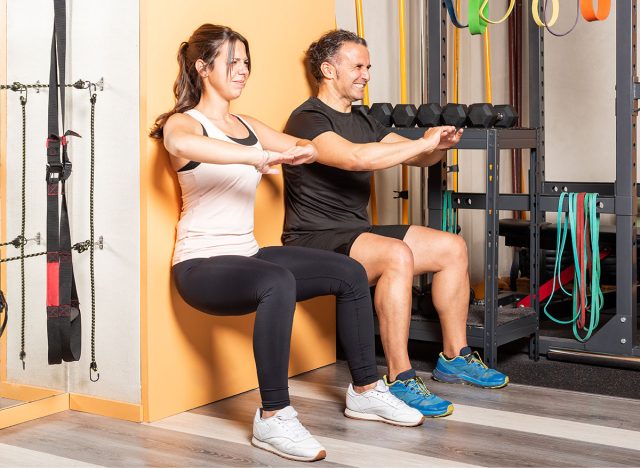
Improving your wall sit endurance requires strengthening the muscles that support the position while gradually increasing the time spent under tension. In my experience coaching older adults, consistent practice paired with simple lower-body exercises produces noticeable improvements within a few weeks.
Start by practicing the wall sit several times per week, aiming to hold the position for shorter intervals such as 15 to 30 seconds. As the quadriceps and glutes grow stronger, gradually extend the hold time by five or ten seconds each session. Controlled breathing and proper posture help prevent early fatigue, allowing the muscles to maintain tension longer.
Supporting exercises also play an important role. Movements like bodyweight squats, glute bridges, step-ups, and standing leg raises strengthen the same muscle groups required for the wall sit. When these muscles grow stronger, the body becomes far more comfortable sustaining the seated position against the wall.
With regular practice, many adults over 60 quickly discover their legs remain far stronger than they expected. Building that endurance doesn’t just improve test results, it also translates into easier walking, stronger stair climbing, and more confidence during everyday movement.
The post If You Can Hold a Wall Sit This Long After 60, Your Lower-Body Power Is Top-Tier appeared first on Eat This Not That.
]]>The post If You Can Hold a Plank This Long After 65, Your Core Strength Is Stronger Than 90% of Peers appeared first on Eat This Not That.
]]>If you can relate, get excited. We have a way to test your core strength, so get ready to form a plank. Planks are a superlative way to test how strong your core is, because they measure muscle engagement, endurance, and overall structure. If you can hold a plan this long after 65, your core strength is stronger than 90% of your peers.
What Is the Ideal Plank Hold Time for Adults 65?
“If you can hold a rock-solid, no-sagging-back plank for 30 to 45 seconds, you’re already doing better than the average person in your age group. Most people lose that ‘mindset muscle’ as they age and stop challenging their static strength,” explains Joe Ghafari, Certified Personal Trainer, Certified Nutritionist, and the Co-Founder and Head Coach of Visiting Wrld, a premium LGBTQ+ fitness retreat brand that blends world travel, structured fitness coaching, nutrition education, and community connection.
If you’re able to hit that 45-second mark, that means you have the foundational strength necessary to protect your spine during everyday tasks.
RELATED: These 6 Bodyweight Moves Build Core Strength Faster Than Planks After 40
What Benchmark Indicates “Exceptional” Core Strength?
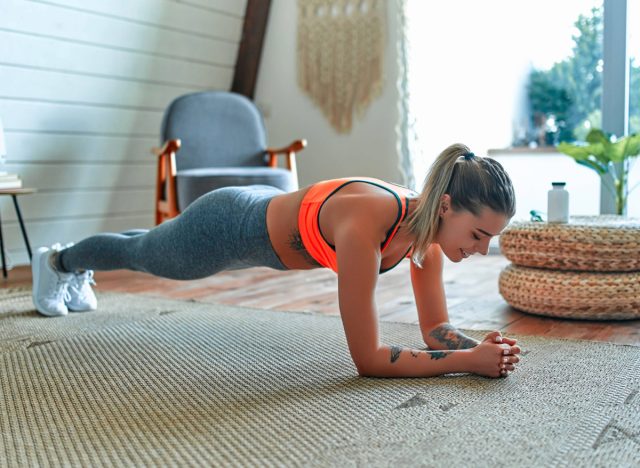
Once you pass over the 90-second to two-minute mark, you are considered “elite” status, within the top 10%.
“At 65+, holding a plank for two minutes means your core stability is likely comparable to someone twenty years younger,” Ghafari tells us. “But remember: a ‘shaky’ two minutes is worse than a ‘perfect’ 30 seconds. I don’t care about the clock if your form is trash.”
RELATED: This 15-Minute Morning Routine Reverses Muscle Loss Faster Than Long Workouts After 45
Why Perfecting Your Plank Matters With Age
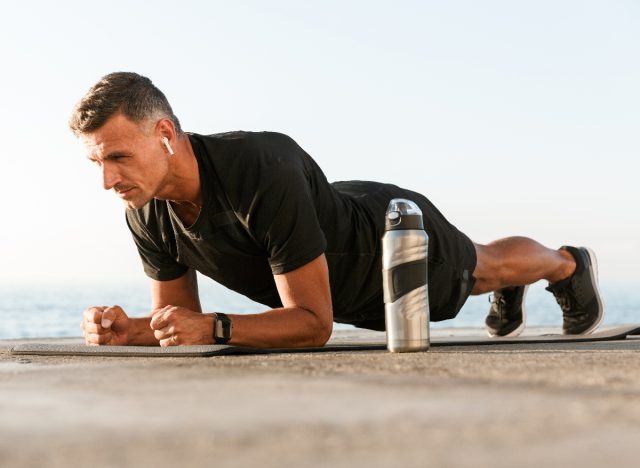
According to Ghafari, planks serve as the ultimate “no-BS” test. They don’t care about how much weight you’re able to bench press or the quickest walking speed you’re able to ace. Planks put your isometric tension to the test—aka, your muscles’ ability to hold your skeleton in place when working against gravity.
“As we age, that’s exactly what we need to prevent falls and back pain. It’s a full-body diagnostic tool: if your hips sag, your lower abs are weak; if your neck hurts, your posture is off. It tells the truth about your fitness every single time,” Ghafari adds.
The post If You Can Hold a Plank This Long After 65, Your Core Strength Is Stronger Than 90% of Peers appeared first on Eat This Not That.
]]>