The post 5 Bed Exercises That Restore Posture Faster Than Physical Therapy After 60 appeared first on Eat This Not That.
]]>When I work with clients who want to improve posture, we don’t jump straight into complicated routines or long sessions. We start by restoring control of the muscles that support the spine. Many of those muscles live in the core, hips, and upper back, and they respond best to slow, intentional movement rather than rushed repetitions. Bed-based exercises are especially useful here because they provide support, reduce strain, and allow you to focus on how each movement feels, often times before your day even begins.
There’s also a big confidence factor that comes into play. When movements feel approachable and comfortable, people are more likely to stick with them. That consistency is what drives change. A short routine performed regularly can help retrain posture, improve alignment, and make standing and moving feel more natural again.
The five exercises below focus on strengthening the muscles that support posture while encouraging the body to move with better alignment. Perform them consistently, and you’ll begin to notice a more upright position, smoother movement, and a body that feels more supported throughout the day.
One quick note before jumping in. This routine is meant to support better movement and posture, not replace professional care. By no means should you stop seeking a physical therapist, and this information is not intended to fill that role. Think of these exercises as a helpful addition to your daily routine that keeps your body moving in the right direction.
Glute Bridge Holds
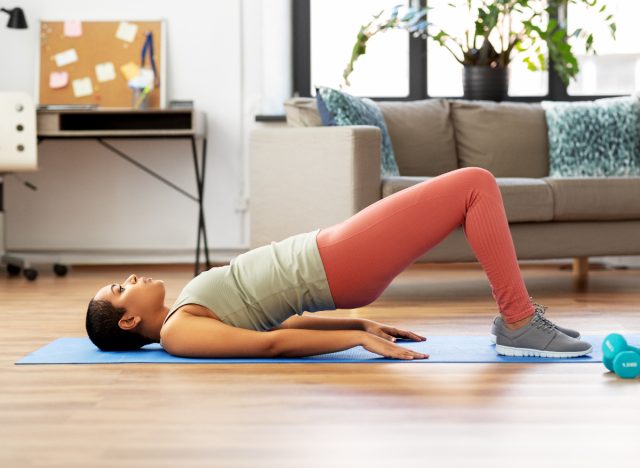
Glute bridge holds help restore strength in the glutes and hips, which play a major role in supporting proper posture. When the glutes are active, they help position the pelvis correctly, which influences spinal alignment. Holding the top position encourages sustained muscle engagement rather than quick repetitions. This allows the body to build endurance in the muscles that support posture. Over time, stronger glutes contribute to a more stable and upright position.
Muscles Trained: Glutes, hamstrings, and core stabilizers.
How to Do It:
- Lie on your back with your knees bent and your feet flat on the bed.
- Place your arms at your sides for support.
- Press through your heels and lift your hips upward.
- Squeeze your glutes and hold the top position.
- Lower your hips back down with control.
Recommended Sets and Reps: Perform 3 sets of 20 to 30 second holds. Rest for 45 seconds between each set.
Best Variations: Single-leg hold, extended hold, banded hold.
Form Tip: Keep your ribs down and avoid arching your lower back at the top.
RELATED: 5 Daily Exercises That Flatten Belly Overhang Faster Than Crunches After 60
Alternating Dead Bugs
Alternating dead bugs strengthen the deep core muscles that help stabilize the spine. The movement requires the core to stay engaged while the arms and legs move in opposite directions. This coordination helps train the body to maintain alignment during movement. Many people find this exercise improves their awareness of how to control their core. With consistent practice, it supports better posture and spinal stability.
Muscles Trained: Transverse abdominis, rectus abdominis, and hip flexors.
How to Do It:
- Lie on your back with your arms extended toward the ceiling.
- Bring your knees into a tabletop position.
- Brace your core and gently press your lower back into the bed.
- Extend one arm and the opposite leg toward the bed.
- Return to the starting position and alternate sides.
Recommended Sets and Reps: Perform 3 sets of 10 to 12 reps per side. Rest for 45 seconds between each set.
Best Variations: Heel taps, slow tempo dead bugs, pause dead bugs.
Form Tip: Keep your lower back lightly pressed into the bed throughout the movement.
Cat-Cows
Cat-cows encourage the spine to move through flexion and extension in a controlled way. This movement helps improve spinal mobility while increasing awareness of posture. Many people spend long periods in one position, which can make the spine feel stiff. Moving between these two positions helps loosen the back and promote better alignment. Over time, this exercise supports a more natural and comfortable posture.
Muscles Trained: Spinal stabilizers, core, and upper back muscles.
How to Do It:
- Begin on all fours with your hands under your shoulders and knees under your hips.
- Inhale as you drop your belly and lift your chest.
- Exhale as you round your back and tuck your chin.
- Move slowly between each position.
- Continue for controlled repetitions.
Recommended Sets and Reps: Perform 3 sets of 10 to 12 reps. Rest for 30 seconds between each set.
Best Variations: Slow tempo cat-cow, extended hold cat-cow, segmented cat-cow.
Form Tip: Move slowly and focus on feeling each segment of your spine.
RELATED: 5 Chair Exercises That Restore Full-Body Balance Faster Than Yoga After 65
Supine Leg Drops
Supine leg drops challenge the core to stabilize the pelvis while the legs move. Lowering the legs requires the abdominal muscles to control the motion and prevent the lower back from arching. This helps strengthen the muscles that support proper spinal alignment. Many people notice that this exercise quickly engages the lower core. Regular practice contributes to better posture and core control.
Muscles Trained: Lower abdominals, hip flexors, and core stabilizers.
How to Do It:
- Lie on your back with your legs extended toward the ceiling.
- Place your hands at your sides for support.
- Brace your core and press your lower back into the bed.
- Lower one leg toward the bed with control.
- Return to the starting position and alternate legs.
Recommended Sets and Reps: Perform 3 sets of 10 reps per leg. Rest for 45 seconds between each set.
Best Variations: Double leg drop, slow tempo drop, pause drop.
Form Tip: Lower your leg only as far as you can while keeping your lower back stable.
Quadruped Scapula Circles
Quadruped scapula circles target the muscles around the shoulder blades, which are essential for maintaining upright posture. This movement encourages controlled shoulder movement without relying on the arms alone. Many people carry tension in the upper back and shoulders, which can contribute to a rounded posture. This exercise helps improve control and awareness in that area. Over time, it supports better shoulder positioning and upper-body alignment.
Muscles Trained: Upper back, shoulders, and scapular stabilizers.
How to Do It:
- Begin on all fours with your hands under your shoulders.
- Keep your arms straight and your core engaged.
- Slowly move your shoulder blades in a circular motion.
- Complete several circles in one direction.
- Reverse the direction and repeat.
Recommended Sets and Reps: Perform 3 sets of 6 to 8 circles per direction. Rest for 30 seconds between each set.
Best Variations: Slow scapula circles, segmented circles, pause circles.
Form Tip: Keep your arms straight and let the movement come from your shoulder blades.
RELATED: If You Can Hold a Wall Sit This Long After 60, Your Leg Strength Is Top-Tier
Daily Strategies to Help Reinforce Better Posture After 60
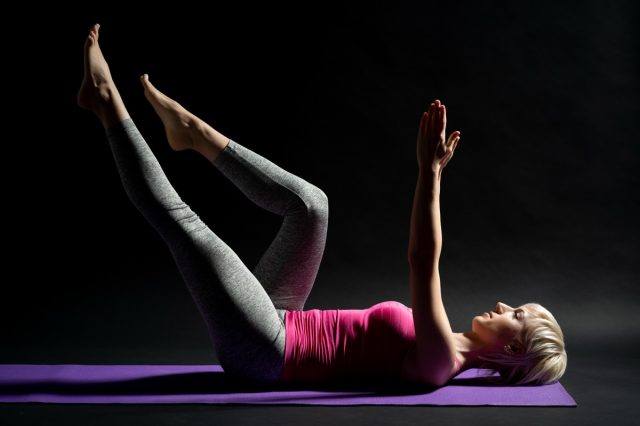
Improving posture involves more than just a few exercises. It requires consistent movement, awareness, and small adjustments throughout the day. The body adapts to the positions it spends the most time in, which means daily habits play a major role in maintaining alignment.
- Move regularly throughout the day: Frequent movement helps prevent stiffness and encourages better positioning.
- Stay aware of your posture: Sitting and standing tall helps reinforce proper alignment.
- Strengthen supporting muscles: The core, glutes, and upper back all contribute to posture.
- Focus on controlled movement: Slow, intentional exercises improve muscle activation and awareness.
- Stay consistent with your routine: Regular practice allows posture improvements to build over time.
Stick with these strategies and exercises, and your posture will begin to feel more natural, supported, and comfortable as the weeks go on.
The post 5 Bed Exercises That Restore Posture Faster Than Physical Therapy After 60 appeared first on Eat This Not That.
]]>The post If You Can Hold a Wall Sit This Long After 60, Your Leg Strength Is Top-Tier appeared first on Eat This Not That.
]]>These muscles also act as stabilizers for your knees and hips. When the lower body stays strong, it absorbs force more efficiently and keeps joints aligned during movement. That support reduces strain on the knees and lower back while helping your body stay steady during prolonged activity.
A wall sit offers one of the simplest ways to test that strength. The position forces your quads and glutes to maintain steady tension while your body remains stable against the wall. The amount of time you can hold that position reveals a lot about the strength and endurance of your lower body. Ahead, you’ll learn why the wall sit works so well, how to perform it correctly, what your hold time says about your leg strength, and how to build stronger legs.
RELATED: The 7-Minute Standing Routine That Restores Core Strength Faster Than Floor Exercises After 60
Why the Wall Sit Is an Important Movement
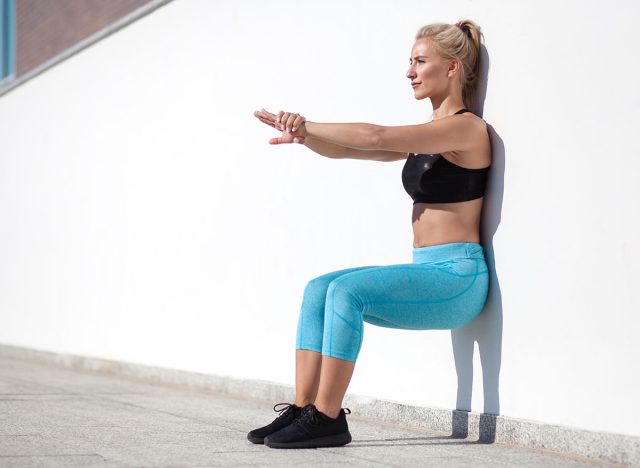
The wall sit challenges your legs to support your body weight while you remain in a fixed position. Many everyday tasks require this same type of muscular endurance. Waiting in line, lowering yourself into a chair, or holding a steady stance during movement all place similar demands on your legs.
Your quads carry most of the load during a wall sit, while your glutes and core help stabilize your posture. Holding the position requires these muscles to stay engaged for an extended period without relying on momentum. That sustained tension helps build fatigue resistance in the muscles responsible for walking, standing, and climbing.
The wall sit also reinforces joint control around the knees and hips. When your legs stay strong in this position, your body learns to maintain alignment even as fatigue builds. That control plays a major role in protecting your joints and supporting long-term mobility.
How to Perform the Best Wall Sit Technique
A proper wall sit requires strong positioning and steady muscular tension. Your goal is to maintain a stable squat position with your back supported by the wall. When your posture stays consistent throughout the hold, the exercise becomes an accurate measure of leg strength and endurance.
How to Do It:
- Stand with your back against a wall and your feet about two feet in front of you.
- Slide your back down the wall while bending your knees.
- Lower until your thighs reach roughly parallel to the floor.
- Place your feet flat on the ground with your knees stacked over your ankles.
- Keep your chest tall and your core braced while maintaining contact with the wall.
- Hold the position until your legs begin to shake or your posture breaks.
Best Variations: Single-Leg Wall Sit, Weighted Wall Sit, Heels-Elevated Wall Sit, Banded Wall Sit, Alternating Leg Lift Wall Sit.
RELATED: 5 Exercises Personal Trainers Recommend for Clients Over 60 Who Haven’t Worked Out in Years
Wall Sit Strength Rankings After 60

This test measures how long you can hold a stable wall sit position without standing up or adjusting your posture.
- Under 20 seconds: Needs Improvement
This range suggests your lower-body strength and endurance could use additional training.
- 20 to 45 seconds: Average
Your legs can support most daily activities, though fatigue may appear during longer efforts.
- 45 to 75 seconds: Above Average
This score reflects strong quads and glutes with good muscular endurance.
- 75+ seconds: Top-Tier
This level demonstrates excellent leg strength and fatigue resistance. Your lower body maintains stability even as the hold becomes demanding.
The Best Tips for Building Stronger Legs After 60
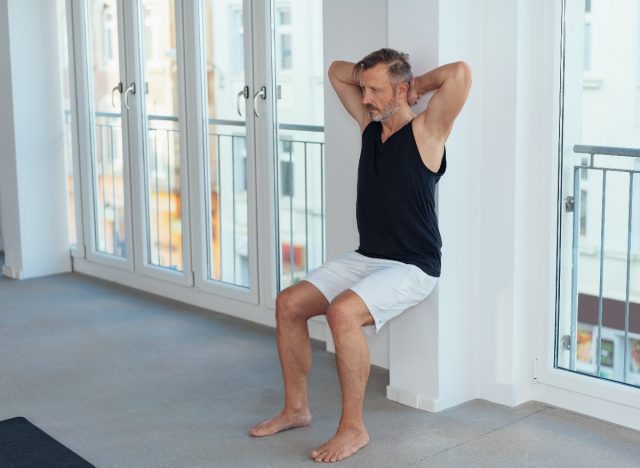
Lower-body strength improves steadily with consistent training and controlled movement. These strategies help increase your wall sit time while supporting joint health and mobility.
- Train your legs two to three times per week: Regular strength work helps build muscular endurance and stability.
- Practice wall sits consistently: Short holds performed several times per week gradually increase your tolerance for the position.
- Add squats and step-ups: These movements target the same muscle groups as wall sits.
- Strengthen your glutes and hips: Bridges and hip thrusts improve hip stability and reduce knee strain.
- Maintain mobility in your hips and ankles: Better joint movement helps you maintain stronger squat positions.
Strong legs support confident movement and long-term independence. If you can hold a wall sit for an extended time with solid posture, your lower body shows the strength and stability needed to stay active for years to come.
References
- Strollo, S E et al. “A review of the relationship between leg power and selected chronic disease in older adults.” The journal of nutrition, health & aging vol. 19,2 (2015): 240-8. doi:10.1007/s12603-014-0528-y
- Cho, Kang Hee et al. “Effect of lower limb strength on falls and balance of the elderly.” Annals of rehabilitation medicine vol. 36,3 (2012): 386-93. doi:10.5535/arm.2012.36.3.386
The post If You Can Hold a Wall Sit This Long After 60, Your Leg Strength Is Top-Tier appeared first on Eat This Not That.
]]>The post If You Can Hold a Bridge This Long After 55, Your Core Strength Is Top-Tier appeared first on Eat This Not That.
]]>Strong glutes and hips play a huge role in how the body performs as it ages. They drive powerful movements like climbing stairs, walking uphill, and rising from chairs. They also help stabilize the pelvis so the lower back doesn’t absorb unnecessary stress. When those muscles stay strong and coordinated, everyday movement feels smoother and more confident.
Hip strength also supports long-term joint health. The glutes help control the position of your knees and spine during movement. That control improves balance, reduces strain on surrounding joints, and keeps your body aligned during walking, lifting, and other daily activities. Many coaches consider the glutes one of the most important muscle groups for maintaining mobility later in life.
The bridge hold offers a clear way to test how well those muscles are doing their job. Holding the position requires your glutes, hamstrings, and deep core muscles to work together without losing tension. Up next, you’ll learn why the bridge is such an effective functional movement, how to perform it correctly, what your hold time says about your core strength, and how to build even stronger hips and glutes.
RELATED: 5 Bed Exercises That Flatten Stubborn Midsection Faster Than Crunches After 60
Why the Bridge Is a Functional Movement
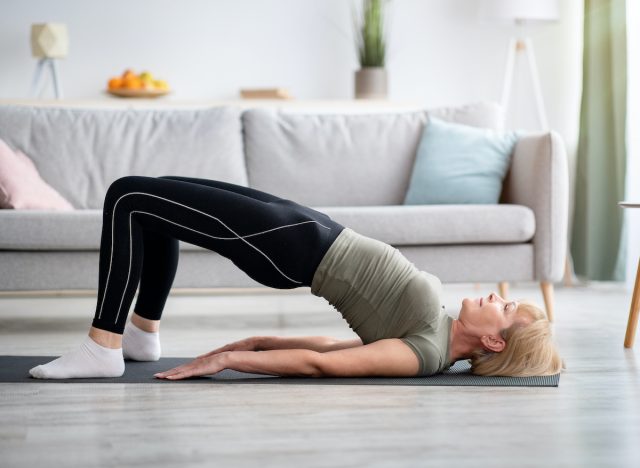
The bridge reinforces one of the body’s most important movement patterns: hip extension. Every step you take, every stair you climb, and every time you stand up from a seated position relies on your hips extending powerfully and under control. Training that pattern helps maintain strength in movements you perform dozens of times every day.
The bridge also teaches your body how to separate hip movement from lower-back movement. Many adults begin to rely too heavily on their lower back when their glutes weaken. The bridge encourages the glutes to take the lead again, improving spinal support and reducing unnecessary strain on the lumbar region.
Another advantage of the bridge is how effectively it challenges muscular endurance. Holding the position forces your glutes and deep core muscles to maintain tension while your pelvis stays level. That sustained effort builds fatigue resistance in the muscles responsible for posture, walking mechanics, and balance.
How to Perform the Best Bridge Technique
Proper technique ensures the test measures glute and core strength rather than compensations from the lower back. A strong setup allows the hips to drive the movement while the spine remains stable. When each second of the hold looks the same as the first, the result becomes a meaningful indicator of core strength.
How to Do It:
- Lie on your back with your knees bent and your feet flat on the floor about hip-width apart.
- Place your arms at your sides with your palms facing the floor.
- Brace your core by tightening your midsection before lifting your hips.
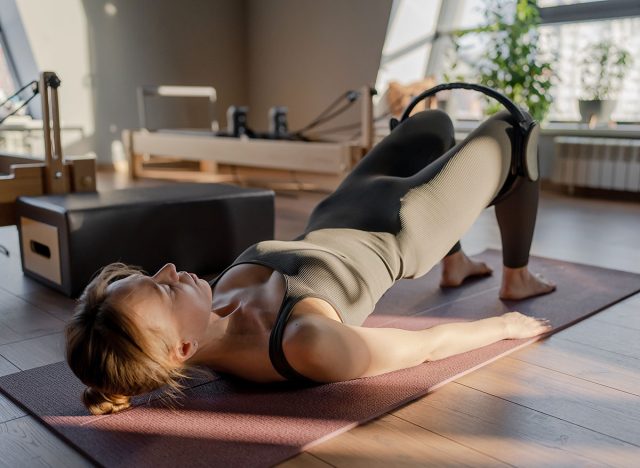
- Press through your heels and lift your hips until your shoulders, hips, and knees form a straight line.
- Squeeze your glutes firmly while keeping your ribs down and your pelvis level.
- Hold the position while breathing steadily until your hips begin to drop or your form breaks.
Once your hips sag or your lower back begins to arch excessively, the hold is complete.
RELATED: 5 Chair Exercises That Restore Leg Muscle Faster Than Squats After 65
Bridge Hold Strength Rankings After 55
This test measures how long you can hold a clean bridge position without losing alignment. Start your timer once your hips reach full extension.
- Under 30 seconds: Needs Improvement
This range suggests limited endurance in the glutes and core. Fatigue may appear quickly during prolonged walking or standing.
- 30 to 60 seconds: Average
Your hips and core can handle everyday movement demands, though fatigue may show up during longer efforts.
- 60 to 90 seconds: Above Average
This score reflects strong glute endurance and solid pelvic stability.
- 90+ seconds: Top-Tier
This level demonstrates exceptional hip and core endurance. Your glutes maintain force output while your pelvis and spine stay controlled.
RELATED: 5 Dumbbell Exercises That Build Shoulder Strength Faster Than Machines After 60
The Best Tips for Building Stronger Hips and Glutes After 55
Stronger hips and glutes develop through consistent training that challenges both strength and endurance. These strategies help build a bridge hold that lasts longer while supporting overall movement quality.
- Practice bridges regularly: Perform two to three sets several times per week to build endurance in the glutes and core.
- Add single-leg variations: Single-leg bridges increase hip demand and improve pelvic control.
- Train other hip extension movements: Exercises like step-ups, kettlebell deadlifts, and hip thrusts strengthen the same muscle groups.
- Strengthen your core stabilizers: Planks, dead bugs, and carries improve trunk stability, which supports strong bridge holds.
- Focus on quality tension: Squeezing the glutes and maintaining alignment matter more than simply holding the position longer.
Strong hips and glutes influence nearly every movement you perform throughout the day. If you can hold a bridge for an extended period with clean form, you’re showing that the muscles supporting your spine and pelvis remain powerful, coordinated, and ready for whatever movement the day brings.
References
- Lehecka, B J et al. “BUILDING A BETTER GLUTEAL BRIDGE: ELECTROMYOGRAPHIC ANALYSIS OF HIP MUSCLE ACTIVITY DURING MODIFIED SINGLE-LEG BRIDGES.” International journal of sports physical therapy vol. 12,4 (2017): 543-549.
- Inacio, Mario et al. “Gluteal muscle composition differentiates fallers from non-fallers in community dwelling older adults.” BMC geriatrics vol. 14 37. 25 Mar. 2014, doi:10.1186/1471-2318-14-37
The post If You Can Hold a Bridge This Long After 55, Your Core Strength Is Top-Tier appeared first on Eat This Not That.
]]>The post The 6-Minute Chair Routine That Builds Leg Muscle Faster Than Squats After 60 appeared first on Eat This Not That.
]]>Short routines like the one below work best when you think of them as a fitness snack rather than a full meal. They don’t replace your regular workouts. Instead, they supplement them. In my coaching work, I often encourage clients to sprinkle in quick strength blocks like this throughout the week. These short sessions help reinforce movement patterns, stimulate muscles, and maintain progress on days when a full workout isn’t on the schedule.
The 6 Minute Chair Routine That Builds Leg Muscle Faster Than Squats After 60 targets the lower body’s major muscles with simple seated movements. Each exercise focuses on controlled reps and steady tension to help strengthen the thighs and hips. All you need is a sturdy chair and a few focused minutes.
The Workout Name: The 6 Minute Chair Routine That Builds Leg Muscle After 60
What you need: A sturdy chair and six focused minutes. This routine uses controlled seated exercises to challenge your legs while keeping the setup simple and joint-friendly.
The Routine:
- Chair Squats
- Seated Knee Extensions
- Seated Marches
Directions
Perform the exercises in the order listed. Move with control and focus on feeling your leg muscles working during each rep. Rest only as prescribed. The full sequence takes about six minutes to complete. Read on for the detailed instructions.
RELATED: If You Can Hold a Squat This Long After 60, Your Lower-Body Strength Is Top-Tier
Chair Squats
Chair squats strengthen the quads and glutes, which play a major role in standing, walking, and climbing stairs. This movement reinforces one of the most important patterns your body uses every day. I like starting with chair squats because they quickly wake up the largest muscles in the lower body while staying approachable for many fitness levels. Over time, stronger legs translate directly into smoother everyday movement.
Muscles Trained: Quadriceps, glutes, hamstrings, and core.
How to Do It:
- Stand in front of your chair with your feet about hip-width apart.
- Brace your core and keep your chest lifted.
- Push your hips back and bend your knees to lower toward the chair.
- Lightly tap the chair with your hips.
- Drive through your whole foot to stand tall again.
- Repeat for the target reps.
Recommended Sets and Reps: Perform 2 sets of 10 to 12 reps. Rest for 30 seconds between each set.
Best Variations: Pause chair squats, slow tempo squats, hands-free squats.
Form Tip: Keep your weight through your whole foot to stay balanced as you stand.
Seated Knee Extensions
Seated knee extensions place focused tension on the quadriceps, the muscles at the front of your thighs. These muscles play a major role in leg strength and knee stability. I often include this movement because it isolates the quads in a joint-friendly position while still building muscular endurance. Consistent reps help restore strength and firmness through the thighs.
Muscles Trained: Quadriceps and hip flexors.
How to Do It:
- Sit tall near the front edge of the chair.
- Place both feet flat on the floor.
- Brace your core lightly and keep your posture upright.
- Extend one leg until it is straight.
- Pause briefly at the top.
- Lower with control and switch legs.
- Continue alternating.
Recommended Sets and Reps: Perform 2 sets of 12 reps per side. Rest for 30 seconds between each set.
Best Variations: Slow tempo extensions, hold at the top, alternating rhythm.
Form Tip: Fully straighten your knee at the top of each rep.
RELATED: The 8-Minute Daily Routine That Builds More Core Strength Than Planks After 65
Seated Marches
Seated marches strengthen the hip flexors and supporting core muscles while improving coordination between the hips and legs. This movement reinforces the same mechanics your body uses during walking and stair climbing. I like using seated marches as a finisher because they keep the legs working while also building endurance through the hips. Over time, this helps your lower body feel stronger and more responsive.
Muscles Trained: Hip flexors, lower abdominals, and core stabilizers.
How to Do It:
- Sit tall with your hands resting at your sides.
- Brace your core and keep your chest lifted.
- Lift one knee toward your chest.
- Lower with control.
- Lift the opposite knee.
- Continue alternating for the full set.
Recommended Sets and Reps: Perform 2 sets of 30 seconds. Rest for 30 seconds between each set.
Best Variations: Higher knee marches, slower marches, hands-free marches.
Form Tip: Stay tall through your spine as you lift each knee.
RELATED: If You Can Hold a Plank This Long After 60, Your Core Strength Is Stronger Than 90% of Peers
Best Daily Habits to Build Leg Strength After 60
Leg strength improves fastest when short training sessions pair with supportive daily habits. Your muscles respond well to frequent activation and steady movement throughout the week. In my coaching experience, adults over 60 see the best results when they combine structured workouts with small strength “snacks” like this routine. These quick sessions help reinforce the work you’re already doing. Consistency drives progress. Use the habits below to support your results.
- Train your lower body several days per week. Frequent stimulus supports muscle retention.
- Add short strength snacks throughout the week. Quick sessions keep your legs active.
- Walk regularly during the day. Daily steps reinforce leg strength and coordination.
- Focus on controlled reps. Slower movement increases time under tension.
- Prioritize protein intake. Adequate protein supports muscle repair and growth.
- Progress gradually over time. Small increases in reps keep your legs adapting.
Stay consistent with this six-minute chair routine and these habits, and many adults over 60 begin to notice stronger legs, better movement control, and more confidence during everyday activities.
References
- Bičíková, Marie et al. “Movement as a Positive Modulator of Aging.” International journal of molecular sciences vol. 22,12 6278. 11 Jun. 2021, doi:10.3390/ijms22126278
- Iversen, Vegard M et al. “No Time to Lift? Designing Time-Efficient Training Programs for Strength and Hypertrophy: A Narrative Review.” Sports medicine (Auckland, N.Z.) vol. 51,10 (2021): 2079-2095. doi:10.1007/s40279-021-01490-1
- Mohammadi, Zahra et al. “Comparison the effect of Otago and chair squat exercises on the fear of falling and the quality of life of the older adults, a clinical trial study.” Aging clinical and experimental research vol. 37,1 66. 3 Mar. 2025, doi:10.1007/s40520-025-02951-7
The post The 6-Minute Chair Routine That Builds Leg Muscle Faster Than Squats After 60 appeared first on Eat This Not That.
]]>The post If You Can Hold a Squat This Long After 60, Your Lower-Body Strength Is Top-Tier appeared first on Eat This Not That.
]]>Your lower body acts as the foundation for daily activity. Standing up from a chair, climbing stairs, stepping over obstacles, and maintaining balance all rely on the muscles in your hips and legs. Well-developed quads and glutes support those movements and help maintain stability from the ground up. When these muscles stay strong, walking feels easier, and physical tasks require far less effort.
Leg strength also supports long-term health and mobility. The muscles in the lower body rank among the largest in the body and play a major role in maintaining circulation, joint stability, and physical independence. Maintaining strength in these muscles helps people stay active, confident, and capable well into later decades.
A simple squat hold offers a quick snapshot of how your lower body is performing. The position challenges your quads, glutes, and core, maintaining tension while keeping your body stable. The length of time you can hold that position reveals a lot about your lower-body strength and endurance. Up next, you’ll learn why the squat hold works so well, how to perform it correctly, what your hold time means, and how to build even stronger legs.
RELATED: The 8-Minute Daily Routine That Builds More Core Strength Than Planks After 65
Why the Squat Hold Is a Functional Movement
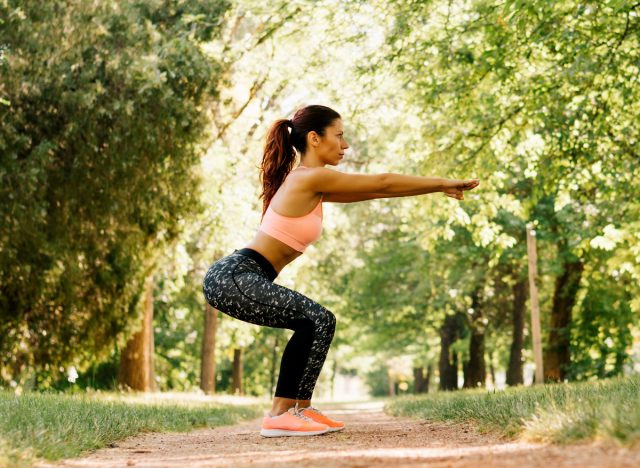
The squat pattern appears constantly in daily life. Sitting down, standing up, picking items off the floor, and lowering your body toward a chair all rely on the same basic mechanics. Training the squat pattern helps reinforce the strength and coordination required to move safely and efficiently.
Holding the squat position further increases the challenge. Instead of briefly lowering and standing back up, your muscles must maintain tension while your joints stay aligned. The quads and glutes work continuously to support your body weight, while your core stabilizes your torso, keeping your posture upright.
The squat hold also builds strength and endurance in the muscles surrounding your hips and knees. Those muscles act like shock absorbers for your body. When they remain strong, they protect your joints and help maintain balance during walking, hiking, and other everyday activities.
How to Perform the Best Squat Hold Technique
A clean squat hold requires strong positioning and consistent tension. Your goal is to maintain a stable posture in which your hips, knees, and ankles share the workload evenly. When your alignment stays steady, the exercise challenges your muscles rather than placing unnecessary strain on your joints.
How to Do It:
- Stand with your feet about shoulder-width apart, and your toes slightly turned out.
- Brace your core by tightening your midsection before lowering into the squat.
- Sit your hips back and down while bending your knees under control.
- Lower until your thighs are parallel to the floor or in your deepest, most comfortable squat position.
- Keep your chest tall and your weight balanced across your heels and midfoot.
- Hold the squat while maintaining steady breathing until your posture begins to break.
Best Variations: Wall Sit, Goblet Squat Hold, Box Squat Hold, Banded Squat Hold, Heels-Elevated Squat Hold.
RELATED: If You Can Hold a Plank This Long After 60, Your Core Strength Is Stronger Than 90% of Peers
Squat Hold Strength Rankings After 60
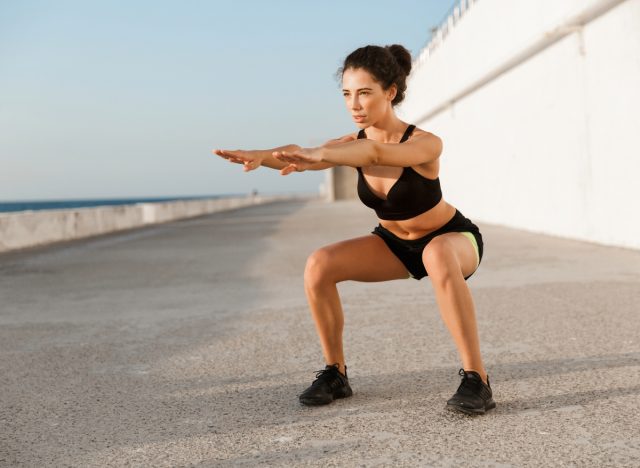
This test measures how long you can maintain a stable squat position with good form. Start the timer once you reach your full squat depth.
- Under 20 seconds: Needs Improvement
This range suggests your lower-body strength and endurance could benefit from targeted training.
- 20 to 45 seconds: Average
Your legs can support most everyday tasks, though fatigue may appear during longer activities.
- 45 to 75 seconds: Above Average
This score reflects strong quads and glutes with good muscular endurance.
- 75+ seconds: Top-Tier
This level shows excellent lower-body strength and stability. Your legs maintain force output and joint control even as fatigue builds.
RELATED: The 7-Minute Standing Routine That Shrinks Hip Dip Fat After 45, According to a Trainer
The Best Tips for Building Stronger Legs After 60
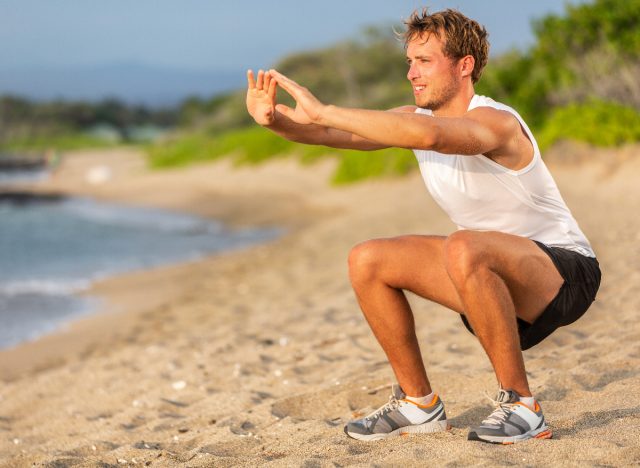
Lower-body strength responds well to consistent, controlled training. These strategies help improve squat hold performance while supporting healthy joints and long-term mobility.
- Train your legs two to three times per week: Regular exposure builds strength without overwhelming recovery.
- Use controlled tempos: Slower squats increase time under tension and reinforce strong movement patterns.
- Add step-based exercises: Step-ups and split squats strengthen the hips and improve balance.
- Strengthen your glutes: Bridges and hip thrusts build the hip power that supports strong squat positions.
- Maintain mobility in your hips and ankles: Better joint mobility helps you reach deeper squat positions comfortably.
Strong legs play a huge role in staying active and independent after 60. If you can hold a squat for an extended period with solid posture, you’re showing that your lower body remains powerful, stable, and ready for whatever challenges the day brings.
References
- Dunn, M.T., Quach, P.T.M., McGraw, M., Preus, R.I., Barefoot, R.C., Lancaster, W.C., Ponder, J. and Singh, H. (2025), Using Isometric Squat Strength to Predict Concentric and Eccentric Squat Strength in Young and Older Adults. Physiother Res Int, 30: e70034. https://doi.org/10.1002/pri.70034
- Straub, Rachel K, and Christopher M Powers. “A Biomechanical Review of the Squat Exercise: Implications for Clinical Practice.” International journal of sports physical therapy vol. 19,4 490-501. 1 Apr. 2024, doi:10.26603/001c.94600
The post If You Can Hold a Squat This Long After 60, Your Lower-Body Strength Is Top-Tier appeared first on Eat This Not That.
]]>The post If You Can Hold a Plank This Long After 60, Your Core Strength Is Stronger Than 90% of Peers appeared first on Eat This Not That.
]]>One thing I’ve noticed coaching clients over the years is that core strength often shows up in subtle ways before people even realize it. Your balance feels steadier. Posture improves. Every day movements feel smoother and less effortful. The core acts like the body’s central support system, quietly doing its job behind the scenes every time you move.
That’s where the plank comes into the picture. This simple position challenges the entire core while also recruiting the shoulders, hips, and legs to work together. Unlike exercises that involve bending or twisting, the plank trains the muscles to stabilize the spine. That ability to maintain control under tension makes it one of the most reliable measures of core strength.
The best part is that the plank works as both a test and a training tool. The longer someone can hold a strong plank position, the greater the endurance of their core muscles. That’s why coaches frequently use plank hold times as a quick benchmark for overall core strength.
RELATED: The 7-Minute Standing Routine That Shrinks Hip Dip Fat After 45, According to a Trainer
How to Execute a Perfect Plank
Before worrying about how long you can hold a plank, it’s important to focus on quality. A strong plank position keeps the body aligned from head to heels while the core muscles stay engaged throughout the hold.
Follow these steps to perform a proper plank:
- Start face down on the floor with your forearms under your shoulders.
- Straighten your legs behind you and plant your toes on the ground.
- Lift your body so it forms a straight line from head to heels.
- Brace your core and squeeze your glutes.
- Hold the position while breathing steadily.
Form Tip: Avoid letting your hips sag or rise too high. Your body should remain in one straight line throughout the hold.
RELATED: 4 Bed Exercises That Restore Thigh Strength Faster Than Leg Press After 65
Plank Strength Rankings After 60
Plank hold times provide a useful way to measure core endurance. The longer someone maintains proper alignment, the stronger and more resilient the stabilizing muscles around the spine become. This matters because those muscles help protect the lower back, support posture, and improve balance during everyday activities.
While everyone’s starting point looks a little different, plank times can give a helpful snapshot of where your core strength stands. Use the rankings below as a general guideline for assessing your performance.
How Do You Rank
- Below Average: Less than 20 seconds
- Average: 20 to 40 seconds
- Good: 40 to 60 seconds
- Very Good: 60 to 90 seconds
- Top 10%: 90 seconds or longer
If you can maintain a strong plank for 90 seconds or more, your core strength likely exceeds 90% of most people in your age group.
How to Improve Your Plank Score
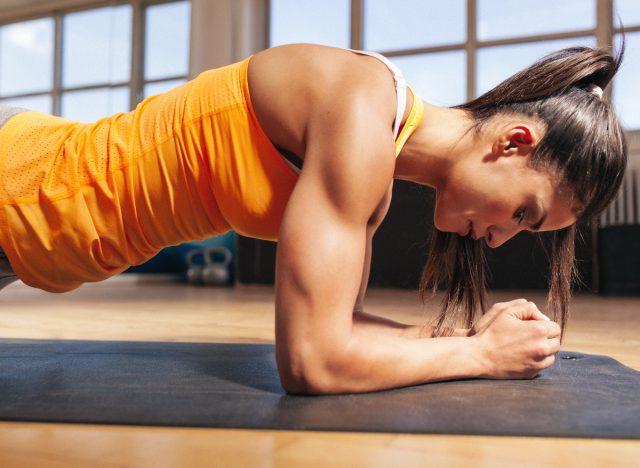
Building a longer plank hold often comes down to consistency and proper progression. The goal is to strengthen the core’s stabilizing muscles while gradually increasing the time they can remain under tension.
Here are several effective strategies for improving your plank score:
- Practice shorter holds more frequently: Multiple sets of 20 to 30 seconds often build endurance faster than a single long hold.
- Focus on perfect alignment: Keeping your body in a straight line activates the correct muscles and prevents energy leaks.
- Strengthen supporting muscles: Exercises like glute bridges, bird dogs, and dead bugs help reinforce core stability.
- Add plank variations: Side planks, plank shoulder taps, and plank marches challenge the core in different ways.
- Progress gradually: Add five to ten seconds to your hold time as your strength improves.
Consistent practice usually produces noticeable improvements within a few weeks.
RELATED: 5 Dumbbell Exercises That Restore Shoulder Strength Faster Than Lifting Weights After 55
Best Daily Tips for Building Core Strength
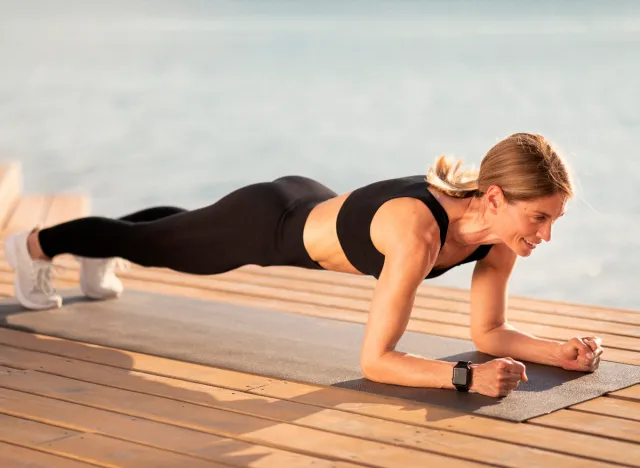
A strong core develops through regular movement and smart training habits. The muscles that stabilize the spine respond well to consistent exercise and controlled repetitions. Small daily habits can make a meaningful difference in how the body feels and moves.
- Train the core regularly: Short sessions performed several times per week help build endurance.
- Strengthen the hips and glutes: These muscles work together with the core to stabilize the body.
- Maintain upright posture throughout the day: Sitting and standing tall encourages the core to stay engaged.
- Prioritize controlled movement: Smooth, deliberate repetitions activate deeper stabilizing muscles.
- Stay consistent with your routine: Regular practice helps the core grow stronger and more resilient.
Stick with these habits and your core will continue supporting stronger movement, better balance, and greater confidence in everyday activity.
Reference
- Kang, Kwon-Young. “Effects of core muscle stability training on the weight distribution and stability of the elderly.” Journal of physical therapy science vol. 27,10 (2015): 3163-5. doi:10.1589/jpts.27.3163
- Park, Sihwa et al. “Effects of plank exercise on respiratory capacity, physical fitness, and immunocytes in older adults.” Journal of exercise rehabilitation vol. 19,6 332-338. 26 Dec. 2023, doi:10.12965/jer.2346536.268
The post If You Can Hold a Plank This Long After 60, Your Core Strength Is Stronger Than 90% of Peers appeared first on Eat This Not That.
]]>The post 5 Chair Exercises That Build Arm Strength Faster Than Weight Training After 60 appeared first on Eat This Not That.
]]>After 60, accessibility often becomes the biggest factor in sticking with a routine. A sturdy chair removes many of the common barriers to strength training. It provides support and stability so you can focus on engaging your muscles rather than worrying about balance or complicated equipment. That simple setup makes it easier to train regularly and build strength safely.
I’ve used chair-based exercises with many clients over the years, and they’re often surprised by how effective they are. Bodyweight movements and resistance bands challenge the arms using natural movement patterns while maintaining tension in the muscles throughout the exercise. That combination helps stimulate strength gains without needing heavy weights.
The five exercises below turn a simple chair into a surprisingly effective upper-body training station. Perform them regularly, and you’ll strengthen your arms, improve shoulder stability, and build upper-body strength that carries over into everyday movement.
Chair Push-Ups
Chair push-ups provide an excellent way to strengthen the chest, shoulders, and triceps while keeping the movement accessible. Elevating the hands slightly reduces the load, making it easier to control each repetition. At the same time, the arms still work hard to press the body away from the chair. Many people find they can perform more quality repetitions with this setup. Over time, chair push-ups build pressing strength and upper-body endurance.
Muscles Trained: Chest, shoulders, triceps, and core.
How to Do It:
- Place your hands on the edge of a sturdy chair.
- Walk your feet back until your body forms a straight line.
- Brace your core and keep your body aligned.
- Lower your chest toward the chair with control.
- Press through your hands to return to the starting position.
Recommended Sets and Reps: Perform 3 sets of 10 to 15 reps. Rest for 45 seconds between each set.
Best Variations: Wall push-ups, incline push-ups, close-grip push-ups.
Form Tip: Keep your body in a straight line from your head through your heels.
RELATED: 5 Daily Exercises That Restore Back Strength Faster Than Floor Workouts After 55
Chair Triceps Dips
Triceps dips are one of the most direct ways to strengthen the back of the arms. The movement encourages the triceps to extend the elbow while the shoulders help stabilize the body. Performing the exercise with a chair allows you to control your depth and tempo. Many people feel their triceps working almost immediately. With consistent practice, this movement helps build stronger and more capable arms.
Muscles Trained: Triceps, shoulders, and chest.
How to Do It:
- Sit on the edge of a chair and place your hands beside your hips.
- Slide your hips forward off the chair.
- Bend your elbows to lower your body toward the floor.
- Lower until your arms form roughly a right angle.
- Press through your hands to straighten your arms.
Recommended Sets and Reps: Perform 3 sets of 10 to 12 reps. Rest for 45 seconds between each set.
Best Variations: Bent-knee dips, slow tempo dips, pause dips.
Form Tip: Keep your shoulders down and avoid shrugging during the movement.
Seated Resistance Band Biceps Curl
Resistance bands create constant tension on the muscles throughout the entire curl. That continuous tension keeps the biceps engaged from the start of the lift through the return. Sitting upright on the chair helps eliminate momentum so the arms do the work. Many people find bands surprisingly challenging because the resistance increases as the band stretches. Over time, band curls help strengthen the biceps and forearms while improving elbow control.
Muscles Trained: Biceps and forearms.
How to Do It:
- Sit on a chair and place the center of a resistance band under your feet.
- Hold one end of the band in each hand.
- Keep your elbows close to your sides.
- Curl the band upward toward your shoulders.
- Lower your hands back down with control.
Recommended Sets and Reps: Perform 3 sets of 12 to 15 reps. Rest for 45 seconds between each set.
Best Variations: Alternating curls, hammer curls, slow tempo curls.
Form Tip: Keep your elbows pinned to your sides throughout the movement.
RELATED: 4 Bed Exercises That Restore Muscle Tone Faster Than Gym Machines After 55
Seated Overhead Press
The seated overhead press strengthens the shoulders and triceps while encouraging strong posture. Resistance bands provide steady tension as the arms press upward. Sitting tall also helps the core stabilize the torso during movement. Many clients find that band presses feel smooth and joint-friendly. With regular practice, this movement helps build shoulder and arm strength that supports everyday activities.
Muscles Trained: Shoulders, triceps, and core stabilizers.
How to Do It:
- Sit on the chair with a resistance band positioned under your feet.
- Hold the ends of the band at shoulder height.
- Brace your core and keep your chest tall.
- Press your hands upward until your arms are extended.
- Lower your hands back to shoulder height.
Recommended Sets and Reps: Perform 3 sets of 10 to 12 reps. Rest for 45 seconds between each set.
Best Variations: Single-arm press, neutral grip press, alternating press.
Form Tip: Keep your ribs down and avoid arching your back.
Seated Resistance Band Triceps Extensions
Resistance band triceps extensions strengthen the muscles on the back of the arms while keeping tension throughout the movement. The band forces the triceps to stay engaged as the arms extend. Sitting tall also helps maintain strong posture and core engagement. Many people find this exercise creates a noticeable burn in the triceps after just a few repetitions. Over time, it helps build stronger arms and better pressing strength.
Muscles Trained: Triceps and shoulders.
How to Do It:
- Sit tall on the chair while holding a resistance band overhead.
- Position the band behind your upper back.
- Bend your elbows so your hands move behind your head.
- Straighten your arms upward against the resistance.
- Lower your hands slowly back down.
Recommended Sets and Reps: Perform 3 sets of 12 to 15 reps. Rest for 45 seconds between each set.
Best Variations: Single-arm extensions, slow tempo extensions, pause extensions.
Form Tip: Keep your elbows pointed forward rather than flaring outward.
RELATED: 5 Chair Exercises That Build Core Strength Faster Than Planks After 60
Best Daily Habits to Build Arm Strength After 60
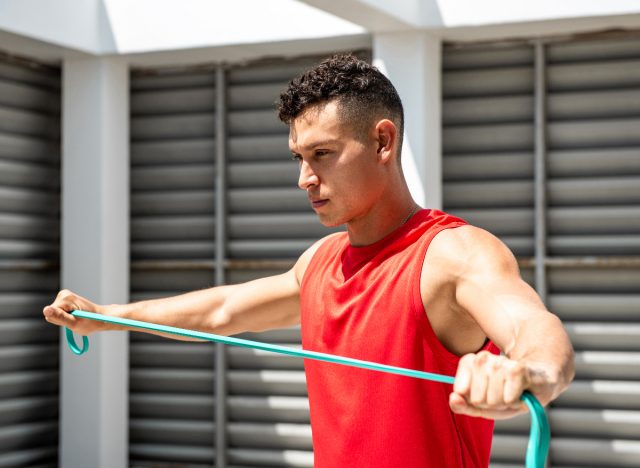
Building stronger arms after 60 often comes down to consistency and smart training choices. Muscles continue responding to strength training well into later decades when exercises are performed regularly and with good technique. Simple routines like these create steady progress because they allow the body to practice strength without overwhelming the joints.
- Train the upper body several times per week: Frequent practice helps keep the muscles active and responsive.
- Focus on controlled movement: Smooth repetitions maintain muscle tension and help protect the joints.
- Use resistance bands to your advantage: Bands provide constant tension and allow you to adjust resistance easily.
- Maintain good posture during exercises: Sitting tall encourages better engagement of the muscles in the shoulders and arms.
- Stay consistent with your routine: Small daily workouts often produce better results than occasional long sessions.
Stick with these chair exercises and your arms will grow stronger, steadier, and more capable with each passing week.
References
- Langhammer, Birgitta et al. “The Importance of Physical Activity Exercise among Older People.” BioMed research international vol. 2018 7856823. 5 Dec. 2018, doi:10.1155/2018/7856823
- Watanabe, Yuya et al. “Effect of resistance training using bodyweight in the elderly: Comparison of resistance exercise movement between slow and normal speed movement.” Geriatrics & gerontology international vol. 15,12 (2015): 1270-7. doi:10.1111/ggi.12427
The post 5 Chair Exercises That Build Arm Strength Faster Than Weight Training After 60 appeared first on Eat This Not That.
]]>The post 5 Standing Exercises That Shrink Waist Overhang Faster Than Weight Training After 60 appeared first on Eat This Not That.
]]>Over years of coaching, I’ve seen a clear pattern in exercises that help people feel leaner and stronger through the waist. Movements that recruit the legs, hips, and upper body simultaneously naturally raise heart rate and encourage the body to burn more energy. At the same time, the core has to stay engaged to keep everything stable. That combination often delivers far more return than isolated midsection work.
The five standing exercises below tap into that full-body effect. They keep the body moving, activate major muscle groups, and challenge the core from start to finish. Perform them consistently, and you’ll build strength, increase calorie burn, and support the kind of training that helps reduce waist overhang over time.
High Knees
High knees combine core engagement with quick lower-body movement. Each time the knee drives upward, the abdominals and hip flexors work together to stabilize the torso. The fast tempo also increases heart rate and encourages greater calorie burn. Many people notice their core automatically bracing to keep the body upright. Over time, this movement helps strengthen the midsection while improving coordination and conditioning.
Muscles Trained: Hip flexors, lower abdominals, quads, and calves.
How to Do It:
- Stand tall with your feet hip-width apart.
- Begin jogging in place.
- Drive one knee upward toward your chest.
- Quickly switch legs while maintaining a steady rhythm.
- Continue alternating knees at a controlled pace.
Recommended Sets and Reps: Perform 3 sets of 30 seconds. Rest for 30 seconds between each set.
Best Variations: Slow high knees, marching high knees, band-resisted high knees.
Form Tip: Keep your chest tall and drive your knees upward rather than leaning back.
RELATED: 4 Bed Exercises That Shrink Stubborn Midsection Faster Than Ab Workouts After 60
Jumping Jacks
Jumping jacks are a classic movement for a reason. They involve the entire body while encouraging continuous motion. The arms and legs move together, which forces the core to stabilize the torso throughout the exercise. This combination quickly raises heart rate and increases overall energy output. When performed consistently, jumping jacks help strengthen the core while improving endurance.
Muscles Trained: Shoulders, hips, calves, and core.
How to Do It:
- Stand with your feet together and your arms at your sides.
- Jump your feet outward while raising your arms overhead.
- Land softly with your knees slightly bent.
- Jump your feet back together while lowering your arms.
- Continue repeating the motion in a steady rhythm.
Recommended Sets and Reps: Perform 3 sets of 30 seconds. Rest for 30 seconds between each set.
Best Variations: Low-impact step jacks, slow jumping jacks, power jacks.
Form Tip: Land softly and maintain a steady rhythm throughout the movement.
Medicine Ball Slams
Medicine ball slams combine power, coordination, and full-body engagement. The downward slam activates the core while the hips and shoulders generate force. This explosive movement encourages the entire body to work together. Because the exercise recruits large muscle groups, it also increases calorie expenditure. Over time, slams help strengthen the muscles that wrap around the waist.
Muscles Trained: Core, shoulders, lats, and hips.
How to Do It:
- Stand with your feet shoulder-width apart while holding a medicine ball.
- Raise the ball overhead with both hands.
- Brace your core and slam the ball toward the floor.
- Catch or retrieve the ball as it rebounds.
- Reset and repeat the movement.
Recommended Sets and Reps: Perform 3 sets of 10 to 12 reps. Rest for 45 seconds between each set.
Best Variations: Rotational slam, alternating slam, overhead slam.
Form Tip: Engage your core before slamming the ball downward.
RELATED: The 5-Minute Standing Routine That Restores Posture After 60, According to a Trainer
Squat Jumps
Squat jumps train the legs and core while encouraging explosive power. Lowering into the squat activates the quads and glutes, while the jump requires the body to produce force quickly. The core works to stabilize the torso during both the jump and the landing. This combination challenges the entire lower body while increasing energy output. With regular practice, squat jumps help build strength and conditioning simultaneously.
Muscles Trained: Quads, glutes, calves, and core.
How to Do It:
- Stand with your feet shoulder-width apart.
- Lower your body into a squat position.
- Drive through your feet and jump upward.
- Land softly with your knees slightly bent.
- Reset your stance and repeat.
Recommended Sets and Reps: Perform 3 sets of 8 to 10 reps. Rest for 60 seconds between each set.
Best Variations: Pause squat jump, low-impact squat jump, box squat jump.
Form Tip: Land softly and absorb the impact through your hips and knees.
Suitcase Carry
The suitcase carries the challenge of the core in a subtle yet powerful way. Holding weight on one side forces the abdominal muscles to stabilize the torso, preventing leaning. This creates continuous tension through the obliques and deep core muscles. Walking while holding the weight also recruits the hips and shoulders. Over time, suitcase carrying helps strengthen the muscles that support the waistline and improve posture.
Muscles Trained: Obliques, core stabilizers, shoulders, and grip.
How to Do It:
- Hold a dumbbell or kettlebell in one hand at your side.
- Stand tall with your shoulders level.
- Brace your core and begin walking forward.
- Maintain steady steps and an upright posture.
- Switch hands after completing the distance.
Recommended Sets and Reps: Perform 3 sets of 30 to 40 seconds per side. Rest for 45 seconds between each set.
Best Variations: Farmer carry, front rack carry, kettlebell carry.
Form Tip: Keep your shoulders level and avoid leaning toward the weight.
RELATED: 4 Standing Exercises That Restore Thigh Strength Faster Than Squats After 60
Best Daily Habits That Help Reduce Waist Overhang After 60

Reducing waist overhang becomes easier when exercise works alongside supportive daily habits. Strength training and movement increase energy output while helping the body maintain muscle mass. When combined with healthy lifestyle choices, these habits encourage the body to gradually reduce excess fat.
- Train large muscle groups regularly: Full-body movements increase energy expenditure and stimulate more muscle.
- Stay consistent with movement: Daily activity helps maintain calorie burn throughout the week.
- Prioritize protein intake: Protein supports muscle maintenance while encouraging satiety.
- Support workouts with sleep and recovery: Quality sleep helps regulate hormones that influence body composition.
- Maintain a balanced routine: Combining strength, movement, and healthy habits encourages long-term results.
References
- Donnelly, Joseph E et al. “Aerobic exercise alone results in clinically significant weight loss for men and women: midwest exercise trial 2.” Obesity (Silver Spring, Md.) vol. 21,3 (2013): E219-28. doi:10.1002/oby.20145
- Cox, Carla E. “Role of Physical Activity for Weight Loss and Weight Maintenance.” Diabetes spectrum : a publication of the American Diabetes Association vol. 30,3 (2017): 157-160. doi:10.2337/ds17-0013
The post 5 Standing Exercises That Shrink Waist Overhang Faster Than Weight Training After 60 appeared first on Eat This Not That.
]]>The post 4 Bed Exercises That Restore Muscle Tone Faster Than Gym Machines After 55 appeared first on Eat This Not That.
]]>I’ve worked with plenty of clients who benefit from exercises that meet them where they are. Sometimes that means beginning the day with a few movements before their feet even touch the floor. A short routine performed on the bed can wake up your muscles and help the body feel more capable right from the start. It also provides a practical way to build strength and restore muscle tone without relying on machines.
The four exercises below target key muscle groups while keeping the routine approachable and effective. They train the legs, hips, and core while encouraging smooth, controlled movement. Perform them regularly, and you will build strength, improve stability, and start the day with a body that feels energized and ready to move.
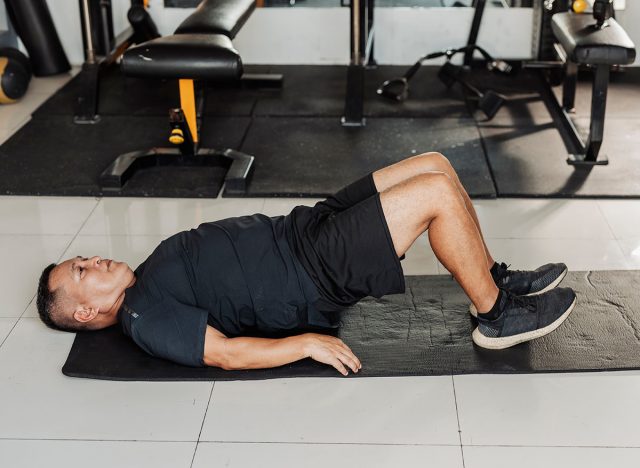
Glute Bridge
The glute bridge activates the glutes and hamstrings while encouraging the hips to move through a strong extension pattern. Many people spend long hours sitting during the day, which can make the glutes less active. This exercise helps wake those muscles up quickly. The movement also supports the lower back by strengthening the muscles that stabilize the pelvis. With consistent practice, glute bridges help rebuild lower-body muscle tone and improve hip strength.
Muscles Trained: Glutes, hamstrings, and core stabilizers.
How to Do It:
- Lie on your back with your knees bent and your feet flat on the bed.
- Place your arms at your sides for support.
- Press through your heels and lift your hips upward.
- Squeeze your glutes at the top of the movement.
- Slowly lower your hips back to the starting position.
Recommended Sets and Reps: Perform 3 sets of 12 to 15 reps. Rest for 45 seconds between each set.
Best Variations: Single-leg glute bridge, pause glute bridge, banded glute bridge.
Form Tip: Drive through your heels and focus on squeezing your glutes at the top.
RELATED: 5 Chair Exercises That Build Core Strength Faster Than Planks After 60
Dead Bugs
Dead bugs strengthen the deep core muscles that stabilize the spine. The alternating arm and leg motion keeps the core engaged as the limbs move. This pattern improves coordination and strengthens the abdominal wall. Performing the exercise on a bed allows you to focus on slow, controlled movement. Over time, stronger core muscles help support better posture and overall muscle tone.
Muscles Trained: Transverse abdominis, rectus abdominis, and hip flexors.
How to Do It:
- Lie on your back with your arms extended toward the ceiling.
- Bend your knees so your legs form a tabletop position.
- Brace your core and gently press your lower back into the mattress.
- Extend one arm and the opposite leg toward the bed.
- Return to the starting position and repeat on the other side.
Recommended Sets and Reps: Perform 3 sets of 10 to 12 reps per side. Rest for 45 seconds between each set.
Best Variations: Heel tap dead bug, slow tempo dead bug, alternating dead bug.
Form Tip: Keep your lower back lightly pressed into the mattress during each repetition.
Side-Lying Leg Raises
Side-lying leg raises strengthen the outer hips and glutes, which play an important role in balance and stability. These muscles help control hip alignment during walking and standing. Strengthening them can improve overall lower-body muscle tone. The controlled lift also encourages the hips to move through a comfortable range of motion. With regular practice, this movement helps build stronger hips and more stable legs.
Muscles Trained: Glutes, outer hips, and hip stabilizers.
How to Do It:
- Lie on your side with your legs stacked on top of each other.
- Support your head with your lower arm.
- Keep your top leg straight and lift it upward slowly.
- Pause briefly at the top of the movement.
- Lower your leg back down with control.
Recommended Sets and Reps: Perform 3 sets of 12 to 15 reps per leg. Rest for 30 seconds between each set.
Best Variations: Banded leg raise, slow tempo leg raise, small pulse raises.
Form Tip: Keep your hips stacked and avoid leaning backward as you lift your leg.
RELATED: 4 Bed Exercises That Shrink Stubborn Midsection Faster Than Ab Workouts After 60
Supine Knee Tucks
Supine knee tucks strengthen the abdominal muscles while encouraging smooth hip movement. Pulling the knees toward the chest activates the core and hip flexors simultaneously. This movement helps strengthen the muscles that support the midsection. The controlled motion also improves coordination between the hips and core. Over time, this exercise helps restore muscle tone throughout the abdominal region.
Muscles Trained: Rectus abdominis, hip flexors, and core stabilizers.
How to Do It:
- Lie on your back with your legs extended.
- Brace your core and lift your feet slightly off the bed.
- Pull your knees toward your chest.
- Pause briefly while keeping your core engaged.
- Extend your legs back out with control.
Recommended Sets and Reps: Perform 3 sets of 10 to 12 reps. Rest for 45 seconds between each set.
Best Variations: Alternating knee tucks, slow tempo knee tucks, and single-leg knee tucks.
Form Tip: Move slowly and keep your core engaged throughout the entire motion.
RELATED: The 5-Minute Standing Routine That Restores Posture After 60, According to a Trainer
Best Daily Tips for Restoring Muscle Tone After 55
Restoring muscle tone after 55 becomes much easier when movement is consistent and accessible. Small daily routines often create the biggest long-term changes. When exercises are simple to start and easy to repeat, the body receives regular signals to maintain strength and coordination. Over time, those signals encourage the muscles to stay active and responsive.
- Start with small routines: Even five to ten minutes of daily movement can make a noticeable difference.
- Focus on controlled movement: Smooth repetitions encourage better muscle activation and joint stability.
- Strengthen multiple muscle groups: Exercises that involve the hips, legs, and core promote full-body muscle tone.
- Stay consistent: Daily habits often produce better results than occasional longer workouts.
- Listen to your body: Move comfortably and gradually increase effort as strength improves.
A short routine like this can help restore muscle tone, improve stability, and make daily movement feel easier and more enjoyable.
References
- Maccarone, Maria Chiara et al. “Effects of the Full-Body in-Bed Gym program on quality of life, pain, and risk of sarcopenia in elderly sedentary individuals: preliminary positive results of a Padua prospective observational study.” European journal of translational myology vol. 33,3 11780. 26 Sep. 2023, doi:10.4081/ejtm.2023.11780
- Schumacher, Leah M et al. “Consistent Morning Exercise May Be Beneficial for Individuals With Obesity.” Exercise and sport sciences reviews vol. 48,4 (2020): 201-208. doi:10.1249/JES.0000000000000226
The post 4 Bed Exercises That Restore Muscle Tone Faster Than Gym Machines After 55 appeared first on Eat This Not That.
]]>The post 5 Chair Exercises That Build Core Strength Faster Than Planks After 60 appeared first on Eat This Not That.
]]>One thing I’ve learned coaching clients over the years is that exercises work best when they meet people where they’re at. Seated movements provide stability and support, allowing you to focus on engaging the muscles in your midsection rather than worrying about balance or getting up and down from the floor. That setup helps many people build foundational core strength while also gaining something just as important: confidence in their movements.
The five exercises below turn a simple chair into a surprisingly effective core-training station. Each movement challenges the abdominals, hips, and stabilizing muscles in a slightly different way. Perform them consistently, and you’ll build core strength that carries over into everyday movement.
Seated Knee Tucks
Seated knee tucks are a fantastic way to wake up the core while keeping the movement simple and controlled. As you draw your knees toward your chest, the abdominal muscles contract to stabilize the torso and guide the motion. Many people are surprised by how quickly they feel this exercise working on the lower core. The movement also trains coordination between the hips and abdominals, which plays a big role in everyday movement. With regular practice, knee tucks help strengthen the muscles that support the spine and stabilize the pelvis.
Muscles Trained: Rectus abdominis, hip flexors, and core stabilizers.
How to Do It:
- Sit toward the front edge of a chair with your hands holding the sides.
- Lean your torso back slightly while keeping your chest tall.
- Extend your legs forward.
- Pull your knees toward your chest.
- Extend your legs again with control.
Recommended Sets and Reps: Perform 3 sets of 12 to 15 reps. Rest for 30 seconds between each set.
Best Variations: Alternating knee tucks, slow tempo knee tucks, single-leg knee tuck.
Form Tip: Keep your chest lifted and avoid rounding your back.
RELATED: The 5-Minute Standing Routine That Restores Posture After 60, According to a Trainer
Seated Russian Twists
Russian twists strengthen the obliques, which help stabilize the torso during rotation. Many daily movements involve turning, reaching, or shifting direction, so these muscles work constantly behind the scenes. The twisting motion keeps the core engaged while the upper body rotates from side to side. This not only strengthens the waistline muscles but also improves coordination between the upper and lower body. Over time, stronger obliques support better posture and a more stable midsection.
Muscles Trained: Obliques, rectus abdominis, and core stabilizers.
How to Do It:
- Sit tall on the chair with your feet planted on the floor.
- Lean your torso back slightly while bracing your core.
- Hold your hands together in front of your chest.
- Rotate your torso to one side.
- Rotate to the opposite side and continue alternating.
Recommended Sets and Reps: Perform 3 sets of 16 to 20 alternating reps. Rest for 30 seconds between each set.
Best Variations: Weighted Russian twists, slow tempo twists, pause twists.
Form Tip: Rotate through your torso rather than swinging your arms.
Seated Leg Lifts
Seated leg lifts challenge the lower abdominal muscles and the hip flexors simultaneously. Lifting the legs requires the core to stabilize the torso while the hips move. This simple action strengthens the muscles that help control pelvic positioning and lower-body movement. Many clients notice that this exercise quickly wakes up the lower core. Practicing it regularly helps build strength that carries over into walking, climbing stairs, and other daily tasks.
Muscles Trained: Lower abdominals, hip flexors, and core stabilizers.
How to Do It:
- Sit tall on the chair with your hands gripping the sides.
- Brace your core and keep your chest lifted.
- Extend both legs forward.
- Lift your feet several inches off the floor.
- Lower your feet slowly back down.
Recommended Sets and Reps: Perform 3 sets of 10 to 12 reps. Rest for 30 seconds between each set.
Best Variations: Alternating leg lifts, slow tempo leg lifts, and single-leg lifts.
Form Tip: Move slowly and keep your core engaged throughout the lift.
RELATED: 4 Standing Exercises That Restore Thigh Strength Faster Than Squats After 60
Seated Marches
Seated marches train the core to stabilize while the legs move independently. Each time one knee lifts, the abdominal muscles work to keep the torso steady. This teaches the core how to maintain control during movement, which is essential for balance and coordination. The alternating pattern also promotes better hip mobility and rhythm. Over time, the movement strengthens the core while improving lower-body coordination.
Muscles Trained: Hip flexors, lower abdominals, and core stabilizers.
How to Do It:
- Sit tall with your feet flat on the floor.
- Brace your core and keep your chest upright.
- Lift one knee toward your chest.
- Lower the leg and lift the opposite knee.
- Continue alternating in a steady rhythm.
Recommended Sets and Reps: Perform 3 sets of 20 alternating reps. Rest for 30 seconds between each set.
Best Variations: Slow-tempo marches, pause marches, alternating-hold marches.
Form Tip: Keep your torso tall and avoid leaning backward as you lift each knee.
Seated Pallof Hold
The pallof hold trains the core to resist rotation, which is one of the most important functions of the abdominal muscles. Instead of bending or crunching the torso, the core works to keep the body steady while the arms extend away from the chest. That small shift in leverage keeps the deep stabilizing muscles around the spine engaged. Many people are surprised by how quickly this movement lights up the midsection. Over time, exercises like this build the kind of core stability that supports posture, balance, and everyday movement.
Muscles Trained: Transverse abdominis, obliques, shoulders, and core stabilizers.
How to Do It:
- Sit tall on a chair beside a resistance band anchor point.
- Hold the band with both hands at chest height.
- Brace your core and extend your arms straight out in front of you.
- Keep your torso still while the band pulls to the side.
- Hold the position before bringing your hands back toward your chest.
Recommended Sets and Reps: Perform 3 sets of 20 to 30 second holds per side. Rest for 30 seconds between each set.
Best Variations: Standing Pallof hold, kneeling Pallof hold, Pallof press.
Form Tip: Keep your shoulders level and avoid letting the band rotate your torso.
RELATED: 4 Standing Exercises That Restore Thigh Strength Faster Than Squats After 60
Best Daily Tips for Building Core Strength After 60
Strong core muscles support posture, balance, and everyday movement. Building that strength does not require complicated workouts or uncomfortable positions on the floor. Simple, consistent routines often produce the most noticeable results.
- Train the core regularly: Short daily sessions often build strength faster than occasional long workouts.
- Focus on controlled movement: Smooth, deliberate repetitions help activate the deeper core muscles.
- Strengthen the hips and abdomen together: These muscle groups work as a team to stabilize the body.
- Maintain upright posture during exercises: Sitting tall encourages better core engagement.
- Stay consistent: Regular practice helps the core grow stronger and more supportive over time.
Stick with these chair exercises, and you’ll build a stronger, more stable core that supports the rest of your movement.
References
- Rodríguez-Perea, Ángela et al. “Core training and performance: a systematic review with meta-analysis.” Biology of sport vol. 40,4 (2023): 975-992. doi:10.5114/biolsport.2023.123319
- Zhong, Yuanji et al. “Effects of core training on balance performance in older adults: a systematic review and meta-analysis.” Frontiers in public health vol. 13 1661460. 9 Oct. 2025, doi:10.3389/fpubh.2025.1661460
The post 5 Chair Exercises That Build Core Strength Faster Than Planks After 60 appeared first on Eat This Not That.
]]>