The post 5 Daily Exercises That Flatten Belly Overhang Faster Than Crunches After 60 appeared first on Eat This Not That.
]]>“A ‘belly overhang‘ after 60 is typically the result of several overlapping factors—not just excess fat,” Canham tells us. First, sarcopenia reduces muscle tone in the core and lower body. As deep stabilizing muscles weaken, the abdomen has less structural support and can protrude. Second, hormonal changes—including lower estrogen and testosterone—shift fat storage toward the lower abdomen. Third, skin elasticity declines with age due to reduced collagen, which can contribute to a softer, more pronounced overhang.”
And finally, changes in posture—such as an anterior pelvic tilt—and sedentary habits can worsen the appearance of a protruding belly, even in those who are active.
“Addressing it requires improving muscle support, posture, and overall body composition, not just increasing activity,” Canham says. “Crunches target the rectus abdominis, but they don’t address the deeper core muscles that support the abdomen. They also don’t reduce fat in a specific area—fat loss occurs systemically, not locally.”
Below, Canham breaks down five daily exercises to prioritize in your workouts. They emphasized deep core strengthening, full-body muscle engagement, and pelvic alignment—all of which are crucial for improving the appearance and function of the abdominal region after 60.
Supine Deep Core Breathing
- Lie flat on your back with knees bent and feet flat on the mattress.
- Place one hand on your chest and the other on your belly.
- Take a deep breath in through the nose, allowing your lower hand to naturally rise as your belly expands.
- Slowly exhale through the mouth.
- Perform 2 sets of 8 to 10 gradual breaths.
RELATED: 5 Standing Core Moves That Flatten Your Stomach After 40
Glute Bridges
- Lie flat on your back with bent knees and feet hip-width apart, arms at your sides with palms pressing into the mattress.
- Press through your heels to lift your hips until your body forms a straight line from head to heels.
- Squeeze your buttocks, holding at the top for 2 seconds.
- Lower your hips back to the start position.
- Perform 2 to 3 sets of 10 to 12 reps.
RELATED: 5 Chair Exercises That Flatten Belly Overhang Faster Than Planks After 50
Dead Bugs
- Lie face-up on the mattress with your arms extended toward the sky and knees lifted and bent to 90 degrees.
- Press your lower back into the mattress as you gradually lower your left arm and extend your right leg.
- Return to the center.
- Then, lower your right arm and left leg.
- Continue to alternate.
- Perform 2 to 3 sets of 8 to 10 reps on each side.
Bird-Dog
- Start on all fours.
- Extend your left arm and right leg, keeping your core braced.
- Hold for 2 to 3 seconds before returning to the start position.
- Switch sides, continuing to alternate.
- Perform 2 sets of 8 reps on each side.
RELATED: These 4 Lower-Body Moves Burn Belly Fat Without Touching Your Core
Standing March
- Start by standing tall with your feet hip-width apart and arms at your sides.
- Lift your left knee up to hip height, pausing for a moment at the top and keeping your core engaged.
- Lower your foot and repeat with your right knee, holding it at the top for a moment before lowering.
- Maintain solid posture and steady breathing throughout.
- Perform 2 to 3 sets of 20 alternating steps.
The post 5 Daily Exercises That Flatten Belly Overhang Faster Than Crunches After 60 appeared first on Eat This Not That.
]]>The post The 8-Minute Daily Routine That Builds More Core Strength Than Planks After 65 appeared first on Eat This Not That.
]]>The best thing you can do for yourself to stay healthy and able to live life to its fullest, is to exercise regularly. Did you know that you can boost your core strength by dedicating just eight minutes to a daily fitness routine? Sure, planks have their place in a successful core workout. Cleveland Clinic says the plank is an effective bodyweight exercise that’s convenient, protects your back, boosts posture, improves mental wellness, and prevents workout-related injuries. However, we spoke with Steve Stonehouse, Vice President of Programming and Education at Body Fit Training (BFT), who breaks down a speedy workout that can build more core strength than planks after 65.
“To build a strong, ‘functional’ core, we need to move beyond just static holding. A truly strong core for a senior involves stability, rotation and even resistance to gravity while upright,” Stonehouse explains. “Farmer’s Carries, [for instance,] require the individual to ‘build tension’ within the deep core musculature which ultimately produces a ‘brace’ of sorts and protects the spine.”
Below, Stonehouse breaks down an eight-minute routine that builds more core strength than planks after 65. Perform the circuit twice.
Farmer’s Carry
- Hold a dumbbell in each hand at your sides.
- Start walking forward, keeping your torso still and maintaining a tall posture.
- Perform the exercise for 45 seconds, then rest for 15 seconds.
RELATED: 5 Core Moves That Burn Belly Fat Faster Than Crunches
Wall Pushups
- Begin standing tall, arms-length away from a wall.
- Place your hands shoulder-width apart on the surface.
- Engage your core and bend your elbows to lower your chest toward the wall.
- Press back up to the starting position, keeping the movement slow and controlled.
- Perform the exercise for 45 seconds, then rest for 15 seconds.
RELATED: 4 Daily Standing Drills That Flatten Belly Overhang Better Than Ab Workouts After 45
Bird Dog
- Start on all fours on a workout mat.
- Extend your left arm and right leg.
- Hold for 3 seconds before returning to the start position.
- Switch sides and continue to alternate.
- Perform the exercise for 45 seconds, then rest for 15 seconds.
RELATED: 5 Daily Walking Drills That Flatten Belly Overhang Better Than Ab Workouts After 45
Seated Dead Bugs
- Begin sitting tall on a sturdy chair or workout bench with your feet flat on the ground and knees bent to 90 degrees.
- Lean back just a bit while keeping your core engaged.
- Lift one knee up toward your chest while lifting the opposite arm overhead.
- Return to the start position and repeat on the opposite side.
- Continue to alternate, performing the exercise for 45 seconds, then resting for 15 seconds.
The post The 8-Minute Daily Routine That Builds More Core Strength Than Planks After 65 appeared first on Eat This Not That.
]]>The post 5 Daily Exercises That Restore Full-Body Strength Faster Than Gym Sessions After 60 appeared first on Eat This Not That.
]]>“What many people fail to realize as they age is that muscle mass does not only equate to strength, but that it is also directly tied to balance, mobility, metabolism, and even bone density,” York stresses. “As we lose our muscle mass, we can lose stability, reaction time, and increase our risk of falling, which is one of the leading causes of injury in older adults. Strength training after 60 goes beyond aesthetics; it’s about maintaining independence to continue to do functional movements like carrying groceries, climbing stairs, and staying active with families.”
These at-home exercises kick certain barriers like accessibility and comfort to the curb. They help fitness enthusiasts work out at their own pace and can be adjusted according to ability and mobility levels.
Chair Squats
- Begin by standing tall in front of a sturdy chair with your feet hip-width apart on the ground.
- Activate your core and keep your chest lifted.
- Bend at the knees and hips and lower slowly into a squat—as if you’re about to sit down. Make sure your weight stays in your heels.
- Lightly touch the surface of the chair with your glutes.
- Press through your heels to rise back up.
- Perform 3 sets of 10 to 12 reps.
RELATED: Over 50? If You Can Do This Many Knee Pushups, Your Upper Body Is Stronger Than Most
Wall Pushups
- Stand tall, arms-length away from a wall.
- Place your hands shoulder-width apart on the surface.
- Engage your core and bend your elbows to lower your chest toward the wall. Keep your elbows tucked at a 45-degree angle, not flared out.
- Press back up to the starting position, keeping the movement slow and controlled.
- Perform 3 sets of 10 to 12 reps.
RELATED: 4 Bodyweight Exercises That Build More Strength Than Gym Machines After 50
Standing Lunges
- Begin standing tall, using a sturdy chair or wall for support.
- Step one foot back into a gentle lunge.
- Return to the standing position.
- Switch sides.
- Perform 3 sets of 8 to 10 reps on each leg.
RELATED: If You Can Hold a Plank This Long After 50, Your Core Is Stronger Than Most
Seated Torso Rotations
- Begin sitting tall on a sturdy chair with your feet flat on the floor. Activate your core.
- Place your hands behind your head or cross them in front of your chest.
- Slowly twist your torso to the left, keeping your hips facing forward.
- Hold for 3 to 5 seconds.
- Return to the center, then twist to the right.
- Perform 3 sets of 12 to 15 rotations.
RELATED: 5 Bodyweight Moves That Fight Muscle Loss Better Than Gym Workouts After 60
Standing High Knee March
- Stand tall with your feet shoulder-width apart and your knees soft. Make sure your spine is long and your arms are crossed high in a “genie” position.
- Then, lift one knee up toward your chest.
- Lower it.
- Lift the other knee up toward your chest.
- Perform 3 sets of 8 to 10 reps on each leg.
The post 5 Daily Exercises That Restore Full-Body Strength Faster Than Gym Sessions After 60 appeared first on Eat This Not That.
]]>The post 5 Daily Exercises That Restore Back Strength Faster Than Floor Workouts After 55 appeared first on Eat This Not That.
]]>“After 55, muscle mass in the posterior chain decreases, fascia loses hydration and becomes restrictive, spinal discs compress, and deep stabilizing muscles go quiet from underuse,” explains Chancy Gill, LMT, co-owner of Syringa Bodwork in Hayden, Idaho. “Decades of desk posture weaken the glutes and shorten the hip flexors, leaving the lower back to carry a load it was never meant to handle. The result: stiffness, reduced mobility, chronic fatigue, and a higher risk of injury. Floor stretches and crunches rarely fix this, especially when restricted fascia is preventing the muscles from firing correctly.”
For those 55+, the most challenging barrier to exercise isn’t about motivation, but rather comfortability and accessibility. Traditional gym sessions can sometimes feel intimidating or inconvenient, which can cause inconsistency.
“At-home exercises eliminate these barriers, allowing people to train at their own pace in an environment that is comfortable,” explains Josh York, Founder & CEO, GYMGUYZ. “These workouts can also be tailored to ability and mobility levels, making them impactful for functional movements.”
Below, experts break down their top daily exercises that help restore back strength quicker than floor workouts.
Standing Hip Hinges
The standing hip hinge engages the hamstrings, lumbar extensors, and glutes.
“Hinge from the hips—not the waist—sending them back while keeping a long, neutral
spine. Drive through the heels to return,” explains Gill. “Repatterns the body to load the posterior chain instead of the lower back. Add light dumbbells as it becomes comfortable.”
- Stand tall, feet hip-width apart.
- Place your hands behind your head.
- Press your hips back while maintaining a tall chest.
- As you hinge forward, feel a solid stretch in your hamstrings.
- Activate your hamstrings and glutes to drive your hips forward.
- Perform 3 sets of 10 to 12 reps.
RELATED: 5 Daily Standing Exercises That Strengthen Your Back Better Than Gym Machines After 45
Resistance Band Rows
This exercise engages the lats, lower trapezius, and rhomboids.
“Anchor a band at chest height and pull both hands toward the ribcage, squeezing the
shoulder blades together at the end of each rep,” explains Gill. “The primary antidote to rounded-shoulder posture. Easily done seated if needed.”
- Begin by anchoring a resistance band to a sturdy pole at chest level.
- Stand tall, facing the anchor point.
- Hold the handles with both hands.
- Bend your elbows and pull the band toward your body.
- Squeeze your shoulder blades together.
- Extend your arms back to the start position.
- Perform 3 sets of 12 to 15 reps.
RELATED: 5 Back Exercises Women Over 50 Should Never Skip
Standing Glute Kickbacks
This move fires up the hamstrings, glutes, and lumbar stabilizers.
- Begin standing tall with your hands placed on a sturdy chair back for balance.
- Maintain an upright spine as you extend one leg straight back—squeezing the glute at the top of the movement.
- Hold for one count before lowering with control.
- Perform 3 sets of 12 to 15 reps on each side.
RELATED: 5 Daily Hip Exercises That Protect Your Back After 50, According to a Trainer
Wall Pushups
“Wall pushups are modified pushups targeting the chest, shoulders, and arms,” York says.
- Begin standing tall, arms-length away from a wall.
- Place your hands shoulder-width apart on the surface.
- Engage your core and bend your elbows to lower your chest toward the wall.
- Press back up to the starting position, keeping the movement slow and controlled.
- Perform 3 sets of 10 to 12 reps.
RELATED: 5 Daily Exercises That Rebuild Lost Muscle Faster Than the Gym After 50
Chair Squats
“Chair squats are modified standard squats to aid in legs, glutes, and core strength,” York points out.
- Begin by standing tall in front of a sturdy chair with your feet hip-width apart on the ground.
- Activate your core and keep your chest lifted.
- Bend at the knees and hips and lower slowly into a squat—as if you’re about to sit down. Make sure your weight stays in your heels.
- Lightly touch the surface of the chair with your glutes.
- Press through your heels to rise back up.
- Perform 3 sets of 10 to 12 reps.
The post 5 Daily Exercises That Restore Back Strength Faster Than Floor Workouts After 55 appeared first on Eat This Not That.
]]>The post 5 Daily Exercises That Restore Hip Mobility Faster Than Floor Stretches After 55 appeared first on Eat This Not That.
]]>After years of coaching athletes and everyday clients, I’ve seen how quickly the hips respond when you give them proper movement prescriptions. Many people assume the answer is to lie on the floor and do long stretches. Stretching has its place, yet the hips often improve faster when they move through strength-based positions that encourage the joints to work through their full range of motion. Plus, many people would rather move than spend ten minutes staring at the ceiling while holding a stretch.
These five daily movements help the hips open up while strengthening the muscles that support them. They combine mobility, stability, and coordination so your hips learn to move freely while staying strong. Perform them consistently, and you’ll build smoother movement, stronger legs, and hips that feel a whole lot better throughout the day.
Bodyweight Deep Squat
The deep squat encourages the hips to move through a full range of motion while strengthening the surrounding muscles. Sitting in the bottom position allows the hips, knees, and ankles to work together naturally. This movement gently stretches the hips while building strength in the quads and glutes. Over time, practicing deep squats helps the joints feel more comfortable in deeper positions. Many people notice their hips start to feel looser and more stable within just a few weeks.
Muscles Trained: Quads, glutes, hamstrings, and core.
How to Do It:
- Stand with your feet slightly wider than shoulder width.
- Brace your core and push your hips back.
- Lower your body into a deep squat position.
- Keep your chest tall and your heels grounded.
- Stand back up by driving through your heels.
Recommended Sets and Reps: Perform 3 sets of 10 to 12 reps. Rest for 45 seconds between each set.
Best Variations: Goblet deep squat, pause squat, assisted squat hold.
Form Tip: Sit your hips down between your heels rather than leaning forward.
RELATED: If You Can Hold These 3 Bed Positions After 60, Your Core Is Stronger Than 90% of Peers
Standing Hip Circles
Standing hip circles encourage the hips to move smoothly in multiple directions. Many daily movements only challenge the hips forward and backward. Circular motion allows the joint to explore a wider range of movement. This helps improve joint awareness and coordination. Over time, the hips become more comfortable moving through these larger patterns.
Muscles Trained: Hip flexors, glutes, and stabilizing muscles around the hip joint.
How to Do It:
- Stand tall while holding onto a wall or sturdy surface.
- Lift one knee to hip height.
- Slowly draw a large circle with your knee.
- Continue rotating the hip through a full circular motion.
- Reverse the direction after completing several circles.
Recommended Sets and Reps: Perform 3 sets of 6 to 8 circles per direction per leg. Rest for 30 seconds between each set.
Best Variations: Controlled hip rotations, banded hip circles, slow tempo circles.
Form Tip: Move slowly and keep your torso steady as the hip moves.
Alternating Lateral Lunges
Alternating lateral lunges strengthen the hips while improving side-to-side mobility. This movement challenges the inner thighs and glutes while encouraging the hips to move in a wider pattern. Many people feel immediate benefits in the groin and hip region after performing a few sets. The controlled shift in body weight also improves balance and coordination. Consistent practice builds stronger hips that move more comfortably in multiple directions.
Muscles Trained: Glutes, quads, inner thighs, and hips.
How to Do It:
- Stand with your feet hip-width apart.
- Step your right foot out to the side.
- Bend your knee while pushing your hips back.
- Keep your opposite leg straight and your chest tall.
- Push through your foot to return to the starting position and switch sides.
Recommended Sets and Reps: Perform 3 sets of 10 reps per side. Rest for 45 seconds between each set.
Best Variations: Weighted lateral lunge, slider lateral lunge, pause lateral lunge.
Form Tip: Sit your hips back to engage the glutes as you step sideways.
RELATED: 5 Bed Exercises That Restore Leg Strength Faster Than Squats After 60
Reverse Lunge with Reach
Reverse lunges encourage the hips to extend and flex through a controlled movement. Adding an overhead reach increases the mobility challenge while engaging the entire body. The movement stretches the hip flexors of the back leg while strengthening the front leg. This combination encourages smoother hip motion during walking and climbing. Over time, the exercise helps restore both strength and flexibility in the hips.
Muscles Trained: Glutes, quads, hip flexors, and core.
How to Do It:
- Stand tall with your feet hip-width apart.
- Step one leg backward into a reverse lunge.
- Raise both arms overhead as you lower your back knee.
- Keep your chest tall and your core engaged.
- Push through your front foot to return to standing.
Recommended Sets and Reps: Perform 3 sets of 8 to 10 reps per leg. Rest for 45 seconds between each set.
Best Variations: Dumbbell reverse lunge with reach, bodyweight overhead lunge, alternating reverse lunge.
Form Tip: Reach upward through your fingertips to open the hips and torso.
Curtsy Lunge
Curtsy lunges strengthen the hips while challenging them in a diagonal movement pattern. The crossing step activates the glutes and outer hips while encouraging stability. This movement helps train the muscles that support the pelvis during walking and single-leg activities. Many people find that it quickly improves balance and hip control. Over time, the exercise builds stronger hips that feel more stable and coordinated.
Muscles Trained: Glutes, quads, hips, and inner thighs.
How to Do It:
- Stand with your feet hip-width apart.
- Step one leg diagonally behind your body.
- Bend both knees to lower into a lunge.
- Keep your chest tall and your hips facing forward.
- Push through your front foot to return to standing.
Recommended Sets and Reps: Perform 3 sets of 8 to 10 reps per leg. Rest for 45 seconds between each set.
Best Variations: Dumbbell curtsy lunge, alternating curtsy lunge, pause curtsy lunge.
Form Tip: Keep your hips square as you step behind your body.
RELATED: 5 Standing Exercises That Flatten Stubborn Belly Pooch Faster Than Crunches After 55
Best Daily Tips for Improving Hip Mobility After 55
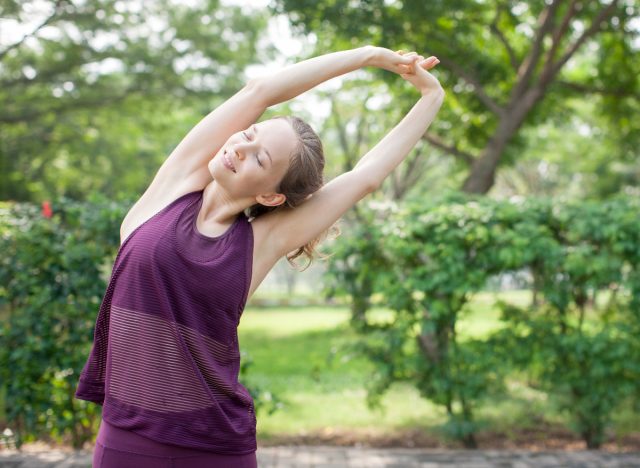
Healthy hips make everyday movement easier and more comfortable. When the hips move well, the knees and lower back often feel better, too. Rather than stretching your life away, improving hip mobility with well-chosen movements performed regularly can make a noticeable difference in how the body feels and moves.
- Move your hips in multiple directions: Exercises that include forward, sideways, and rotational movements help your hips stay adaptable.
- Prioritize controlled movement: Slow and steady repetitions allow the joints to move through their full range safely.
- Strengthen the surrounding muscles: Strong glutes and thighs support healthy hip mechanics.
- Stay consistent with daily movement: Short daily sessions help maintain hip mobility and strength.
- Listen to your body: Move within comfortable ranges and gradually increase depth as mobility improves.
Stick with these exercises and your hips will begin to feel stronger, looser, and more capable with every week of training.
References:
- Leem, Inhwan et al. “Impact of Hip Exercises on Postural Stability and Function in Patients with Chronic Lower Back Pain.” Diagnostics (Basel, Switzerland) vol. 15,10 1229. 13 May. 2025, doi:10.3390/diagnostics15101229
- Ehresman, Brent A et al. “Improved Hip Flexibility and Gluteal Function Following a Daily Lunge-and-Reach Stretching Intervention.” International journal of sports physical therapy vol. 20,6 814-823. 2 Jun. 2025, doi:10.26603/001c.137692
The post 5 Daily Exercises That Restore Hip Mobility Faster Than Floor Stretches After 55 appeared first on Eat This Not That.
]]>The post 4 Daily Exercises That Rebuild Knee Strength Faster Than Resistance Bands After 55 appeared first on Eat This Not That.
]]>Why Your Knees Feel Unstable
You’re not imagining it. There are real physical changes happening in your knees after 55, and understanding them makes it easier to fix them.
You’re losing quadriceps muscle mass. Your quads are one of the fastest muscle groups to decline with age. We can lose up to 40% of quadriceps strength between the ages of 30 and 80 unless we actively do something about it. These muscles are the main stabilizers of your knee. When they weaken, your knee becomes unstable. That wobble you feel stepping off a curb or going downstairs? That’s your quads not being strong enough to control the movement.
Your proprioception is declining. Your body has proprioceptors — sensors that tell your brain where your joints are in space. After 55, these become less reliable. It takes longer for your brain to get information about what’s happening in your knee, so your muscles can’t react in time to stabilize the joint. That “giving out” feeling isn’t your knee structurally collapsing. It’s nerve impulses taking longer to transmit.
Your cartilage is thinning. The cartilage in your knee joint absorbs shock as you move. When it thins, forces are transmitted more directly to the joint, causing inflammation, pain, and swelling, which causes you to move less, which causes more strength loss. You can see where this goes.
Your movement patterns are changing. When your knee hurts or doesn’t feel stable, you change the way you move without realizing it. Shorter steps, favoring one leg, and avoiding stairs. These adaptations feel protective in the moment, but actually contribute to more strength loss and stiffness over time.
Here’s the key point: most of this is reversible. You can’t grow new cartilage, but you can absolutely regain strength, retrain your proprioception, and fix your movement patterns.
RELATED: 5 Daily Exercises That Restore Leg Muscle Faster Than Weight Training After 50
What “Rebuilding Knee Strength” Actually Means
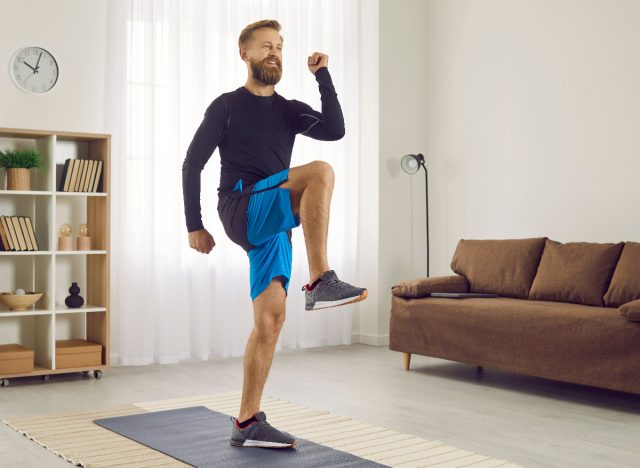
When I talk about rebuilding knee strength, I mean three specific things.
Muscle strength and mass. Your quadriceps, hamstrings, and glutes control your knee. They absorb the forces going through it and manage the movement. The science is clear: people in their 60s, 70s, and 80s can build muscle and strength at the same relative rate as younger adults when they actually train. You won’t gain mass at the same rate as a 25-year-old, but you can still build meaningful, functional strength.
Neuromuscular control. This is the relationship between your brain and the muscles around your knee. When it’s working well, your muscles fire quickly and correctly to stabilize the joint. Training this system improves the speed and accuracy of those signals, which is why regular exercisers have better balance and fewer falls.
Proprioception and joint position sense. Mechanoreceptors in your knee detect movement, pressure, and position. With the right exercises, you can improve their sensitivity and reaction time. This is what gives you that feeling of your knee being more reliable. You’re literally teaching your knee where it is and what it’s doing.
One honest note: you can’t rebuild cartilage, and you can’t repair completely torn ligaments through exercise alone. But here’s what most people don’t appreciate — you can have structural damage in your knee and still have excellent function. Strong muscles and good movement strategies compensate remarkably well for structural issues.
The realistic expectation after 55: you can build enough strength, control, and proprioception to move without pain and trust your knees in daily life. You probably won’t have the knees you had at 25. But you can have knees that work well and don’t hold you back.
Why Bodyweight Beats Bands
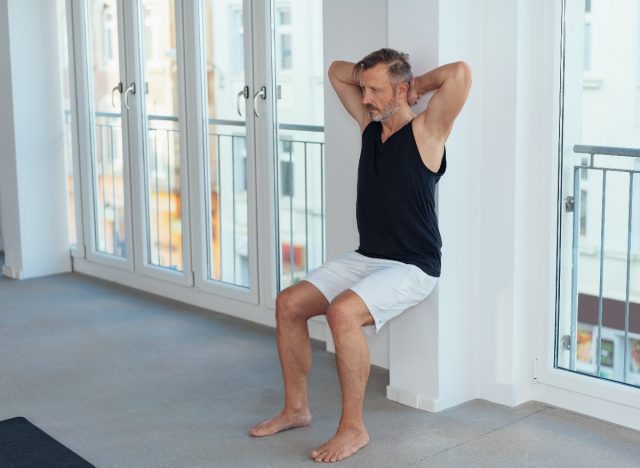
Resistance bands aren’t useless — I use them with clients regularly. But they’re not the complete answer for rebuilding knee strength after 55, and relying on them alone has some real limitations.
Progressive overload is harder to track. One of the main goals of any strength program is to keep getting stronger over time. With bodyweight exercises, progression is clear and measurable — deeper range of motion, slower tempo, harder variations. With resistance bands, how do you quantify the difference between a medium band and a thick one? Most of my clients over 55 need a clear, trackable progression to stay motivated and to see their own improvement. Bands don’t lend themselves well to that.
They don’t train functional movement. Your knee needs to learn to stabilize itself under the demands of real life — standing from a chair, walking downstairs, stepping onto an uneven surface. Bodyweight exercises like squats, step-ups, and single-leg stands replicate those exact movements. Seated band exercises don’t. You might build some quad strength doing leg extensions with a band, but that strength doesn’t automatically transfer to climbing stairs.
They use the wrong force type. When you stand up from a chair or climb stairs, your knee experiences compression forces — your body weight pushing down through the joint. This stimulates muscles, tendons, and bone to adapt and strengthen, and it trains your joint mechanoreceptors to respond. Bands primarily provide tension forces (pulling). The adaptation is different and less transferable to daily activities.
They don’t build coordination. Functional movements require multiple muscle groups and joints working together. A proper squat involves your ankles, knees, hips, and core all coordinating simultaneously. Most band exercises isolate a single joint. That builds some strength but doesn’t build the complex movement patterns your nervous system actually needs.
The most effective approach uses bodyweight functional exercises as the foundation, with bands as a supplementary tool when useful.
RELATED: 5 Bed Exercises That Flatten Belly Pooch Faster Than Gym Machines After 55
Sit-to-Stand
This is the single most important exercise for knee strength after 55 because it directly mimics a movement you do dozens of times every day. It builds quadriceps strength, trains hip and knee coordination, and improves the exact movement pattern most people over 55 struggle with — getting up from a seated position.
Muscles Trained: Quadriceps, glutes, hamstrings, hip stabilizers
How to Do It:
- Sit on a sturdy chair with feet flat on the floor, hip-width apart, knees roughly aligned over your ankles
- Lean your torso forward slightly (about 10–15 degrees), keeping your spine straight
- Push through your heels and stand up in one smooth motion, taking 3 seconds to rise
- At the top, fully extend your hips and knees
- Take 3 seconds to lower back down with control, lightly touching the chair before immediately standing again
Avoid These Mistakes:
- Don’t use momentum to swing yourself up — you should be able to pause at any point in the movement; if you can’t, you’re going too fast
- Don’t let your knees collapse inward — they should track in line with your toes throughout
- Don’t lean back as you stand — leaning forward loads your quads properly and protects your lower back
Recommended Sets and Reps: 10–12 reps
Easier variation: Use a higher surface (a kitchen stool or stacked cushions). You can use your hands on the armrests or thighs to help — then gradually reduce that assistance as you get stronger.
Harder variation: Use a lower chair or bench. Progress to hovering above the seat without fully sitting between reps — just tap and stand. Eventually work toward a full bodyweight squat without the chair. A 2–3 second pause at the bottom eliminates momentum and increases the challenge.
Step-Ups
Step-ups train single-leg strength, which is critical for knee stability because most daily movements — walking, climbing stairs, stepping over obstacles — happen one leg at a time. This exercise forces each knee to handle your full body weight independently, which builds serious functional strength.
Muscles Trained: Quadriceps, glutes, hamstrings, hip stabilizers
How to Do It:
- Stand facing a sturdy step or box (start at 10–15cm height)
- Place your right foot entirely on the step — your whole foot flat, not just your toes
- Shift your weight onto your right leg and step up, taking 2–3 seconds to rise
- Drive through your right heel and fully extend your knee and hip at the top so you’re standing tall on one leg
- Take 2–3 seconds to step back down with control, landing softly on your left foot
- Complete 8–10 reps on the right leg, then switch
Avoid These Mistakes:
- Don’t push off with the bottom leg — the leg on the step should do all the work; the bottom leg is just along for the ride
- Don’t let your knee cave inward — keep it tracking over your second toe
- Don’t rush — control matters more than speed here
Recommended Sets and Reps: 8–10 reps per leg
Easier variation: Use a lower step — even a thick book or a single stair works. Hold a railing or wall for balance if needed, using as little assistance as possible. A “tap-down” is also a good starting point: step up until your knee is at 90 degrees, tap the top of the step, and lower back down without fully standing.
Harder variation: Use a higher step (20–30cm). Progress to no railing. Add a 2-second pause at the top while balanced on one leg. Eventually hold light weights (even filled water bottles). The ultimate progression is a lateral step-up — standing beside the step and stepping up sideways — which challenges knee stability even further.
RELATED: If You Can Hold a Wall Sit This Long After 60, Your Lower-Body Power Is Top-Tier
Single-Leg Balance
Balance work is proprioceptive training in disguise. When you stand on one leg, every muscle around your knee is making constant micro-adjustments to keep you stable. This trains your neuromuscular system to react quickly and precisely — which is exactly what prevents that “knee giving out” feeling.
Muscles Trained: Quadriceps, glutes, calf muscles, ankle stabilizers, core
How to Do It:
- Stand near a wall or counter for safety
- Lift your left foot a few centimetres off the ground
- Stand on your right leg with a very slight bend in your knee — don’t lock it straight
- Hold for 30 seconds, staying as still as possible (some shaking in the standing leg is normal)
- Switch legs and repeat
- Do 3 sets on each leg
Avoid These Mistakes:
- Don’t lock your knee completely straight — keep a small, soft bend to keep the muscles engaged
- Don’t sway or shift weight around — the goal is stillness, not rocking side to side
- Don’t hold your breath — breathe normally throughout
Recommended Sets and Reps: 3 sets of 30 seconds per leg
Easier variation: Hold onto a wall or counter with one or both hands, reducing the support gradually over time. Even shifting most of your weight onto one leg while the other foot barely touches the floor counts as a starting point.
Harder variation: Close your eyes — this dramatically increases difficulty by removing visual input. Stand on an unstable surface like a folded towel or cushion. Add small movements like turning your head or reaching your arms in different directions while balancing. Progress to single-leg balance with slow knee bends — bending and straightening your standing knee while maintaining balance.
Wall Slides
Wall slides build isometric quadriceps strength while teaching proper knee tracking and alignment. The wall provides support and feedback, making this safer than a freestanding squat while still delivering real strength benefits. This exercise specifically targets the VMO — the teardrop-shaped muscle on the inside of your knee that’s critical for kneecap stability.
Muscles Trained: Quadriceps (especially VMO), glutes, hamstrings
How to Do It:
- Stand with your back against a wall, feet about 30cm from the base and hip-width apart
- Slowly slide down the wall, taking 3–4 seconds, until your knees are bent to roughly 60–90 degrees — don’t go deeper than 90 degrees
- Keep your knees aligned over your ankles, not pushed forward past your toes
- Hold for 10–20 seconds, keeping weight in your heels and your back flat against the wall
- Slide back up, taking 3–4 seconds
- Rest 10 seconds between reps
- Do 5–8 reps
Avoid These Mistakes:
- Don’t slide down too far — most people think they need to get their thighs parallel to the floor, but that’s too deep after 55 and can irritate the joint; stop at 60–90 degrees
- Don’t let your knees fall inward — press them slightly outward throughout the hold
- Don’t hold your breath during the hold — breathe steadily
Recommended Sets and Reps: 5–8 reps with 10-second rest between each
Easier variation: Reduce the depth to 30–45 degrees of knee bend. Shorten the hold to 5–10 seconds. You can also place a small ball or cushion between your knees and squeeze it gently — this activates the inner thigh and helps stabilize the knees.
Harder variation: Increase hold time to 30–45 seconds. Work up to a full 90-degree bend. Add small pulses at the bottom — hold the position and gently pulse up and down 5–10cm for 10 reps. Progress to single-leg wall slides, where one foot is lifted slightly while the other leg supports you.
RELATED: The 8-Minute Morning Routine That Restores Muscle Tone Faster Than Weight Training After 55
Soreness vs. Warning Signs
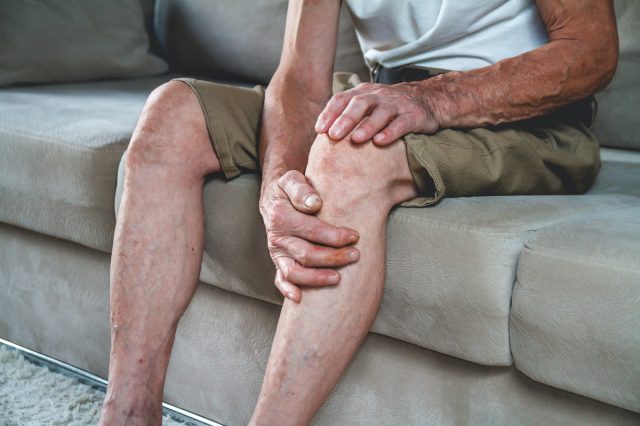
Since these exercises are meant to be done daily, knowing when to push and when to back off is essential. Most people get this wrong — they either push through everything and make things worse, or they rest at the first sign of discomfort and never build strength.
Productive discomfort feels like muscle fatigue or a dull, generalised ache in the muscles around your knee — your quads, hamstrings, or glutes. It typically shows up during or immediately after exercise and eases within an hour or two. Next-day muscle soreness (DOMS) is normal and actually indicates your muscles are adapting. This kind of discomfort is fine to work through, though you might reduce the intensity slightly.
Warning signs feel different:
- Sharp or stabbing pain inside the joint
- Pain that worsens as you continue exercising instead of easing
- Swelling that develops during or right after exercise
- Pain that lingers for hours afterward or interferes with the next day’s activities
- Pain localised to one specific point in the knee (especially on the inside, outside, or behind the kneecap)
On days when your knees are moderately sore but not swollen, modify — don’t stop. Reduce your range of motion, cut volume in half, and slow the tempo down further. These adjustments let you stay consistent without aggravating inflammation.
On days when your knees are swollen or painful to walk on, rest completely from these exercises. Swelling signals inflammation, and loading an inflamed joint makes it worse. Gentle walking on flat ground, seated range-of-motion work, or light ankle pumps are fine. Ice for 15–20 minutes after exercise if your knees feel warm or puffy. Elevate your legs above heart level when possible.
The rule worth remembering: muscle soreness that gets better with movement is fine. Joint pain that gets worse with movement is not.
What to Expect in 4 to 8 Weeks
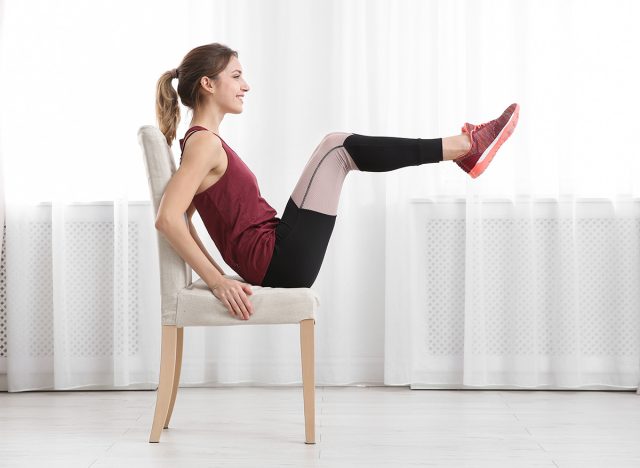
Here’s a realistic timeline of what consistent work will produce.
Week 1: No visible changes yet, but you’ll feel different. Your knees will feel more stable during basic movements. Standing up from a chair or walking downstairs won’t feel as uncertain. This early shift comes from neuromuscular adaptation — your nervous system is learning to activate the right muscles more efficiently.
Week 2: Functional improvements start showing up. Getting in and out of the car will be easier. Morning stiffness won’t be as bad. You’ll push yourself up from a chair less with your hands.
Week 4: Measurable strength gains. Exercises that felt difficult at the start will feel manageable, and you’ll be progressing to harder variations. Your quads may start to look slightly more defined.
Week 8: Noticeably better stability and confidence in your knees. Activities you were avoiding — longer walks, stairs without a railing, standing for extended periods — will feel more accessible. Research shows 8–12 weeks of consistent strength training can increase quadriceps strength by 20–40% in older adults, which translates to real, daily functional improvement.
RELATED: 5 Standing Exercises That Shrink Belly Overhang Faster Than Gym Machines After 50
Habits That Help (and Hurt) Progress

The exercises matter, but so does what happens around them.
Habits that support progress:
- Protein intake. Aim for 25–35 grams per meal across three meals. Your muscles need amino acids to repair and grow. Without enough protein, strength gains will be minimal regardless of how well you train.
- Daily movement. Walking reinforces good movement patterns and keeps joints mobile. Aim for 6,000–8,000 steps daily if possible.
- Sleep. Your body builds strength during deep sleep — that’s when growth hormone is released and muscle tissue is repaired. Aim for 7–8 hours. At 5–6 hours, progress slows noticeably.
- Hydration. Your cartilage is roughly 80% water. When you’re dehydrated, joints have less cushioning and more friction. A simple check: your urine should be pale yellow, not dark.
Habits that slow progress:
- Prolonged sitting. It stiffens your knees and weakens your quads. If you sit for work, stand up and walk for 2–3 minutes every hour.
- Excess body weight. Every kilogram of extra weight creates 4–6 kilograms of force through your knee when walking. Even modest weight loss of 3–5kg can meaningfully reduce pain and improve function.
- Daily NSAID use. Anti-inflammatory medications mask pain, which can lead to overdoing it. If you’re relying on them regularly to manage knee pain, you may not feel the warning signs that you’re pushing too hard. Use them sparingly and only when genuinely needed.
- Inconsistency. Missing a day or two occasionally is fine. Missing a full week sets you back noticeably. The neural, muscular, and proprioceptive adaptations you’re building all require regular stimulus to hold. Sporadic effort produces sporadic results.
When to See a Doctor First

For the majority of healthy people over 55 with weak, stiff, or mildly sore knees, this program is completely safe and beneficial. That said, some situations warrant a conversation with your GP or physiotherapist before you start.
Check with your surgeon before beginning if you’ve had a total or partial knee replacement. Most people are cleared for modified versions of these exercises after postoperative rehab, but verify first.
Talk to your doctor if you have moderate to severe osteoarthritis with significant cartilage loss. Exercise is generally beneficial for arthritis, but if you’re dealing with bone-on-bone contact or severe joint space narrowing, you may need guidance on modifying the program.
See a physiotherapist if you have a meniscal tear — especially a recent one or one that hasn’t been operated on. Some meniscal tears benefit from strengthening; others require surgery first. Don’t guess.
Get assessed before starting if you’ve torn a knee ligament (ACL, PCL, MCL, or LCL) or have significant joint laxity. Strengthening generally helps compensate for ligament problems, but you need to know the extent of the damage and which exercises are appropriate.
See your doctor if you’re getting regular episodes of unexplained knee swelling. Recurring swelling may indicate inflammatory arthritis, infection, or another underlying issue that needs medical attention before you start loading the joint.
Speak with your rheumatologist if you have any form of inflammatory arthritis (rheumatoid, psoriatic, ankylosing spondylitis). Exercise is typically beneficial, but active flares require a different approach.
Check with your doctor if you take blood thinners or have a bleeding disorder. These aren’t reasons to avoid exercise, but you should know what to look out for and that bruising may occur more easily.
Work with a physiotherapist if you have significant neuropathy or reduced sensation in your feet or legs. Decreased sensation affects proprioception and raises your fall risk, particularly during single-leg exercises.
If you’re in any doubt at all, a quick conversation with your GP or physio is always worth it. They can assess you individually and adjust the program if needed.
The post 4 Daily Exercises That Rebuild Knee Strength Faster Than Resistance Bands After 55 appeared first on Eat This Not That.
]]>The post 5 Daily Exercises That Restore Leg Muscle Faster Than Weight Training After 50 appeared first on Eat This Not That.
]]>Over the years, working as a strength coach, I’ve seen how quickly the lower body can rebound when people start moving well again. Many clients arrive thinking their best-strength days are behind them, then discover that their legs respond almost immediately once the right exercises are in place. Controlled bodyweight movements often work especially well because they reinforce balance, coordination, and joint stability while rebuilding muscle.
The five exercises below focus on simple patterns that wake up the quads, glutes, and hips while reinforcing the strength your body relies on every day. Perform them consistently, and your legs will start to feel stronger, steadier, and more capable. Let’s walk through five daily exercises that help restore leg muscle after 50.
Pause Bodyweight Squat
The pause bodyweight squat teaches your legs to generate strength from the bottom of the movement, where many people feel weakest. Holding the pause forces your muscles to stay engaged instead of relying on momentum. That pause also builds joint stability in your hips, knees, and ankles. Over time, your legs learn to stay strong and controlled throughout the entire squat pattern. It’s a simple tweak that makes a basic squat dramatically more effective.
Muscles Trained: Quads, glutes, hamstrings, and core.
How to Do It:
- Stand with your feet about shoulder-width apart, bracing your core.
- Push your hips back and bend your knees to lower into a squat.
- Pause at the bottom position for two to three seconds.
- Keep your chest tall and your knees tracking over your toes.
- Drive through your heels and stand back up to the starting position.
Recommended Sets and Reps: Perform 3 sets of 10 to 12 reps. Rest for 45 seconds between each set.
Best Variations: Goblet pause squat, box pause squat, tempo squat.
Form Tip: Sit back into your hips and keep your heels pressed firmly into the floor.
RELATED: 5 Bed Exercises That Flatten Belly Pooch Faster Than Gym Machines After 55
Glute Bridge
The glute bridge brings your glutes back online, which plays a huge role in rebuilding lower-body strength. Many adults spend long hours sitting, which can make the glutes lazy during movement. This exercise restores proper hip extension and teaches your glutes to drive movement again. Strong glutes also support the lower back and reduce strain on the knees. Once the glutes start firing properly, the entire lower body begins working more efficiently.
Muscles Trained: Glutes, hamstrings, core, and lower back stabilizers.
How to Do It:
- Lie on your back with your knees bent and your feet flat on the floor.
- Place your arms at your sides with your palms facing down.
- Press through your heels and lift your hips toward the ceiling.
- Squeeze your glutes at the top while keeping your ribs down.
- Lower your hips slowly back to the floor.
Recommended Sets and Reps: Perform 3 sets of 12 to 15 reps. Rest for 45 seconds between each set.
Best Variations: Single-leg glute bridge, glute bridge with pause, glute bridge march.
Form Tip: Drive through your heels and focus on squeezing your glutes at the top of each rep.
Split Squats
Split squats train each leg independently, helping restore balance and strength between the two sides of the body. Many people develop small differences in strength between their legs over time. This movement forces each leg to work independently, helping rebuild stability in the hips and knees. It also challenges your balance and coordination, which becomes increasingly important with age. The result is stronger, more capable legs that move confidently during everyday tasks.
Muscles Trained: Quads, glutes, hamstrings, and hip stabilizers.
How to Do It:
- Stand in a staggered stance with one foot forward and one foot behind you.
- Keep your torso upright and your core braced.
- Bend both knees and lower your back knee toward the floor.
- Keep your front heel planted firmly on the ground.
- Push through your front foot to return to the starting position.
Recommended Sets and Reps: Perform 3 sets of 8 to 10 reps per leg. Rest for 60 seconds between each set.
Best Variations: Bulgarian split squat, front foot elevated split squat, goblet split squat.
Form Tip: Keep your weight centered over your front foot as you lower and rise.
RELATED: If You Can Hold a Wall Sit This Long After 60, Your Lower-Body Power Is Top-Tier
Reverse Lunge
The reverse lunge strengthens the legs while reducing stress on the knees. Stepping backward naturally encourages better hip engagement and control. This movement also improves balance and coordination while strengthening the quads and glutes. Many people find the reverse lunge easier to control than forward lunges, which helps reinforce good mechanics. Over time, this exercise helps restore confidence in single-leg movement.
Muscles Trained: Quads, glutes, hamstrings, and calves.
How to Do It:
- Stand tall with your feet hip-width apart and your core engaged.
- Step one leg backward into a lunge position.
- Lower your back knee toward the floor with control.
- Keep your front knee stacked over your ankle.
- Push through your front foot and return to standing.
Recommended Sets and Reps: Perform 3 sets of 8 to 10 reps per leg. Rest for 60 seconds between each set.
Best Variations: Dumbbell reverse lunge, alternating reverse lunge, reverse lunge with knee drive.
Form Tip: Step back far enough so your front shin stays nearly vertical.
Jump Squats
Jump squats bring power back into your lower body. Fast, explosive movements stimulate muscle fibers that often become underused with age. This type of training helps improve coordination, reaction time, and overall athletic ability. Jump squats also train your legs to absorb force safely when landing. With consistent practice, your legs regain the spring and responsiveness that make movement feel easier and more confident.
Muscles Trained: Quads, glutes, hamstrings, and calves.
How to Do It:
- Stand with your feet shoulder-width apart and brace your core.
- Lower into a squat position while keeping your chest tall.
- Drive through your feet and jump straight upward.
- Land softly with your knees slightly bent.
- Reset your stance and repeat the movement.
Recommended Sets and Reps: Perform 3 sets of 6 to 8 reps. Rest for 60 seconds between each set.
Best Variations: Squat jumps to box, pause squat jump, low-impact squat pop.
Form Tip: Land softly and absorb the impact by bending your hips and knees.
RELATED: The 8-Minute Morning Routine That Restores Muscle Tone Faster Than Weight Training After 55
Best Daily Strength Tips for Restoring Leg Muscle After 50

Restoring leg muscle after 50 comes down to consistency, smart exercise selection, and giving your body enough recovery to adapt. Daily movement helps maintain joint mobility and muscle activation, while strength exercises stimulate the muscles that keep you strong and steady. Over time, small habits compound into noticeable gains in strength. When you approach training with patience and intent, your legs respond faster than many people expect.
- Train movements you use every day: Squats, lunges, and bridges mirror real-life movement patterns. Practicing these regularly builds strength that carries over into daily activities.
- Focus on controlled repetitions: Slowing down each rep increases muscle tension and improves joint stability. That extra control helps muscles rebuild strength more efficiently.
- Train one leg at a time: Single-leg exercises such as split squats and lunges strengthen stabilizing muscles and improve balance.
- Keep moving throughout the week: Short daily sessions often work better than occasional long workouts. Consistency keeps muscles active and encourages faster adaptation.
- Prioritize recovery habits: Quality sleep, proper hydration, and adequate protein intake all support muscle repair and growth.
References
- Arnold, W David, and Carlos J Padilla Colón. “Maintaining Muscle Function Across the Lifespan: The State of Science.” American journal of physical medicine & rehabilitation vol. 99,12 (2020): 1171-1176. doi:10.1097/PHM.0000000000001429
- Reid, Kieran F et al. “Comparative effects of light or heavy resistance power training for improving lower extremity power and physical performance in mobility-limited older adults.” The journals of gerontology. Series A, Biological sciences and medical sciences vol. 70,3 (2015): 374-80. doi:10.1093/gerona/glu156
The post 5 Daily Exercises That Restore Leg Muscle Faster Than Weight Training After 50 appeared first on Eat This Not That.
]]>The post 5 Exercises Men Over 55 Should Do Daily to Restore Leg Strength appeared first on Eat This Not That.
]]>Many men rely on occasional gym sessions or machine circuits. That approach often neglects balance, hip stability, and coordinated force production. Strong legs require more than seated presses. They demand hip extension, single-leg control, and full-body tension that carries into real life.
The five exercises below focus on rebuilding glutes, quads, hamstrings, and stabilizers in patterns that matter. Perform them daily with controlled tempo and disciplined form. Stay consistent, increase load gradually, and leg strength returns.
Bodyweight Reverse Lunge
Single-leg strength defines functional power after 55. Reverse lunges build quads and glutes while protecting the knees. I’ve used this movement for years with male clients who want to regain stair-climbing strength and balance without aggravating old injuries. Stepping backward shifts more load into the hips, where strength often declines first.
Step back slowly and lower under control. Keep your chest tall and your front knee aligned over your mid-foot. Drive through the front heel to return to standing. Smooth, deliberate reps restore coordination and muscle density simultaneously.
How to Do It
- Stand tall with feet hip-width apart
- Step one leg back
- Lower into a controlled lunge
- Keep torso upright
- Push through front heel to stand
- Alternate sides.
RELATED: The 7-Minute Chair Routine That Firms Belly Pooch Faster Than Crunches After 60
Dumbbell Romanian Deadlift
Glute and hamstring strength protect the lower back and power everyday movement. The Romanian deadlift retrains the hip hinge, which many men lose after years of sitting. I’ve watched clients regain visible muscle tone in their hips and thighs within weeks once they master this lift. It builds the backside, not just the thighs.
Push your hips back and keep the dumbbells close to your legs. Maintain a neutral spine and steady breathing. Drive through your heels to stand tall and squeeze your glutes hard at the top. That squeeze signals full hip extension.
How to Do It
- Hold dumbbells in front of thighs
- Slightly bend knees
- Push hips back
- Lower weights along legs
- Drive through heels to stand
- Squeeze glutes at the top.
Step-Ups
Step-ups build practical strength that directly improves daily function. Climbing stairs, stepping onto curbs, and hiking all require unilateral power. I program step-ups frequently because they rebuild leg drive without excessive joint stress. They also expose imbalances between legs quickly.
Place one foot firmly on a sturdy bench or step. Lean slightly forward to load the glutes. Drive through the top heel to stand fully upright. Lower slowly and repeat before switching sides. Control increases effectiveness.
How to Do It
- Stand in front of a sturdy step
- Place one foot on top
- Lean slightly forward
- Drive through heel to stand
- Lower with control
- Switch sides.
RELATED: The 6-Minute Chair Routine That Restores Hip Strength Faster Than Floor Stretches After 60
Wall Sit
Isometric endurance reveals true leg conditioning. The wall sit forces sustained quad engagement while the glutes stabilize the hips. I’ve tested hundreds of men over 55 with this exercise, and time under tension often predicts real-world stamina. Strong legs hold position under fatigue.
Slide your back down a wall until your thighs reach parallel. Keep knees stacked over ankles and core braced. Avoid resting your hands on your thighs. Hold with steady breathing and upright posture.
How to Do It
- Stand with back against wall
- Slide down until thighs are parallel
- Keep knees aligned
- Brace your core
- Hold steady
- Stand when form breaks.
Standing Calf Raises
Lower-leg strength often gets overlooked, yet it plays a critical role in balance and walking speed. Weak calves limit push-off power and increase fall risk. I’ve seen noticeable improvements in gait and stability once clients commit to daily calf training.
Stand tall and rise slowly onto your toes. Pause briefly at the top and lower with control. Avoid bouncing. Full range and strict tempo build ankle strength and resilience.
How to Do It
- Stand tall with feet hip-width apart
- Rise onto toes slowly
- Pause at the top
- Lower under control
- Repeat steadily.
The post 5 Exercises Men Over 55 Should Do Daily to Restore Leg Strength appeared first on Eat This Not That.
]]>The post 5 Daily Exercises That Restore Walking Endurance Faster Than Treadmills After 65 appeared first on Eat This Not That.
]]>True walking endurance depends on more than cardiovascular fitness. Strong hips, stable knees, active glutes, and responsive ankle muscles all contribute to how long someone can walk comfortably. When any of these areas weaken, fatigue sets in quickly and walking begins to feel like a chore rather than a natural movement.
That’s why targeted exercises often outperform treadmill sessions when rebuilding endurance. Instead of simply repeating the walking motion, these drills strengthen the muscles that power each step and keep the body balanced. Many clients notice that after just a few weeks of strengthening these areas, their walking distance increases without feeling winded.
The following exercises focus on the muscles that control stride length, balance, and push-off strength. Practice them daily with slow, controlled movement and steady breathing. Over time, these drills help restore the strength and stability that allow longer, more comfortable walks.
Standing March
Standing marches strengthen the hip flexors and core muscles responsible for lifting the leg during each step. This movement closely mirrors the mechanics of walking while allowing greater control and muscle activation. Many clients over 65 rediscover smoother stride patterns once these muscles regain strength.
When the hip flexors weaken, people often shuffle rather than stride. The standing march corrects that pattern by training the body to lift the knee confidently and maintain upright posture. Practicing this movement daily helps rebuild the rhythm and coordination required for longer walks.
How to Do It
- Stand tall with feet hip-width apart
- Lift one knee to hip height
- Tighten your core muscles
- Lower the leg slowly
- Alternate legs in a marching rhythm.
RELATED: 5 Chair Exercises That Firm Inner Thigh Looseness Faster Than Squats After 55
Sit-to-Stand
The sit-to-stand exercise strengthens the glutes and quadriceps, two muscle groups responsible for pushing the body forward during walking. In my experience training older adults, improving these muscles quickly translates into stronger, more confident steps.
This movement also improves overall lower-body endurance because it trains the same muscles used during walking uphill or climbing stairs. As the legs grow stronger, the body requires less effort with every stride.
How to Do It
- Sit in a sturdy chair
- Place feet flat on the floor
- Stand up using your legs
- Lower yourself back down slowly
- Repeat with controlled movement.
Standing Heel Raises
Heel raises strengthen the calf muscles responsible for push-off power during walking. Every step requires the calves to propel the body forward, yet these muscles often weaken with age and inactivity.
Many of my clients feel immediate improvements in walking stamina after strengthening the calves. Stronger calves allow the body to move forward more efficiently, which reduces fatigue during longer walks.
How to Do It
- Stand tall with feet hip-width apart
- Rise onto your toes slowly
- Pause briefly at the top
- Lower heels back down
- Repeat steadily.
RELATED: If You Can Complete These 5 Standing Exercises Without Rest After 55, Your Endurance Is Elite
Side Leg Raises
Side leg raises target the hip abductors, muscles that stabilize the pelvis while walking. Weak hips often cause side-to-side sway, which wastes energy and reduces endurance.
I frequently add this movement to programs for clients who feel unstable while walking. Strengthening the outer hips improves balance and keeps the body aligned during each step.
How to Do It
- Stand tall beside a chair
- Lift one leg out to the side
- Keep torso upright
- Lower the leg slowly
- Repeat and switch sides.
RELATED: 5 Morning Exercises That Flatten Apron Belly Faster Than Gym Machines After 60
Step-Back Lunges
Step-back lunges strengthen the glutes, hamstrings, and core while reinforcing balance. This combination builds the strength necessary for longer strides and improved walking endurance.
Unlike forward lunges, the step-back variation places less pressure on the knees while still activating the major walking muscles. Many clients feel their stride length increase after consistently practicing this movement.
How to Do It
- Stand tall with feet hip-width apart
- Step one foot backward
- Lower into a gentle lunge
- Push through front heel to stand
- Alternate legs.
The post 5 Daily Exercises That Restore Walking Endurance Faster Than Treadmills After 65 appeared first on Eat This Not That.
]]>